Address
Building A1, Runteng Industrial Park, No. 4 Xishan Road, Longteng Community, Shiyan Subdistrict, Bao'an District, Shenzhen 518000, China
Work Hours
Monday to Saturday: 09:00 – 23:00 (UTC+8)
Sunday: closed
Address
Building A1, Runteng Industrial Park, No. 4 Xishan Road, Longteng Community, Shiyan Subdistrict, Bao'an District, Shenzhen 518000, China
Work Hours
Monday to Saturday: 09:00 – 23:00 (UTC+8)
Sunday: closed

Request a quote
AUTOMATIC SMT LENS FEEDING SYSTEM
Multi-channel high-speed SMT lens feeding for Hanwha, Yamaha, JUKI, Samsung, Hitachi and Fuji pick and place machines — 0.5–1 s per lens, under 0.5% rejection, PLC controlled.
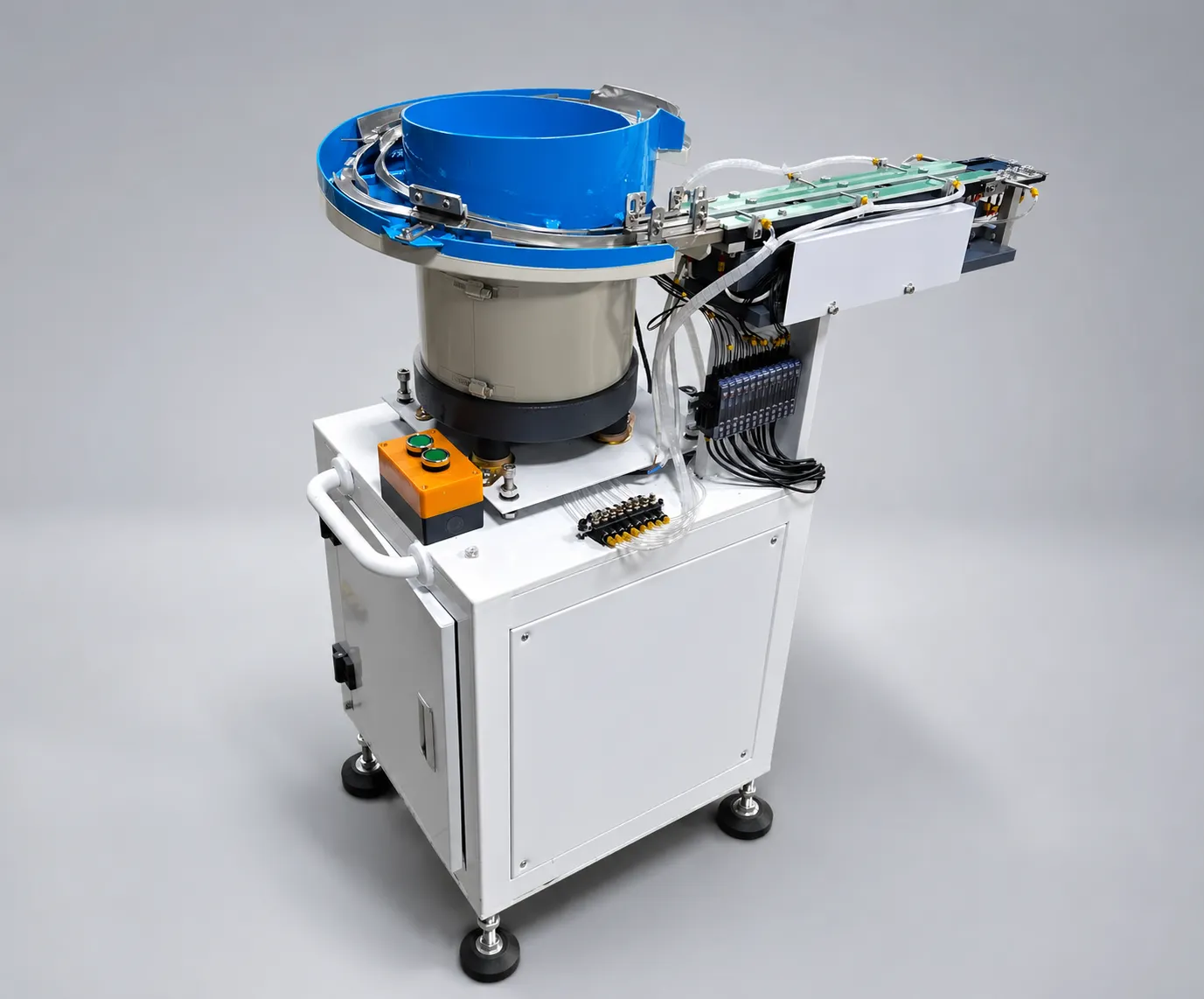
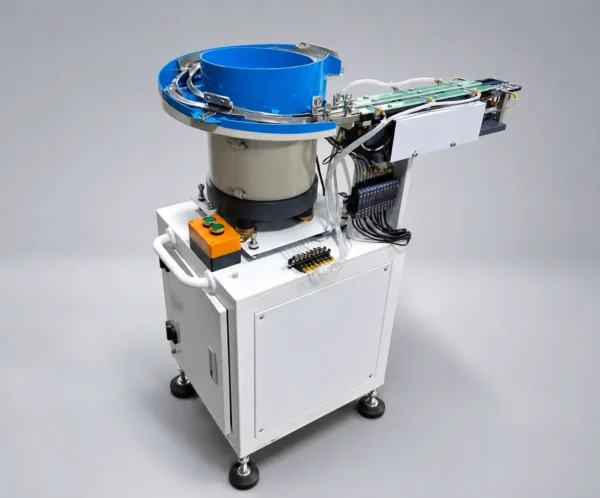
JHIMS DPS-2 Lens Vibratory Feeder — automatic multi-channel lens feeding for SMT pick and place
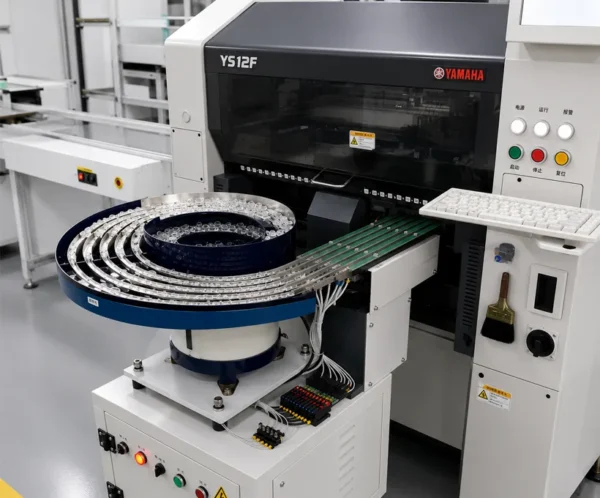
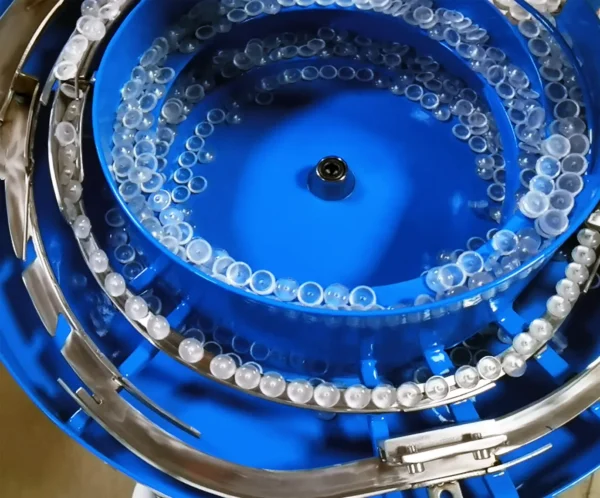
The JHIMS DPS-2 is a multi-channel high-speed lens vibratory feeder purpose-built for SMT pick and place production lines. Launched in 2013 and continuously refined, it feeds optical lenses (3–25 mm) directly to the placement head at 0.5–1 second per lens with under 0.5% rejection — replacing 2–3 manual operators per line with one operator managing 4+ machines. Patented dual-frequency direct vibration technology separates bulk circular feeding from precision linear alignment, keeping vibration amplitude stable under varying load — a JHIMS patent that eliminates the resonance interference common in single-frequency feeders.
The DPS-2 is built on a heavy-duty cast aluminum base with fully automatic Mitsubishi FX5U PLC control, a 7-inch HMI touchscreen, optical fiber induction jog sensing and SMC pneumatic components. Up to 50 lens-type preset profiles make changeover tool-less and under 5 minutes.
Applications: automotive ADAS cameras, consumer electronics optics, medical device lenses, LED lighting and TV backlight modules, industrial automation and new energy electronics.
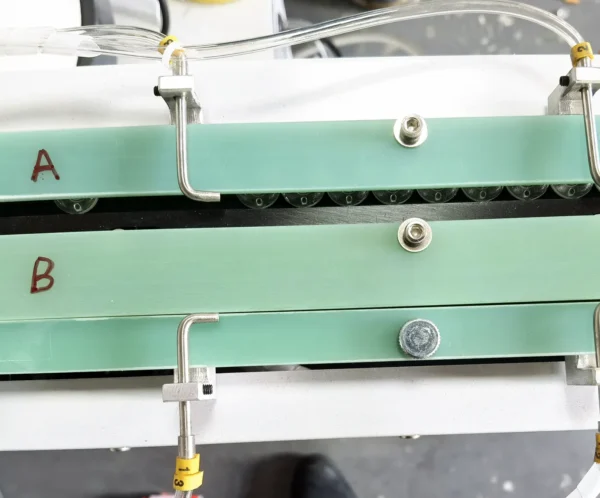
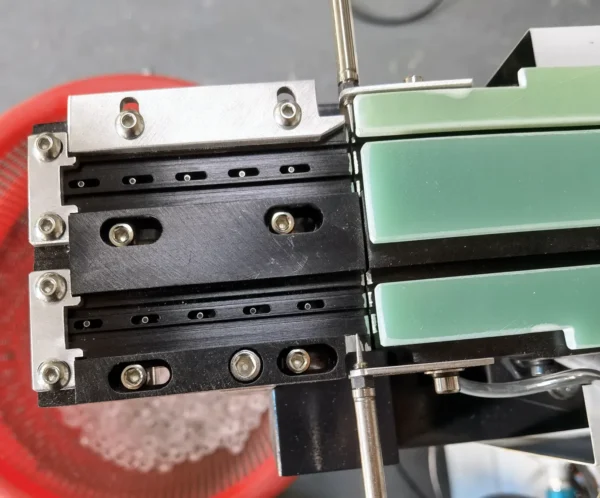
2 disc tracks standard (expandable to 10), each channel with independent drive, sensors and jog control. Multiple lens types feed simultaneously without retooling.
Patented dual-frequency direct vibration technology keeps lenses perfectly oriented for pick-up. ±1 mm tolerance based on lens shape and pin dimensions.
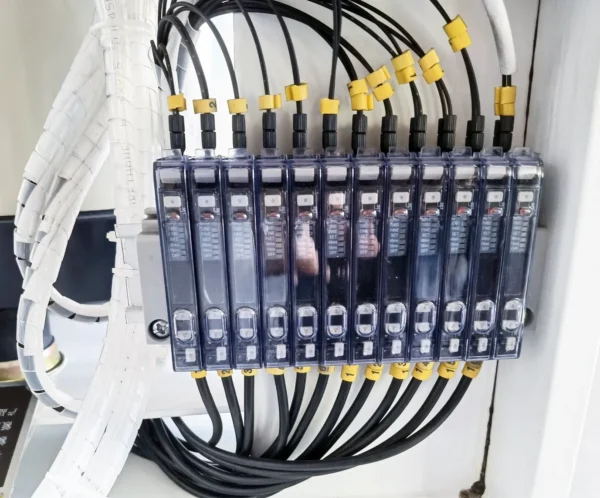
Keyence/Omron fiber optic sensors detect lens presence and orientation in real time, preventing misfeeds and keeping the queue advancing without disrupting alignment.
Mitsubishi FX5U PLC with 7-inch HMI touchscreen stores up to 50 preset profiles. Profile recall takes under 3 seconds, cutting setup time by up to 80%.
Supports inner/outer three-feet and four-angle reflection lenses from 3 mm to 25 mm diameter, with tool-less quick-change track tooling.
0.5–1 second per lens per channel. High-power four-way circular vibration delivers consistent feeding at any production speed.
| Parameter | Specification | Parameter | Specification |
|---|---|---|---|
| Model | DPS-2 (Pick & Place Lens Feeder) | Disc Tracks | 2 tracks (expandable to 10) |
| Direct Vibration Tracks | 2 tracks | Base | Single seat, heavy-duty cast aluminum |
| Vibration Technology | Patented dual-frequency stable direct vibration | Circular Vibration | High-power four-way system, brushless motor drive |
| Operating System | Fully automatic PLC control with 7-inch HMI touchscreen | Pneumatic Control | Optical fiber induction jog, adjustable air pressure 0.4–0.6 MPa |
| Lens Transfer Speed | 0.5–1 second per lens (single channel) | Lens Diameter Range | 3 mm – 25 mm |
| Lens Types Supported | Inner/outer three-feet, four-angle reflection lenses | Bowl Alignment Tolerance | ±1 mm (based on lens shape and pin dimensions) |
| Anti-Static Option | ESD-safe bowl coating available | Noise Level | < 65 dB(A) at 1 meter |
| Dimensions (L×W×H) | 1050 × 700 × 750 mm | Net Weight | Approx. 130 kg |
| Power Supply | 220V AC, 50–60 Hz, single phase | Power Consumption | 0.55 KVA (rated) / 0.35 KVA (typical) |
| Operating Temperature | 0 °C to 45 °C | Humidity | 20%–85% RH (non-condensing) |
| Compatible P&P Brands | Hanwha, Yamaha, JUKI, Samsung, Hitachi, Fuji | Manual Controller | 2 groups (circular + direct vibration, independent adjust) |
The JHIMS DPS-2 lens vibratory feeder is a versatile workhorse deployed across mission-critical electronics manufacturing sectors worldwide.
High-reliability lens feeding for ADAS camera modules, dashboard displays and LED headlamp assemblies, with IATF 16949-aligned quality control. Handles high-temperature-rated lenses for engine-bay applications.
Ultra-high-speed feeding for smartphone camera lenses, fingerprint sensor lenses and wearable device optics. Optimized for 24/7 high-volume production with sub-5mm micro-lens support.
Cleanroom-compatible configuration for endoscope lenses, surgical camera modules and diagnostic equipment optics. Validated processes with full traceability documentation.
Precision feeding for LED collimator lenses, TIR optics and secondary optics for general lighting, UV curing and horticultural applications. Anti-static configurations available.
Understanding vibratory feeding technology is essential for optimizing your SMT lens assembly process. Below is a comprehensive technical reference for engineers and process managers.
The DPS-2 separates circular vibration (bulk part movement) from direct vibration (precision alignment) — a JHIMS patent. This dual-drive design eliminates the resonance interference common in single-frequency feeders.
A high-power four-way electromagnetic system generates controlled helical motion, moving lenses upward along the spiral track. The four-way design distributes force evenly, preventing dead zones.
A separate dual-frequency driver delivers precision alignment pulses with amplitude stable across load changes. Fiber optic sensors detect lens presence in real time and trigger PLC jog pulses to advance the queue.
The Mitsubishi FX5U PLC stores up to 50 preset profiles — amplitude, frequency, track width and sensor thresholds per lens type. Profile switching takes under 3 seconds; tool-less track and bowl swaps complete changeover in under 5 minutes.
Maximize your DPS-2 performance with these manufacturing operation and maintenance guidelines.
All raw materials — aluminum castings, steel rails, motors and sensors — are inspected against JHIMS specification sheets. Certificates of Conformance (CoC) are archived per machine serial number.
Bowl tracks and mounting surfaces are precision-machined on 5-axis CNC centers to ±0.02 mm tolerance. Surface finish is verified with profilometer measurement.
Pre-assembled modules (bowl + track, control cabinet, pneumatic manifold) are integrated on a calibrated assembly jig. Fasteners are torqued with digital wrenches and wiring harnesses continuity-tested.
Every machine runs continuously for 48 hours with 500–800 customer-supplied lens samples. Vibration stability, speed consistency and rejection rate are logged every 30 minutes.
A 120-point checklist covers mechanical, electrical, pneumatic and software systems, documented in the machine birth certificate shipped with the unit. Vacuum-sealed moisture barrier and reinforced plywood crate with shock indicators.
See exactly where the JHIMS DPS-2 fits in your PCB assembly process and how it integrates with upstream and downstream equipment.
The JHIMS DPS-2 sits at the lens feeding stage of your SMT line, delivering oriented lenses directly to the pick-and-place head. Its 0.5–1 s per-lens transfer speed directly determines the line’s effective UPH — a slow or unreliable feeder starves downstream placement and creates bottlenecks. JHIMS offers complete line integration support with your MES/ERP system.
| Metric | Manual Printing | JHIMS DPS-2 | Advantage |
|---|---|---|---|
| UPH (Units Per Hour) | 800–1,200 | 3,600–7,200 | 3–6× Faster |
| Rejection Rate | 5–15% | < 0.5% | 10–30× Better |
| Operators Required | 2–3 per line | 1 per 4+ machines | Up to 75% Less |
| Changeover Time | 15–30 min | < 5 min | 3–6× Faster |
| Annual Labor Cost (1 shift) | $18,000–$25,000 | $3,000–$4,000 | ~85% Lower |
| Lens Types Supported | Any (manual) | 1–10 channels | Multi-lens |
| Warranty | N/A | 1 year + lifetime support | Full Coverage |
| Typical Payback (published case) | N/A | 6 months (Dongguan LED) | ROI in months |
Based on typical industry benchmarks. Actual results may vary by application and operating conditions.
Enter your current lens feeding parameters to calculate how quickly the JHIMS DPS-2 lens vibratory feeder pays for itself. Defaults are based on a typical deployment — results align with our published customer case studies.
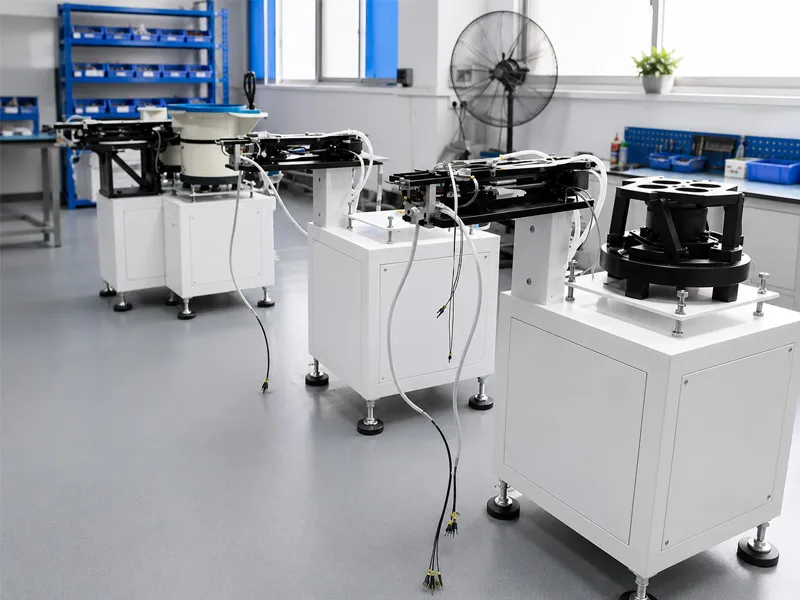
Tour our state-of-the-art manufacturing facility in Shenzhen, China. Every JHIMS machine is assembled, calibrated, and tested under rigorous quality control standards before shipment.


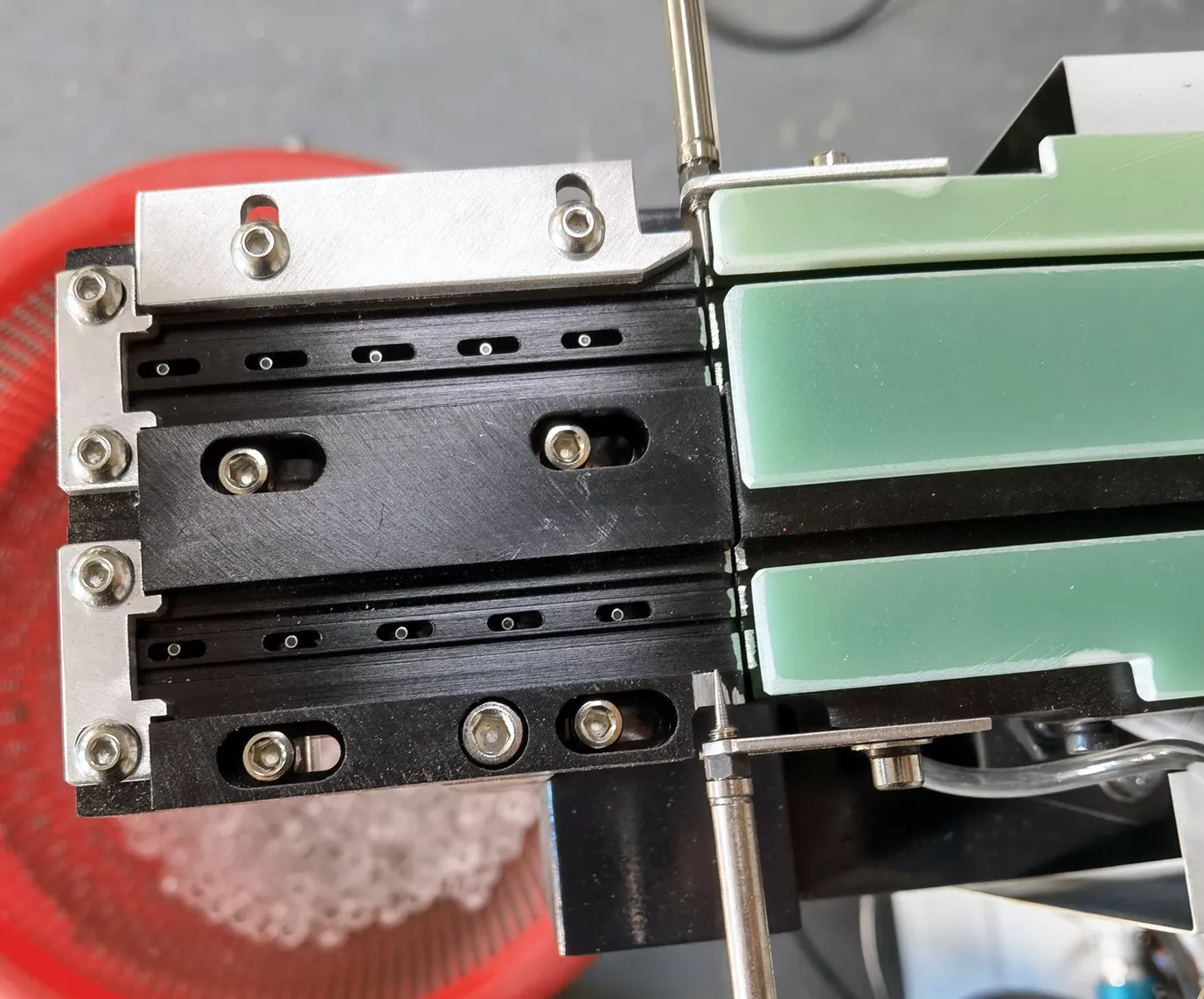
Watch the JHIMS DPS-2 performing real-world production tasks. All videos are hosted on YouTube for fast, reliable streaming worldwide.


CUSTOMER SUCCESS STORIES
Real deployments of the JHIMS lens vibratory feeder — from LED lighting in Russia to TV backlight production in China. Every project shipped, installed and supported by the JHIMS team.
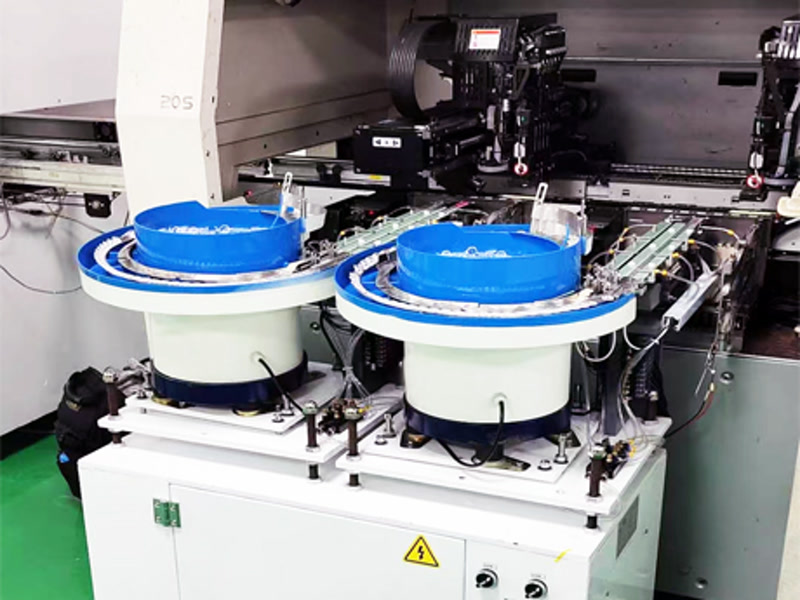
 LED LIGHTING
A Russian LED lighting manufacturer automated manual lens assembly for LED panel light bars with the JHIMS feeder on Hanwha SM481 lines.
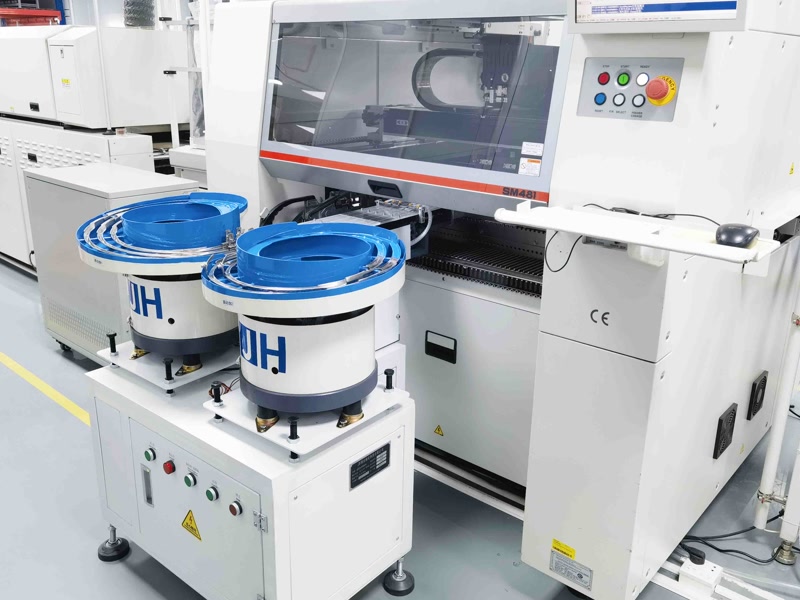
 TV BACKLIGHT
A Xiamen TV panel leader lifted backlight lens throughput from 6,000 to 10,000 CPH and cut jam rates by 87% with the dual-vibration feeder.
 LED ASSEMBLY
A Dongguan LED manufacturer automated 1.2m LED lens strip assembly with a custom double-bowl SM481 feeder — 6-month payback, 99% uptime.
TV BACKLIGHTTCL cut lens-type changeover time by 85% and raised throughput by 30% after standardizing on JHIMS lens feeders with PLC preset profiles.
The DPS-2 is an automatic multi-channel SMT lens feeder — a vibratory bowl feeder for lens feeding in pick and place lines. It feeds optical lenses (3–25 mm) at 0.5–1 second per lens with under 0.5% rejection, replacing 2–3 manual operators with one operator managing 4+ machines. It is compatible with six major P&P brands and uses a Mitsubishi FX5U PLC with SMC pneumatics and Keyence sensors.
As a Hanwha lens feeder, the DPS-2 integrates with Hanwha SM481, SM482, HM520 and DECAN machines, and also supports Yamaha (YSM20R, YSM10), JUKI (RS-1, RX-7), Samsung (SM series), Hitachi (G5, SIGMA) and Fuji (NXT, AIMEX). A brand-specific interface kit is included, and installation takes 4–8 hours with remote video guidance.
The DPS-2 lens feeder transfers 0.5–1 second per lens per channel, which equals 3,600–7,200 UPH per channel. A 4-channel configuration reaches 14,400–28,800 total UPH — 3–6 times faster than manual lens placement at 800–1,200 UPH. Speed stays consistent across full shifts thanks to PLC control.
The DPS-2 lens feeder achieves under 0.5% rejection, typically 0.2–0.4% after optimization. For comparison, manual feeding runs 5–15% and generic vibratory feeders 2–5%. Every machine is verified during a 48-hour burn-in with your own lens samples, and the results are documented in the machine birth certificate.
The DPS-2 handles lens diameters from 3 mm to 25 mm, including round, three-foot, four-angle and rectangular-cutout geometries, with ±1 mm bowl alignment tolerance. Custom track tooling is available for asymmetric lens designs.
The standard configuration uses 2 disc tracks, expandable to up to 10 tracks for high-mix production. Each track is fully independent — its own drive, sensors and jog control — all managed by a single Mitsubishi FX5U PLC.
It is a JHIMS-patented drive architecture with two independent vibration units and separate PID controllers: circular vibration (50–120 Hz) moves lenses in bulk along the bowl track, while direct vibration (100–200 Hz) delivers precision alignment pulses. Amplitude variation stays under 5%, versus 15–30% in single-frequency feeders.
Under 5 minutes. The PLC recalls a saved profile in under 3 seconds (up to 50 profiles stored), tool-less track adjustment takes about 2 minutes, magnetic bowl inserts swap in under 1 minute, and verification takes 1–2 minutes. Manual changeover typically takes 15–30 minutes.
The DPS-2 measures 1050 × 700 × 750 mm and weighs approximately 130 kg. It runs on 220V AC, 50–60 Hz, single phase, with 0.55 KVA rated power consumption (0.35 KVA typical). Compressed air requirement is 0.4–0.6 MPa, and noise is under 65 dB(A) at 1 meter.
Standard: Mitsubishi FX5U-32MT/ES PLC with a 7-inch Weintek HMI, storing up to 50 profiles. Optional: Siemens S7-1200 with Pro-face HMI. The HMI supports English, Chinese, Spanish, Vietnamese, Hindi and Turkish, and communicates via Modbus TCP for MES integration.
Yes. Modbus TCP streams lens count, speed, rejection rate, downtime and active profile ID for OEE dashboards, quality alerts and batch traceability (IATF/FDA). Optional Ethernet/IP and OPC UA gateways are available for factory-wide connectivity.
Daily: 2-minute visual inspection. Weekly: clean tracks and check pneumatic pressure (10 minutes). Monthly: inspect vibration units and lubricate guide rails (30 minutes). Annual: comprehensive 4-hour preventive maintenance by JHIMS. Manuals, maintenance cards and video guidance are included.
Yes. An ESD-safe bowl coating (10⁶–10⁹ Ω per IEC 61340-5-1), static-dissipative track inserts and a dedicated grounding kit are available for lens types sensitive to electrostatic discharge. Cleanroom (ISO Class 7) configuration is also offered.
Every DPS-2 includes a 1-year comprehensive warranty covering parts and labor, plus lifetime technical support. Remote diagnostics reply within 12 working hours (Mon–Sat, 09:00–23:00 China Standard Time, UTC+8) and spare parts dispatch within 48 hours via DHL. An extended warranty up to 3 years is available on request.
Contact us on phone (86-755) 86700443, WhatsApp, email ([email protected]) or Telegram (@jinghe_tech). An engineer replies within 12 working hours (Mon–Sat, 09:00–23:00 China Standard Time, UTC+8) (business days), and most issues are diagnosed remotely by video before any on-site visit is considered.
Yes. All components use global-standard parts — Mitsubishi PLC, SMC pneumatics, Keyence sensors, THK/HIWIN rails. JHIMS dispatches spares from Shenzhen within 48 hours via DHL, or you can source standard parts locally since they are brand-name industrial components.
Yes. JHIMS provides on-site installation, commissioning and operator training by JHIMS certified engineers — on-site service is available at a charge. Remote video training, documentation support and professional technical guidance are provided free of charge.
Authorized JHIMS service partners are active in Vietnam, India, Mexico and Turkey. For other regions we operate a remote-first model — WhatsApp video diagnosis, DHL spare parts and scheduled on-site visits — which keeps response time short and cost predictable.
Lifetime technical support continues free of charge. Diagnosis is done via WhatsApp or video, and parts can be bought from JHIMS (48-hour dispatch) or sourced locally. No recurring fees, no mandatory service contracts.
Each unit ships with a Machine Birth Certificate (120-point QC checklist, serial-numbered), a 48-Hour Burn-In Report, CE Declaration of Conformity, ISO 9001:2015 certificate copy, operation manual and dimensional drawings. JHIMS is ISO 9001:2015 certified.
Yes — factory visits are encouraged. Our 3,000 m² Shenzhen facility includes CNC machining, assembly lines and a burn-in testing area. You can watch your machine being built, run a live demo with your own lenses and meet the engineering team in person.
8–10+ years in 2–3 shift operation. The PLC is rated for 15+ years, pneumatic components for 8–12 years, sensors 5–8 years (replaceable), and guide rails 12–15 years. Regular preventive maintenance per the manual keeps the feeder at peak rejection performance.
The DPS-2 is quoted per configuration. The final quotation depends on channel count and options (ESD-safe coating, Siemens PLC upgrade, custom track tooling). A spare parts kit can be quoted on request–800. Request a detailed quotation at [email protected] or via the quote button on this page.
Standard payment terms: 70% T/T deposit with the order, 30% T/T before shipment. Trade assurance is available on major platforms Trade assurance is available on major platforms for additional buyer protection.
Yes — sample testing is free. Send 500–800 lenses per type to our Shenzhen facility and we run a comprehensive 48-hour burn-in test on your actual lenses. You receive a detailed report with time-series data, rejection breakdown and a video of the test.
Standard manufacturing takes 15–20 working days after deposit receipt; express manufacturing (10 working days) is available with a priority surcharge. Transit adds 5–7 days by air or 15–35 days by sea depending on destination. Door-to-door DDP delivery is available.
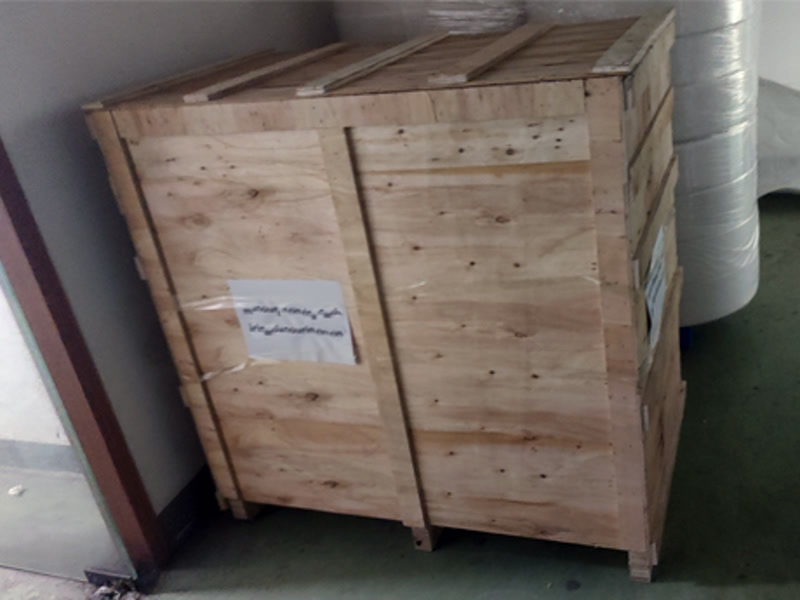
Every machine is vacuum-sealed in a moisture barrier, packed in an ISPM-15 fumigated plywood crate with shock and tilt indicators, and covered by marine insurance. Export documentation (commercial invoice, packing list, bill of lading, Form E/F certificate of origin) is included.
The MOQ is 1 unit — trial orders are welcome. Volume pricing and priority production scheduling apply from 5, 10 and 20+ units. Every unit, first or fiftieth, gets identical engineering attention and burn-in testing.
Yes. JHIMS provides complete customs-ready documentation — commercial invoice (HS 8479.89), packing list, bill of lading and certificate of origin (Form E/F for duty preference). Under DDP terms we handle export and import clearance, duties and final delivery.
Sea freight: 5–10 days to Southeast Asia, 15–20 days to India and the Middle East, 20–28 days to Europe, 25–35 days to the Americas. Air freight: 5–7 days worldwide. Express (DHL): 3–5 days door-to-door. We ship to 30+ countries.
Yes. Trade-in credit of 10–35% of the original price is applied toward a new DPS-2, assessed on age, condition, operating hours and maintenance records. Upgrade programs add channels, ESD options or Siemens PLC to an existing feeder at the factory.
LEARNING CENTER
Practical guides and real case studies about the JHIMS DPS-2 — from daily operation to full line integration, written by JHIMS engineers.
Reference videos: Automatic Lens Vibratory Bowl Feeder | Precision Lens Feeding System; JHIMS | LED Lens Feeder for Pick and Place Machine|Yamaha LED lens automatic feeder operation video; LED lens feeder for pick and place machine -JHIMS.
| Weight | 130 kg |
|---|---|
| Dimensions | 1050 × 700 × 750 mm |
| Lens Diameter Range | 3mm – 25mm |
| Lens Types Supported | Inner/outer three-feet, four-angle reflection lenses |
| Bowl Alignment Tolerance | ±1mm (based on lens shape and pin dimensions) |
| Anti-Static Option | ESD-safe bowl coating available |
| Number of Tracks (Standard) | 2 disc tracks |
| Expandable To | Up to 10 tracks |
| Number of Linear Tracks | 2 direct vibration tracks |
| Transfer Speed | 0.5–1 second per lens (single channel) |
| Power Supply | 220V AC, 50–60Hz, single phase |
| Rated Power Consumption | 0.55 KVA |