Address
Building A1, Runteng Industrial Park, No. 4 Xishan Road, Longteng Community, Shiyan Subdistrict, Bao'an District, Shenzhen 518000, China
Work Hours
Monday to Saturday: 09:00 – 23:00 (UTC+8)
Sunday: closed
Address
Building A1, Runteng Industrial Park, No. 4 Xishan Road, Longteng Community, Shiyan Subdistrict, Bao'an District, Shenzhen 518000, China
Work Hours
Monday to Saturday: 09:00 – 23:00 (UTC+8)
Sunday: closed

85% faster lens changeover (25+ min to under 5) and 30% more throughput at a leading Chinese TV brand — two JHIMS DPS-2 multi-channel feeders, 15+ lens types.
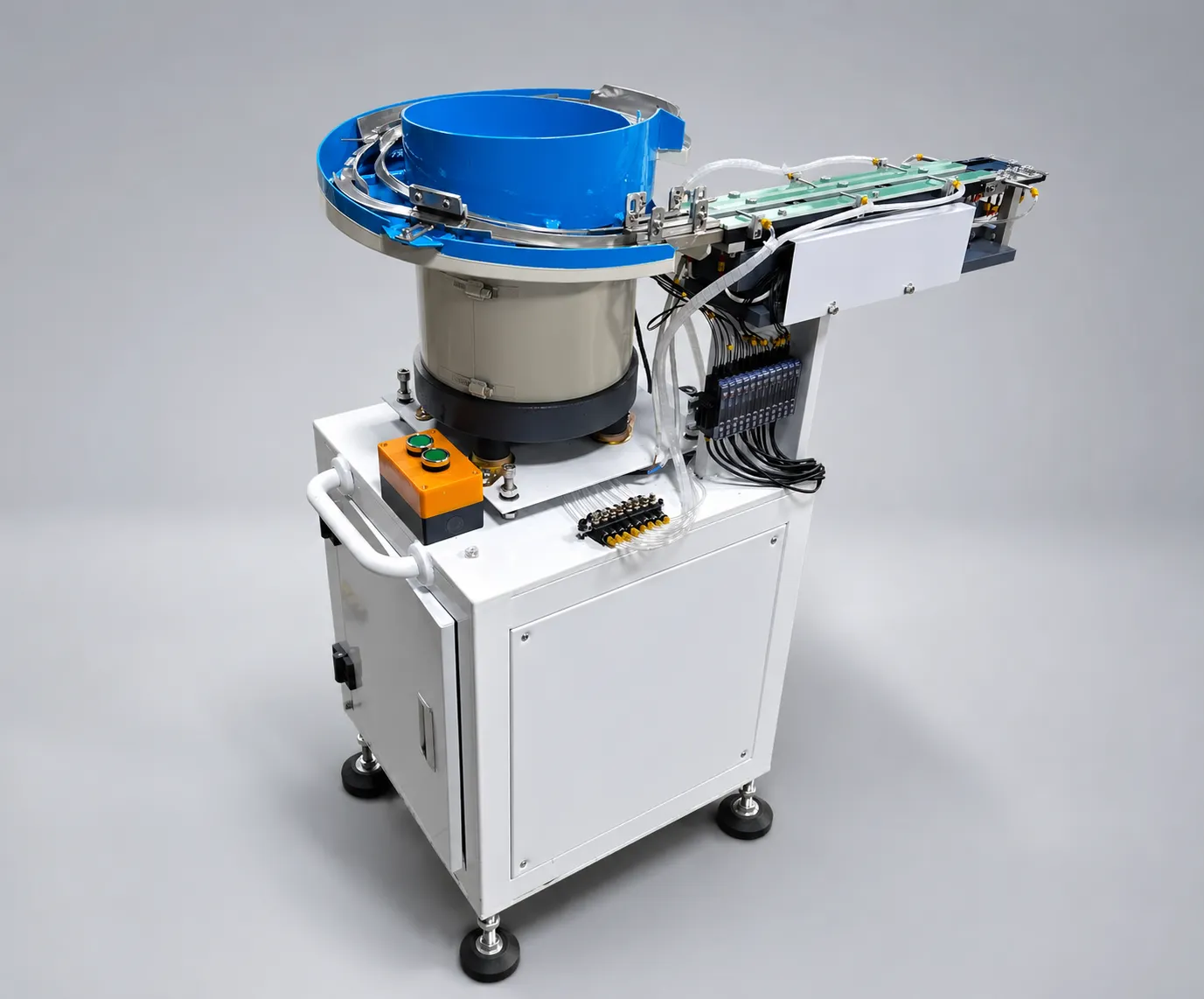
85% faster lens changeover — 25+ minutes down to under 5 — and 30% more throughput for a leading Chinese TV brand, using two JHIMS DPS-2 multi-channel lens vibratory feeders across 15+ lens types.
At a glance: who the customer is, what they produce, and what drove the changeover project.
The customer builds TV backlight strips and display modules in more than 15 lens types, changing lens 3–5 times per shift. Each changeover took 25 minutes even when the feeder was already tuned — one to two hours of lost output a day. In high-mix production the feeder is judged by how fast the line switches lens without an engineer on the floor, not by peak speed.
A leading Chinese TV brand manufactures TV backlight strips and display modules with more than 15 lens types across a highly diversified product mix. Production requires 3–5 lens-type changeovers per shift, and every changeover minute directly reduces output.
Before the DPS-2 installation, each changeover meant manually retuning vibration frequency, amplitude, track width and sensors for the next lens type — a process measured in tens of minutes, repeated several times per shift, across multiple lines.
Each changeover meant retuning frequency, amplitude, track width and sensors by hand, then running the feeder until orientation was acceptable — tens of minutes, several times a shift. Amplitude also drifted as the bowls emptied, so operators adjusted mid-shift even when the product did not change. Changeovers cost output, drift cost quality, and both took operator attention.
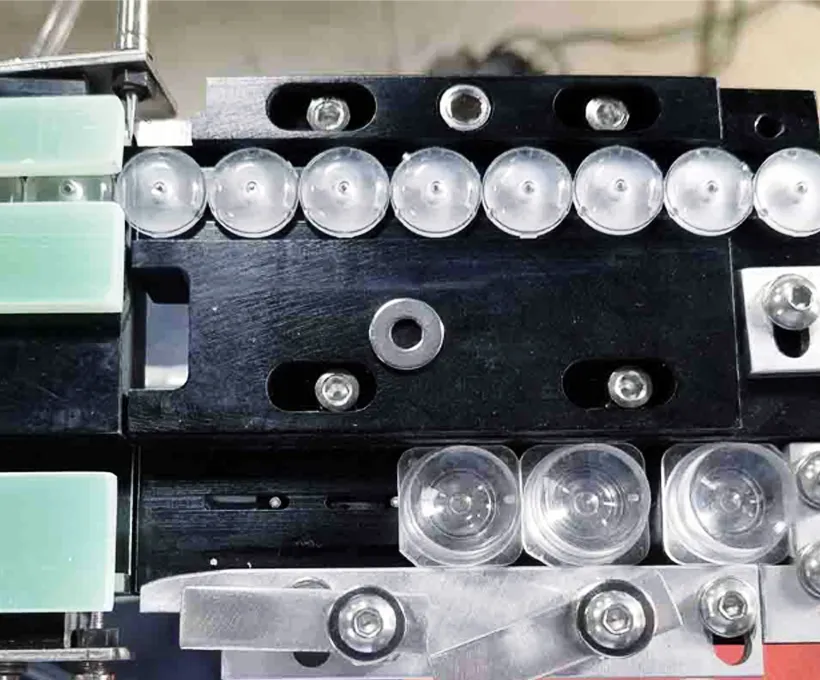
Two mechanisms caused it. Tuning is a manual search: frequency, amplitude, track width and sensor position interact, so a workable setting is found by iteration rather than calculation. Second, single-frequency drives resonate — bowl load shifts the spring-mass behavior — so the setting that orients well in a full bowl drifts as it empties, forcing adjustments between changeovers as well.
What a changeover involved before the project and what it involves now, step by step.
| Changeover step | Before (manual retuning) | After (DPS-2) |
|---|---|---|
| Select the product | Read notes, identify lens type | Select named profile on the HMI |
| Set frequency and amplitude | Hand-tuned by iteration | Recalled in under 3 seconds |
| Set track width | Mechanical adjustment | Tool-less adjustment about 2 minutes |
| Position sensors | Adjusted and checked by trial | Recalled with the profile |
| Confirm orientation | Run until acceptable | Verification 1–2 minutes |
| Total per changeover | 25+ minutes | Under 5 minutes |
| Operator skill required | Experienced technician | Line operator |
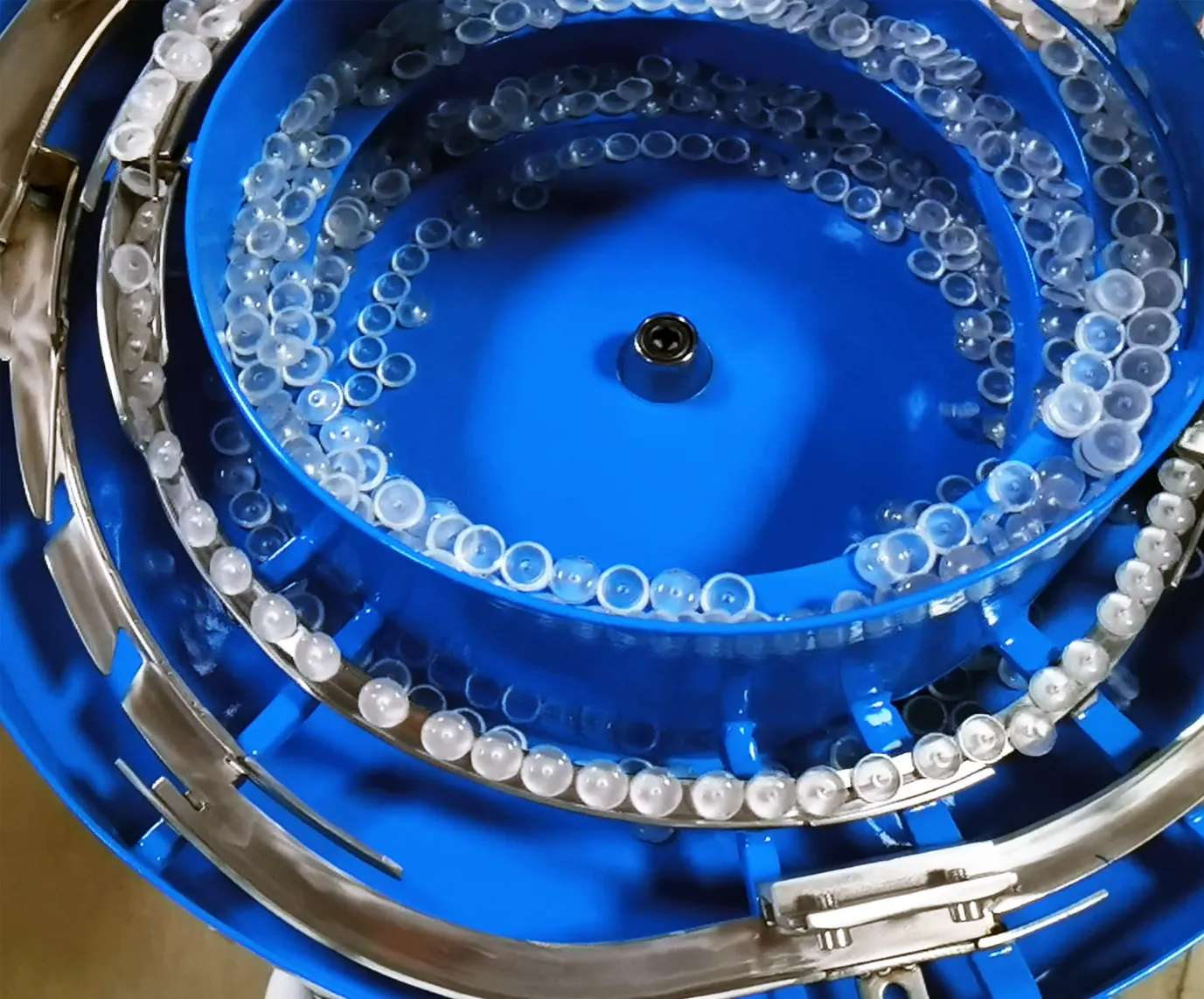
The four requirements define the machine delivered. Changeover in minutes: product selection, feed-path adjustment and orientation check finish in a few minutes without specialist tools. Stable feeding: rate and rejection hold from a full bowl to an emptying one. Multi-lens support: 15+ lens types from stored settings, not re-tooling. Low operator dependence: a line operator, not an engineer, performs the change.
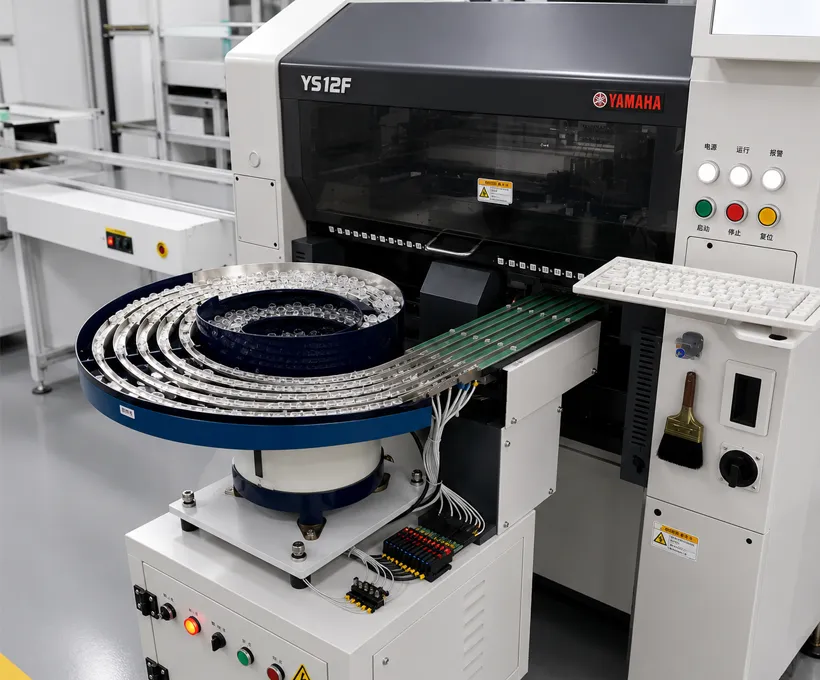
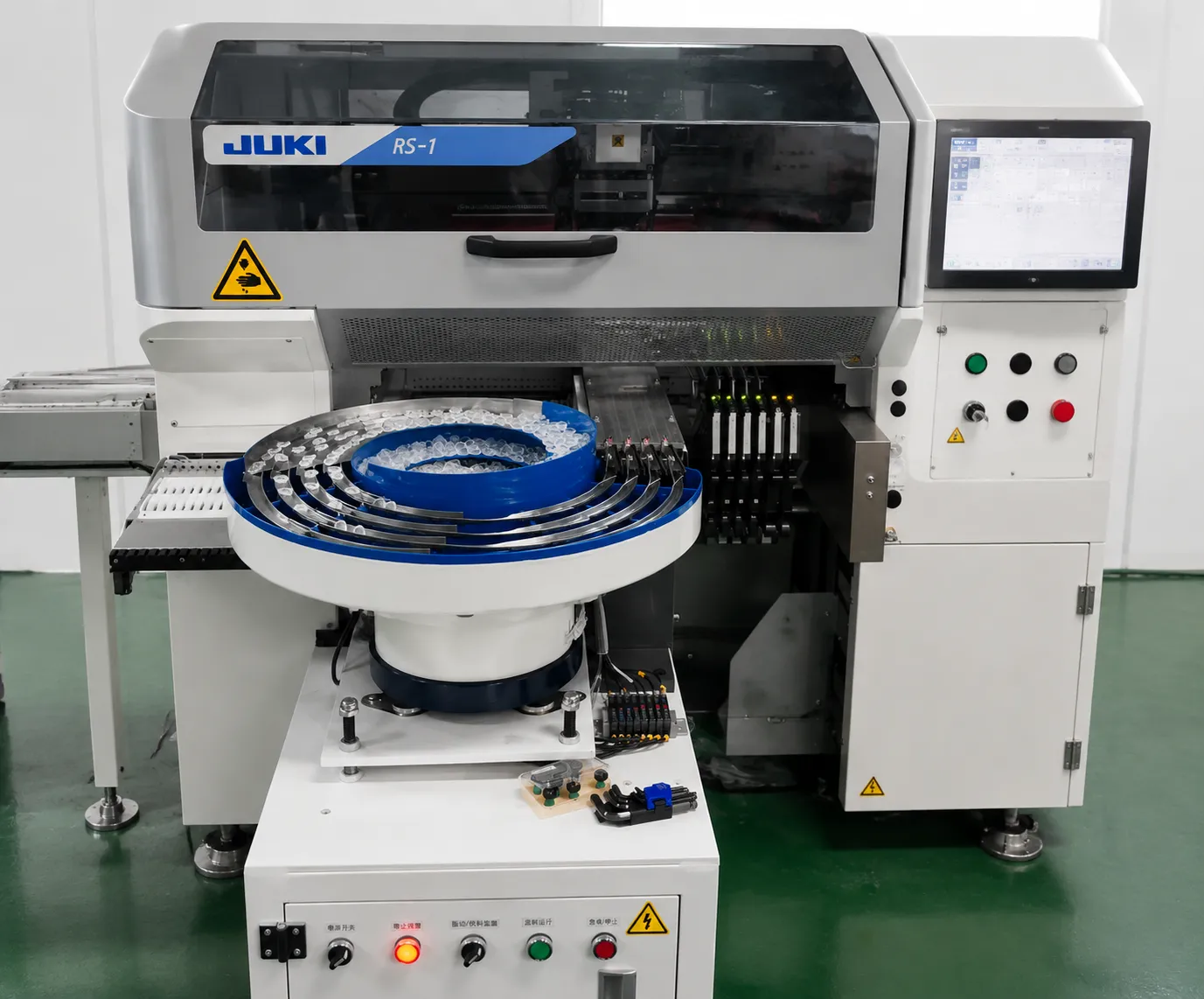
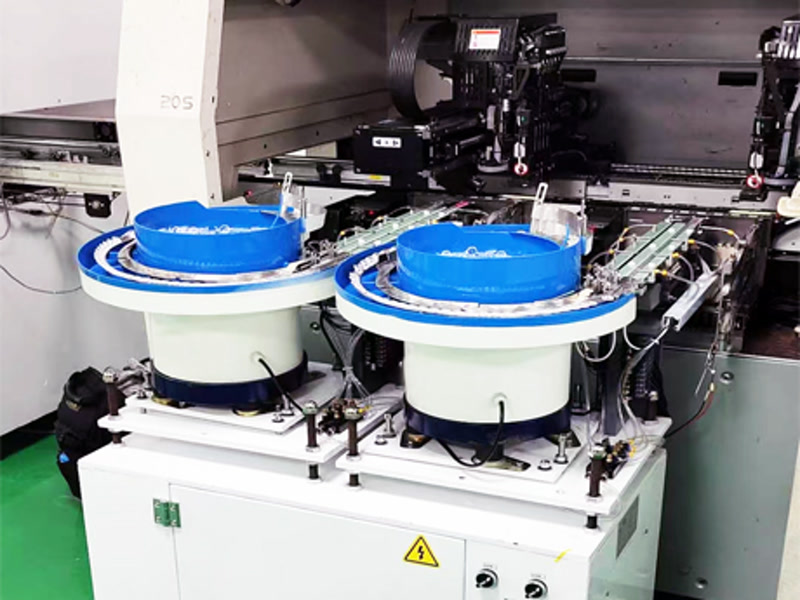
JHIMS supplied 2 DPS-2 lens feeders, configured as multi-channel vibratory units around the customer’s 15+ lens portfolio:
JHIMS supplied two DPS-2 lens feeders as multi-channel vibratory units for the customer’s 15+ lens portfolio. Each lens type is calibrated once — frequency, amplitude, track width, sensor position — and stored as a named profile in the Mitsubishi FX5U PLC: up to 50 profiles, recalled in under 3 seconds. Tool-less adjustment removes the mechanical work: changeover becomes a selection, not a tuning session.
From JHIMS sales records:
| Date | Item | Model | Qty |
|---|---|---|---|
| 2019-06-01 | Lens vibratory feeder | JHIMS DPS-2 | 2 |
| Feature | Details |
|---|---|
| Lens Diameter Range | 3mm – 25mm |
| Lens Types | Inner/outer three-feet, four-angle reflection lenses |
| Number of Tracks | 2 disc tracks standard, expandable to 10; 2 linear tracks |
| Transfer Speed | 0.5–1 second per lens (single channel) |
| Rejection Rate | Under 0.5% |
| Changeover | Under 5 minutes — PLC profile recall & tool-less track adjustment |
| PLC & HMI | Mitsubishi FX5U + 7-inch Weintek HMI (50 profiles) |
| Power Supply | 220V AC, 50–60Hz, single phase, 0.55 KVA |
Order record: two JHIMS DPS-2 lens vibratory feeders delivered 2019-06-01, each set for the customer’s lens range. The platform handles lens diameters of 3–25 mm and covers the three-foot and four-angle reflection lenses that make up most of the portfolio. Two disc tracks are standard (expandable to ten) with two linear alignment tracks at 0.5–1 s per lens per channel. Extra lanes add capacity without re-qualifying lenses in production.
Channel capacity: one channel transfers 0.5–1 s per lens, i.e. 3,600–7,200 UPH; four channels running together reach 14,400–28,800 UPH.
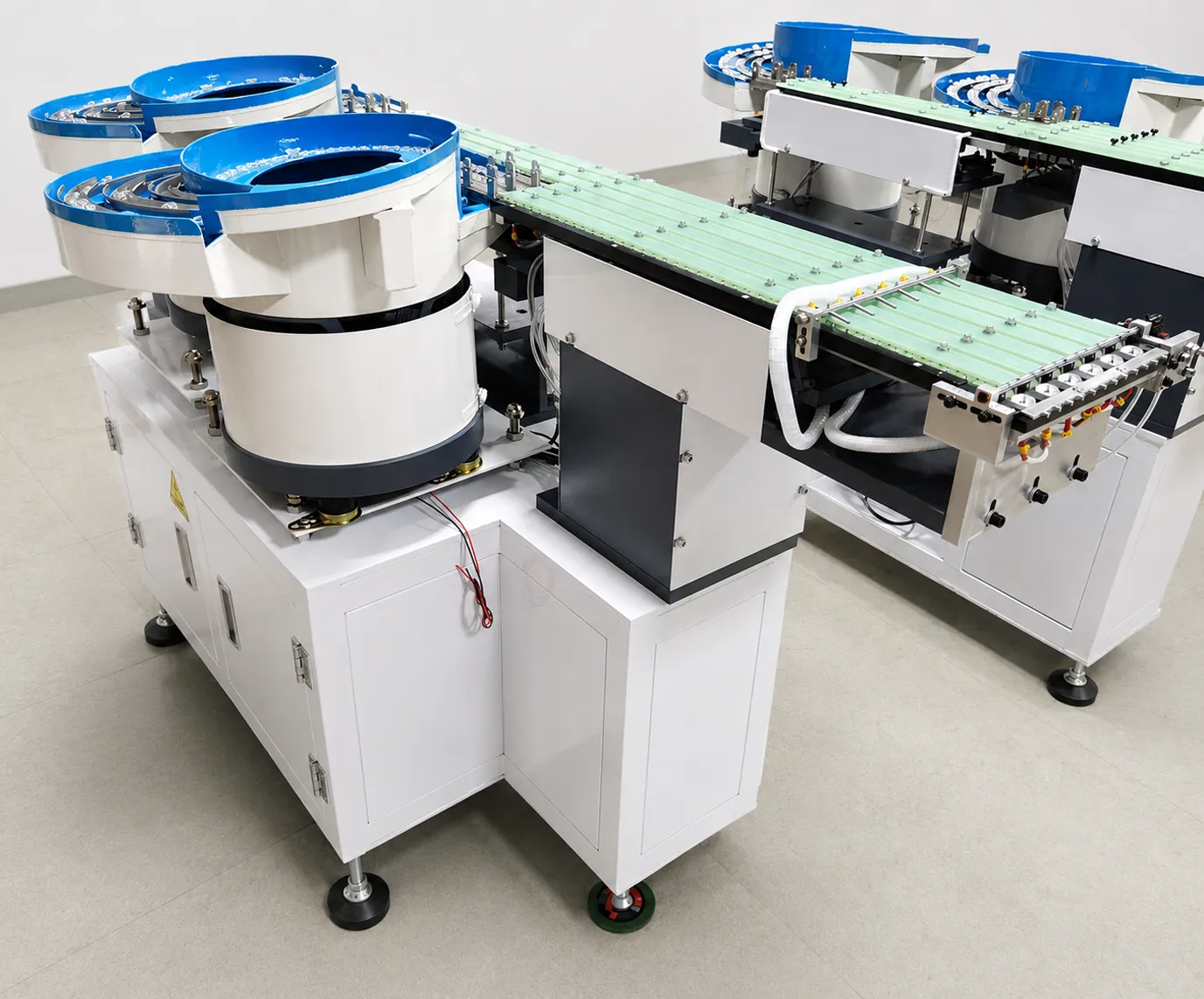
Implementation ran in three phases. First the lens portfolio was catalogued — 15+ types with their geometries, coatings and placement tolerances — defining the profiles needed. Second, each type was calibrated once and stored as a named profile, so commissioning knowledge stays in the machine, not with the engineer who tuned it. Third, the feeders were interfaced with the line and the profiles verified against the production nozzles.
After the DPS-2 lens feeder installation, the customer reported the following improvements (published JHIMS case record):
| KPI | Before | After (DPS-2) | Improvement |
|---|---|---|---|
| Changeover Time | 25+ minutes | Under 5 minutes | 85% reduction |
| Daily Downtime | 75–125 minutes | Under 20 minutes | 85% reduction |
| Throughput | Baseline | +30% | Significant |
Changeover fell from 25+ minutes to under 5 — an 85% reduction — and daily downtime from 75–125 minutes to under 20, also 85%. Throughput rose 30% against the pre-project baseline. The mechanism matters more than the headline: with the profile selected rather than the machine retuned, the saving does not depend on operator experience, and amplitude is held as the bowls empty.
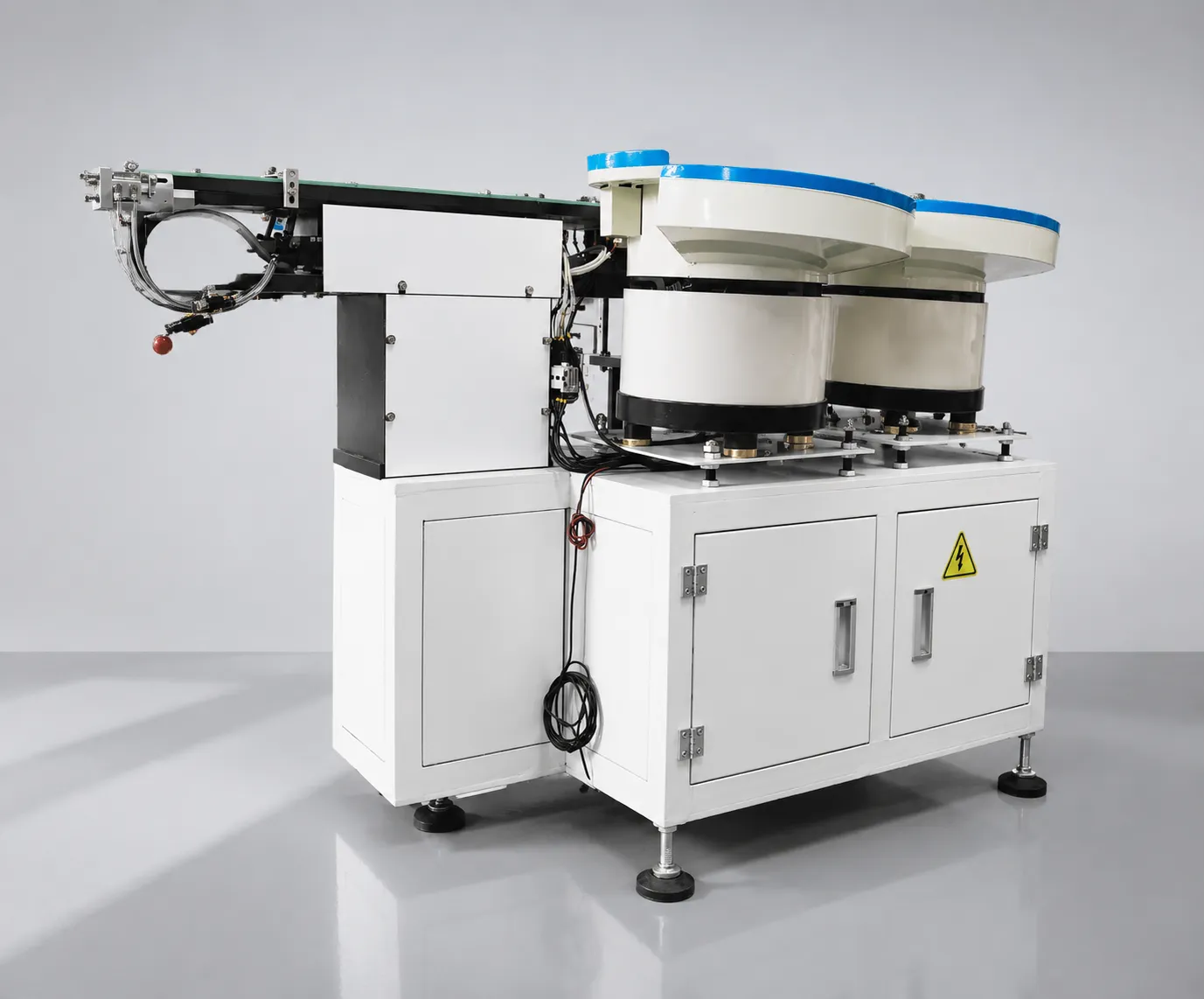
The DPS-2 lens feeder also cut operator dependence: named profile recall and tool-less quick changes let line staff switch lens types without specialist tuning, and the same units now run both the TV backlight and smartphone camera module lines.
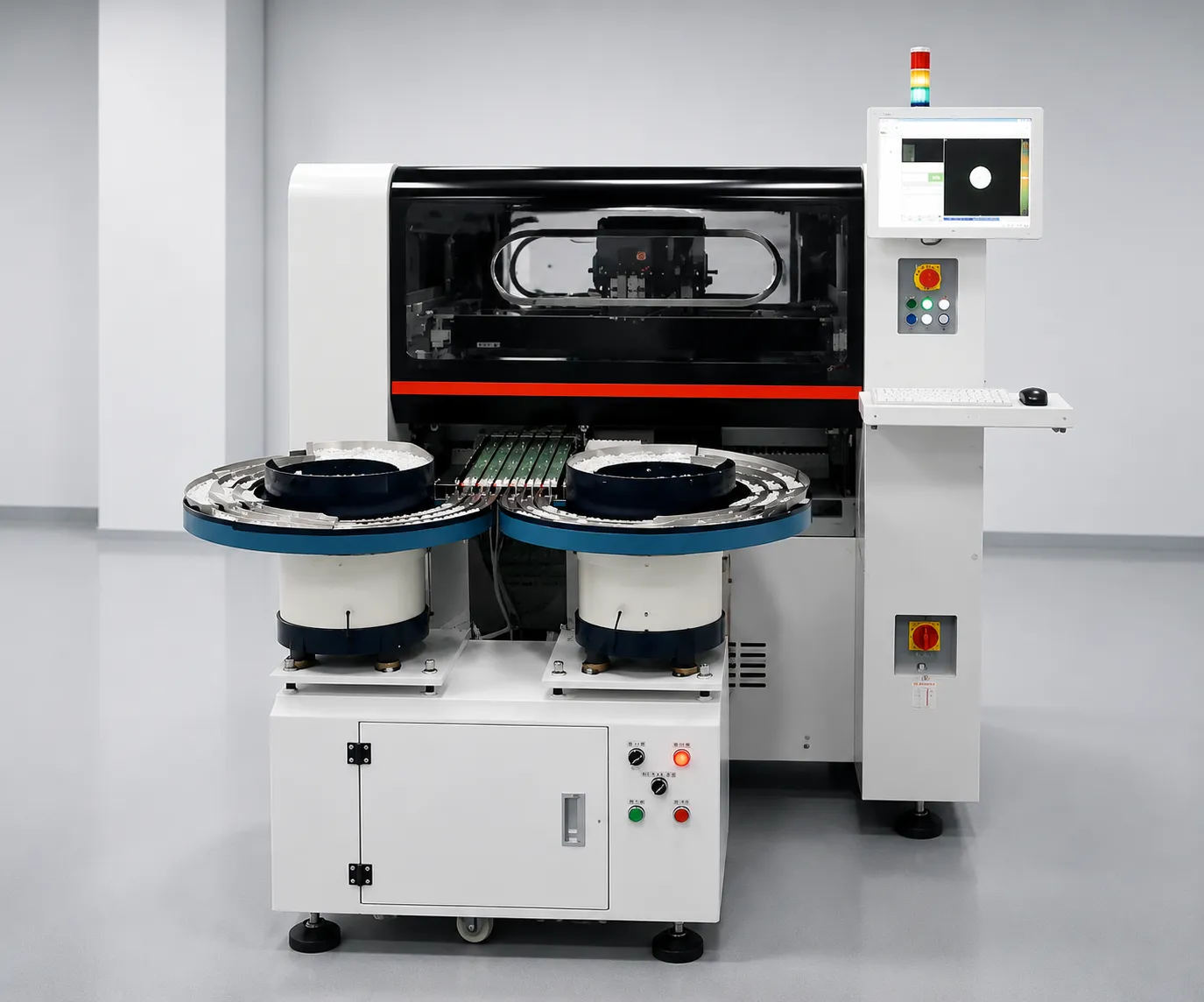
FeaturedJHIMS DPS-2 Lens FeederMulti-channel lens vibratory feeder – 0.5–1s per lens, under 0.5% rejection, PLC profile recall.View product →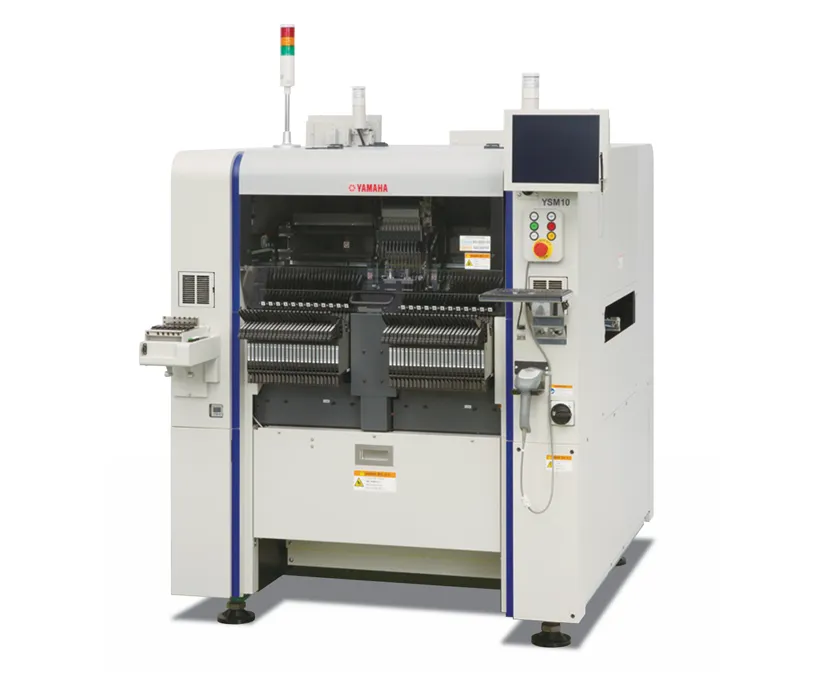 CompanionYamaha YSM10 MounterHigh-speed compact modular mounter – 46,000 CPH, 96 feeders, e-Vision + Side View.View product →
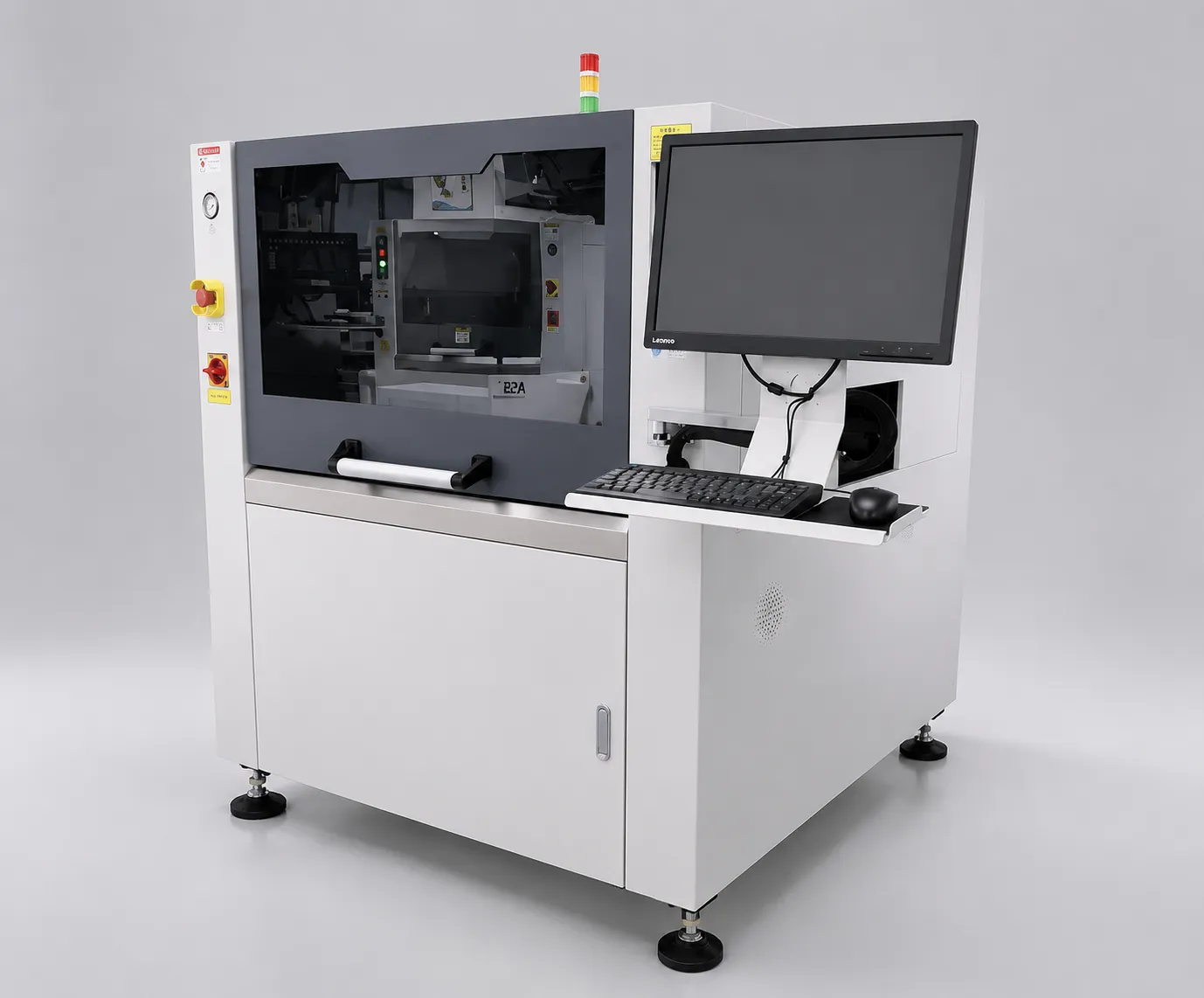 JHIMS L5 Solder Paste PrinterAutomatic SMT stencil printer – ±0.025mm accuracy with vision-aligned printing for the SMT line.View product →
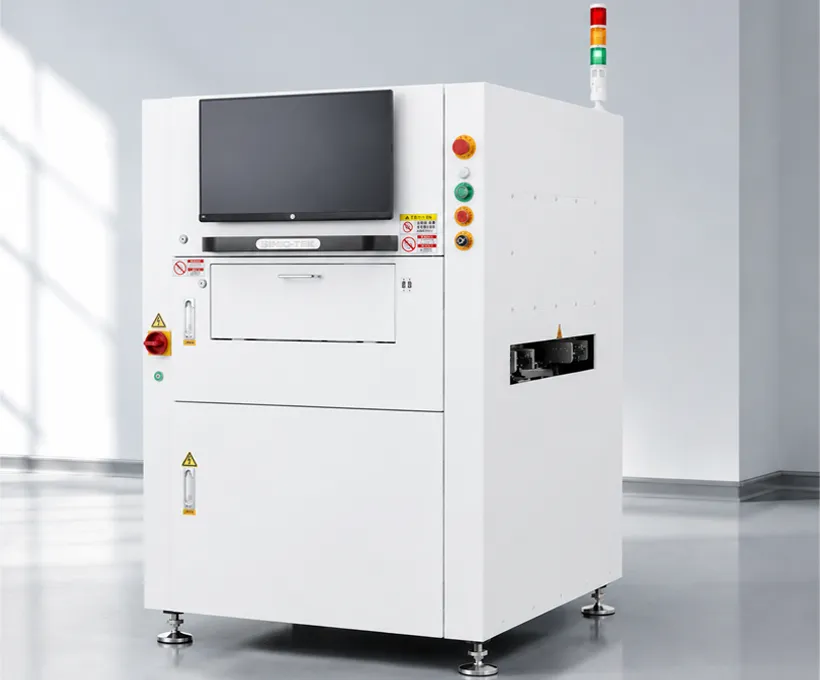 RelatedJHIMS S630 3D SPI3D solder paste inspection – verifies print quality before reflow.View product →
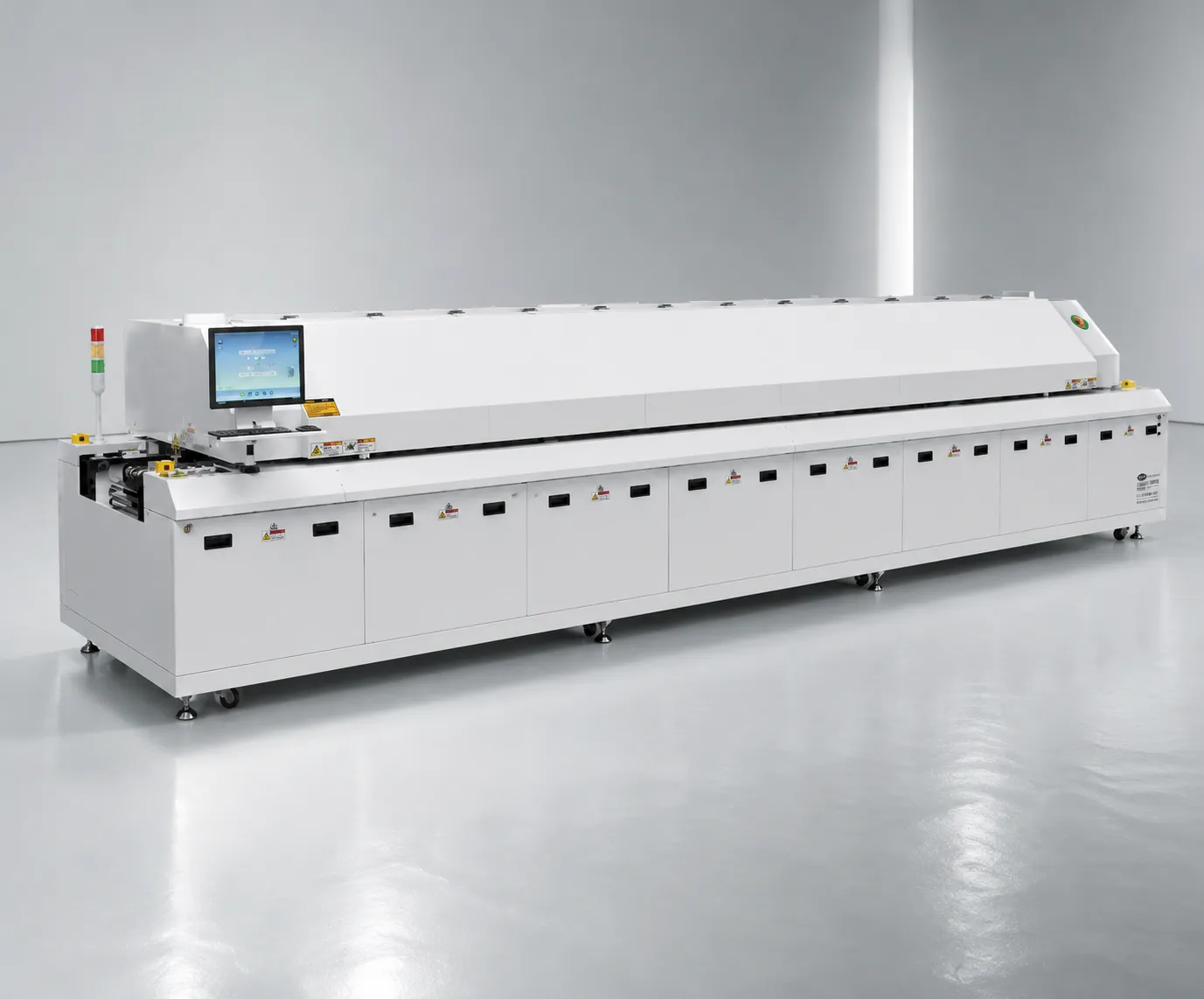 RelatedJHIMS R10 Reflow OvenLead-free hot-air reflow soldering for SMT lines – 20 heating zones, up to 300°C peak.View product →
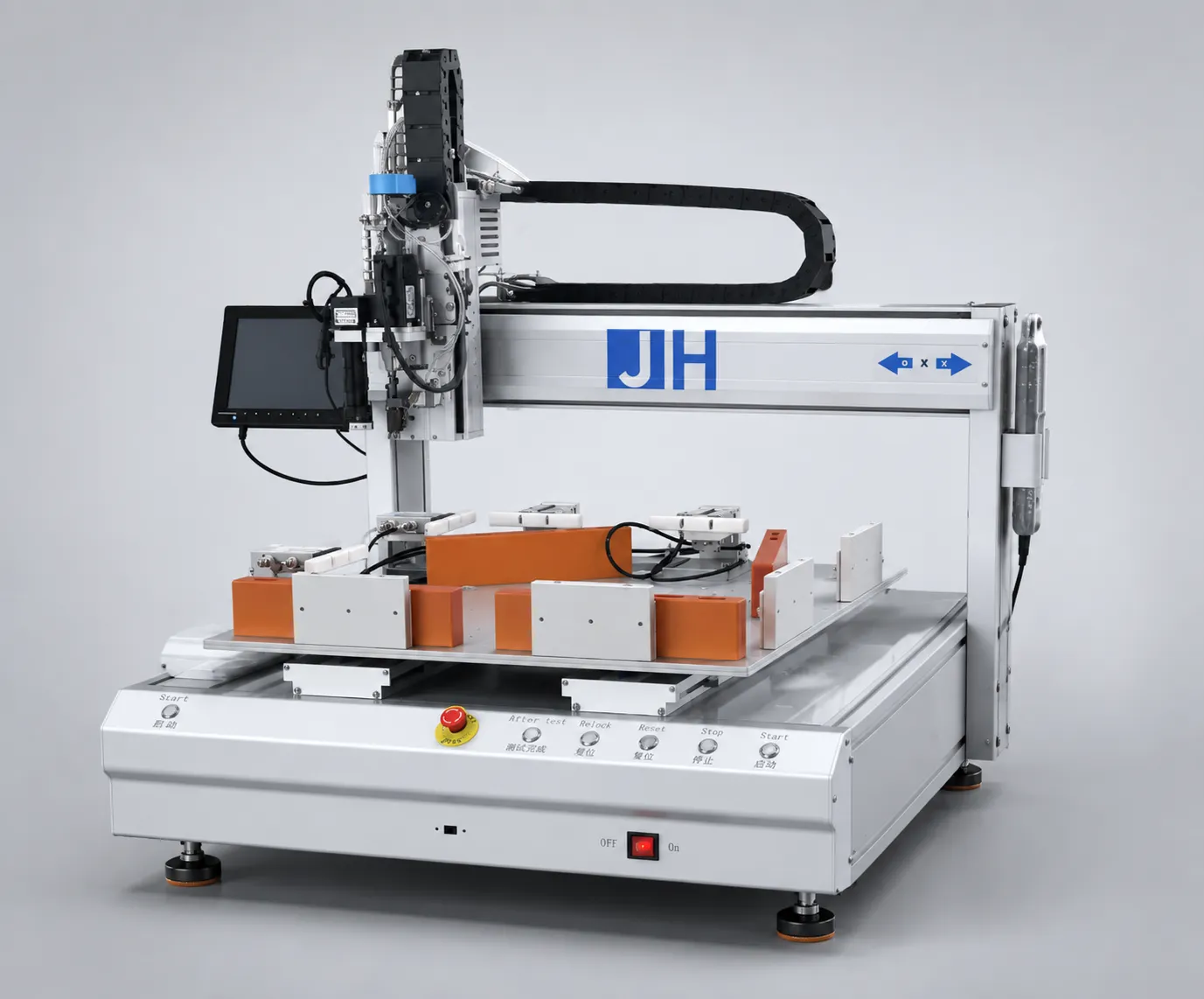 RelatedJHIMS ZM500 Screw MachineAutomated screw tightening and removal for electronics assembly.View product →
 DPS-2 Lens Vibratory Feeder FAQ40 real-world Q&As on the DPS-2: speed, channels, lenses, changeover and integration.Read article →Dual-Frequency vs Single-Frequency FeedingWhy dual-frequency vibration keeps amplitude stable as the bowl empties.Read article →
 Manual vs Automatic SMT Lens FeedingCompare manual placement vs automatic lens feeding for high-mix production.Read article →
 Lens Feeder Case Study: TV Backlight XiamenThroughput from 6,000 to 10,000 CPH and 87% fewer jams for a Xiamen TV panel leader.Read article →JHIMS Lens Feeder ROI AnalysisPayback analysis for automatic lens feeding vs manual placement.Read article →DPS-2 Troubleshooting GuideDiagnose feeding, jamming and calibration issues on the DPS-2.Read article →
Send your lens samples for a free 48-hour DPS-2 lens feeder test — we will validate throughput and rejection on your line, and we reply within 12 working hours (Mon–Sat, 09:00–23:00 China Standard Time, UTC+8).