Address
Building A1, Runteng Industrial Park, No. 4 Xishan Road, Longteng Community, Shiyan Subdistrict, Bao'an District, Shenzhen 518000, China
Work Hours
Monday to Saturday: 09:00 – 23:00 (UTC+8)
Sunday: closed
Address
Building A1, Runteng Industrial Park, No. 4 Xishan Road, Longteng Community, Shiyan Subdistrict, Bao'an District, Shenzhen 518000, China
Work Hours
Monday to Saturday: 09:00 – 23:00 (UTC+8)
Sunday: closed

DPS-2 lens vibratory feeder for SMT pick-and-place: how it works, machine compatibility, who it suits, pricing and ROI, and installation on an existing line.
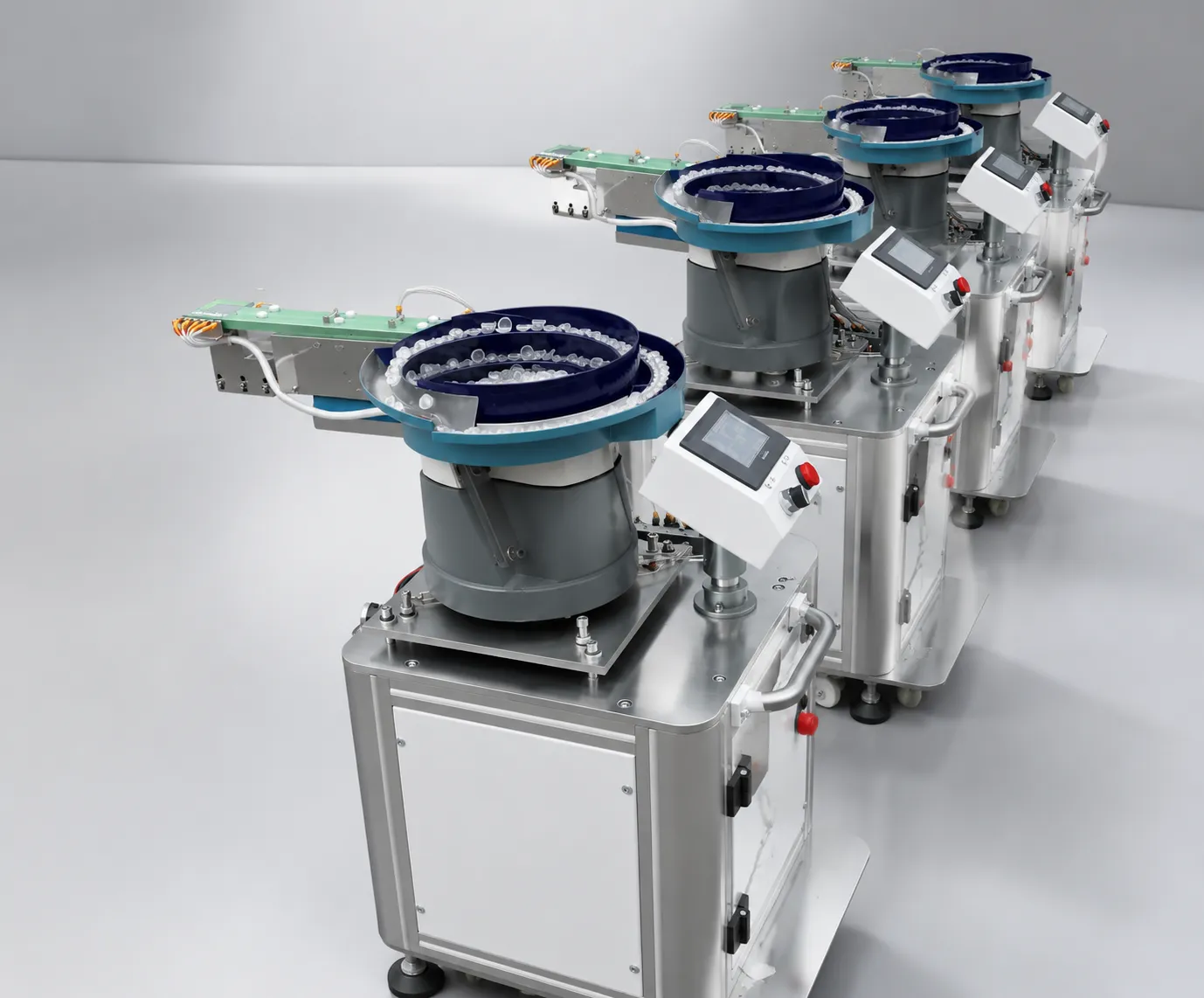
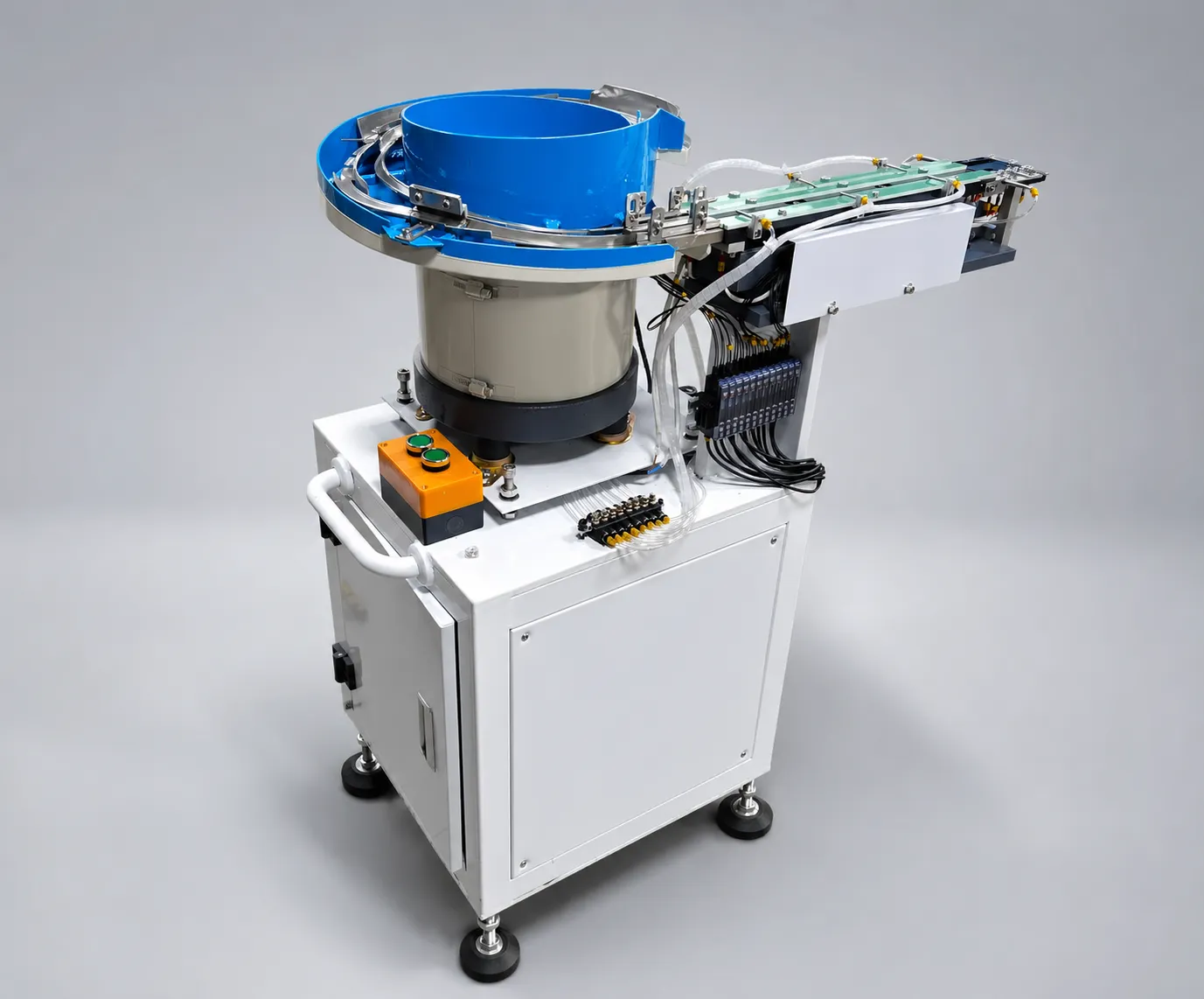
JHIMS DPS-2 automatic lens vibratory feeder for SMT pick-and-place lines: 0.5–1 second per lens per channel, <0.5% rejection, 3–25 mm lens range, dual-frequency drives with independent PID control, and interface kits for Hanwha, Yamaha, JUKI, Samsung, Hitachi and Fuji machines.
| Item | Specification |
|---|---|
| Lens diameter range | 3mm – 25mm |
| Lens types supported | Inner/outer three-feet, four-angle reflection lenses |
| Bowl alignment tolerance | ±1mm (based on lens shape and pin dimensions) |
| Transfer speed | 0.5–1 second per lens (single channel) |
| Rejection rate | <0.5% typical after profile optimization |
| Number of tracks (standard) | 2 disc tracks, expandable to 10 |
| Linear tracks | 2 direct vibration tracks |
| Vibration architecture | Dual-frequency: circular 50–120 Hz + direct 100–200 Hz, independent PID |
| Manual controller | 2 groups (circular + direct) |
| Power supply | 220V AC, 50–60Hz, single phase, 0.55 KVA rated |
| Dimensions / weight | 1050 × 700 × 750 mm, approx. 130 kg |
| Anti-static option | ESD-safe bowl coating available |
All values from the official DPS-2 specification sheet; configuration options can change dimensions and weight.
The feeding path is a straight chain from bulk parts to placed components:
Input hopper → vibratory bowl feeding → spiral track metering → orientation gate → sensor verification → pickup point → P&P machine vacuum nozzle.
Two details in that chain decide how well the feeder performs in production. The first is metering: the spiral track releases lenses at a controlled rate, so the orientation gate sees parts one at a time rather than as a competing crowd — which is where most jamming originates.
The second is verification: the sensor confirms a lens has arrived at the pick-up point in the expected orientation before the placement machine is signalled, so the nozzle never waits or reaches for a lens that is not properly presented. Everything upstream exists to make those two points reliable — the bowl circulates, the track meters, and the control loop holds the amplitude that makes timing repeatable.
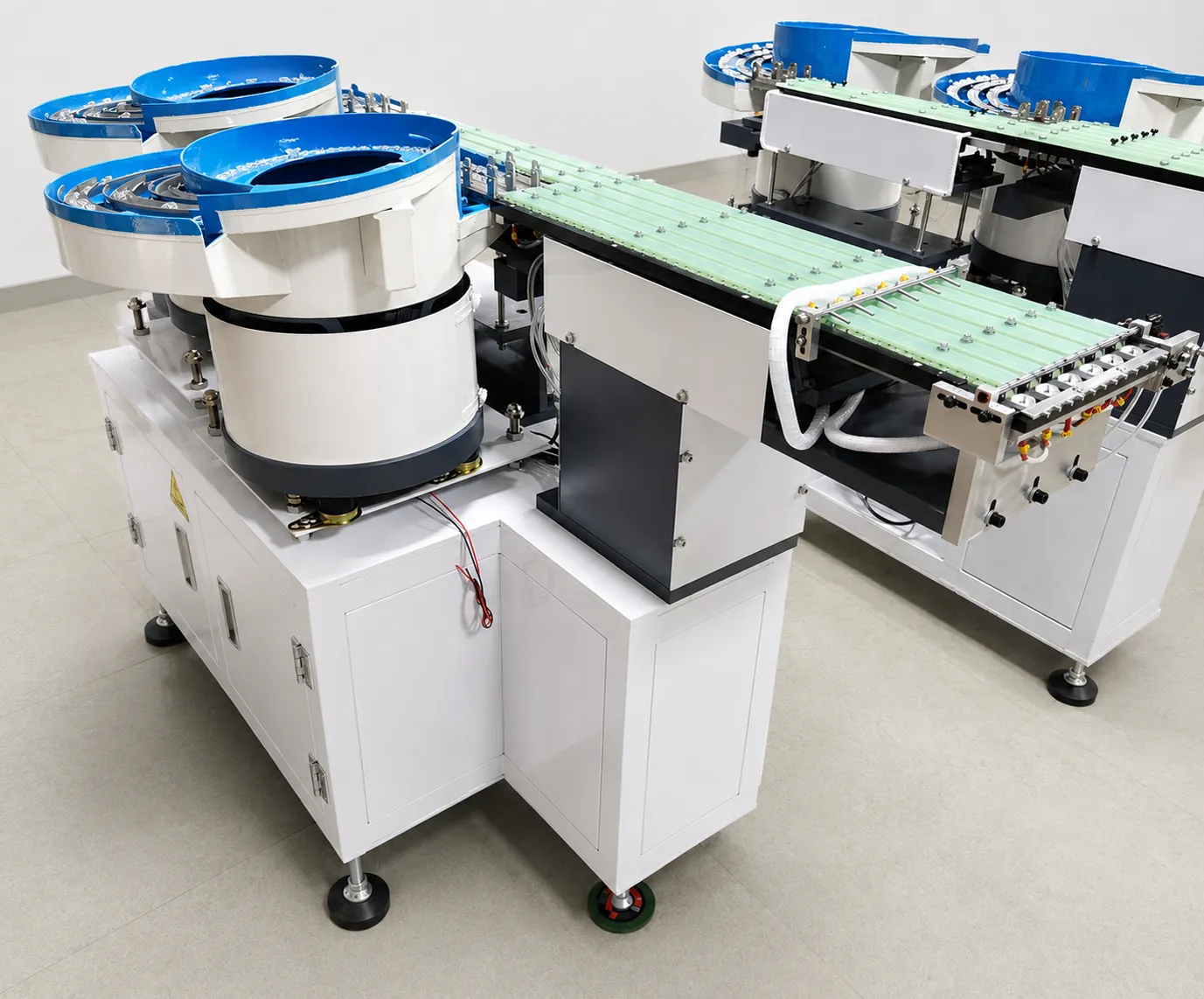
The DPS-2 runs dual-frequency vibration: two independent electromagnetic drives with separate PID controllers. The circular channel meters bulk movement; the direct channel performs precision final alignment at 100–200 Hz. Because the drives are mechanically decoupled, bowl load changes never disturb track alignment — amplitude stays within <5% from full to empty bowl.
The physics behind this — resonance vs. load, and why single-frequency systems drift 15–30% — is explained in detail in our dual vs. single frequency technical comparison. Multi-channel configurations scale throughput linearly: each additional channel adds its own independent feeding path.
The practical consequence is that the two jobs the feeder has to do can be optimized separately. Bulk movement wants amplitude that keeps lenses circulating without throwing them; final alignment wants a stable, gentle motion that presents the part squarely at a fixed position.
A single drive has to compromise between them, which is why feeders of that type are usually tuned to be safe on alignment and slower than necessary on movement. Separating the drives lets the circular channel run at the rate the bowl needs and the direct channel be tuned purely for presentation — and because each has its own PID loop, neither needs re-tuning when the other changes or when bowl load varies during a shift.
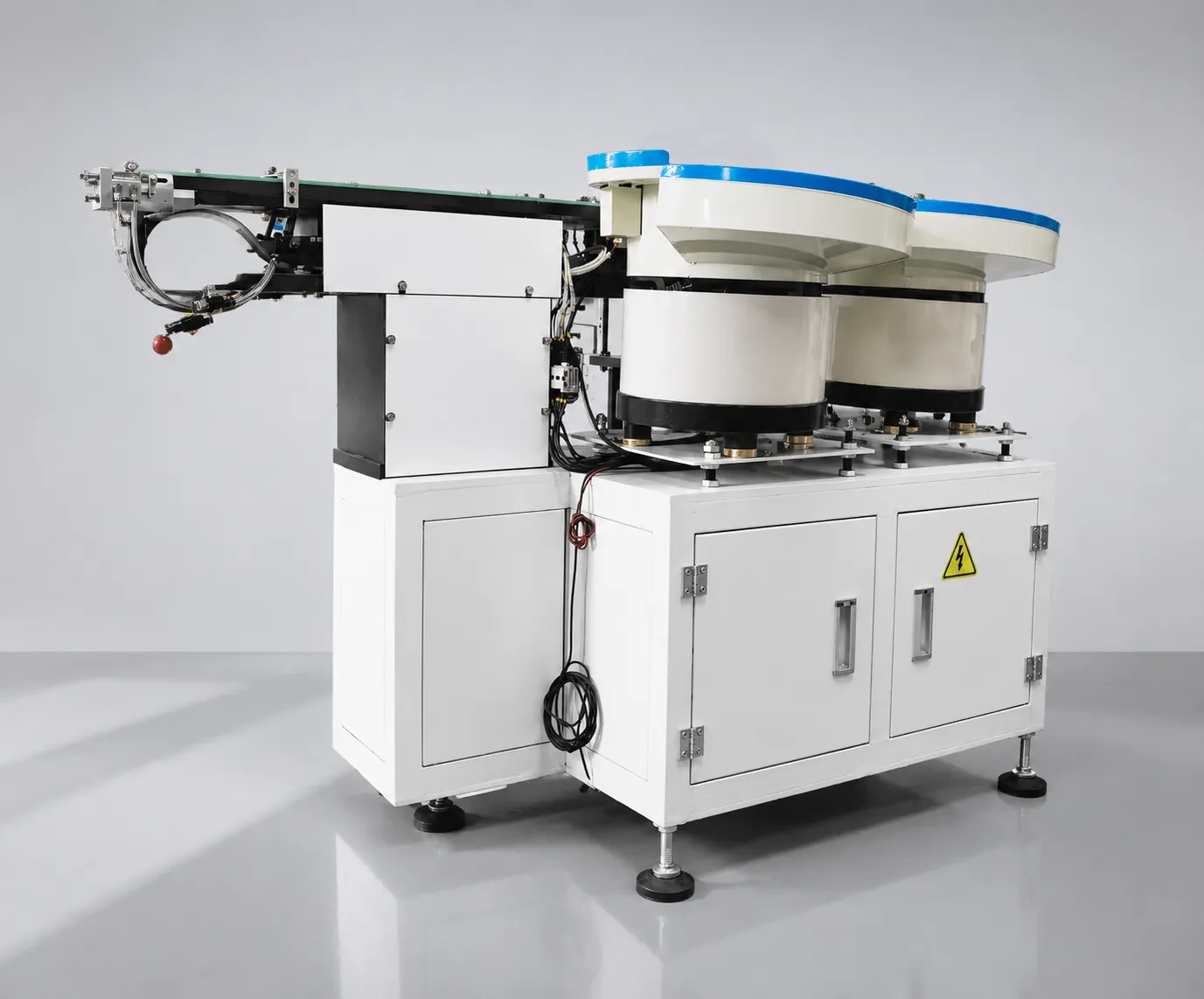
| Brand | Series Examples | Status |
|---|---|---|
| Hanwha | HM520, Decan | Compatible — interface kit included |
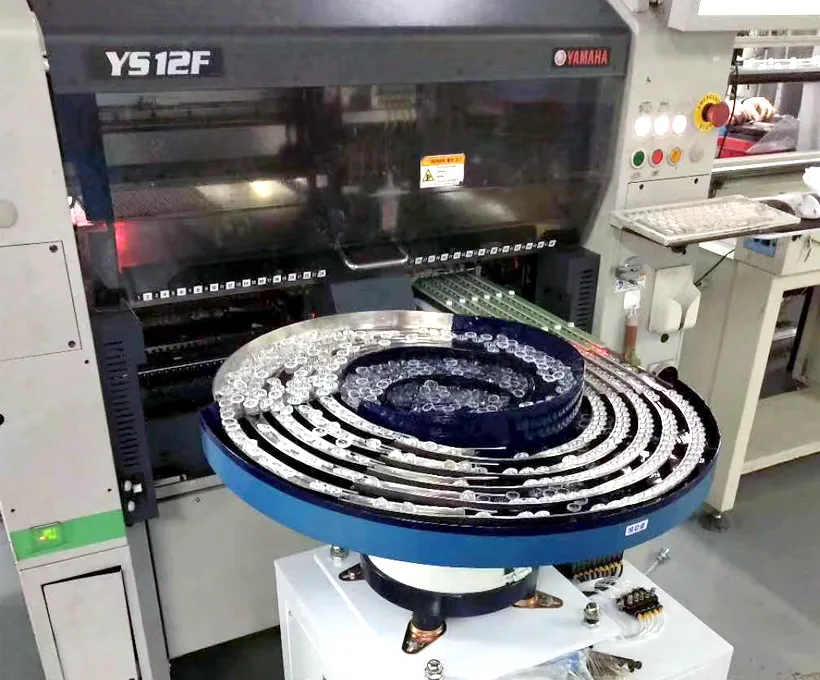
| Yamaha | YSM20, YSM10 | Compatible — interface kit included |
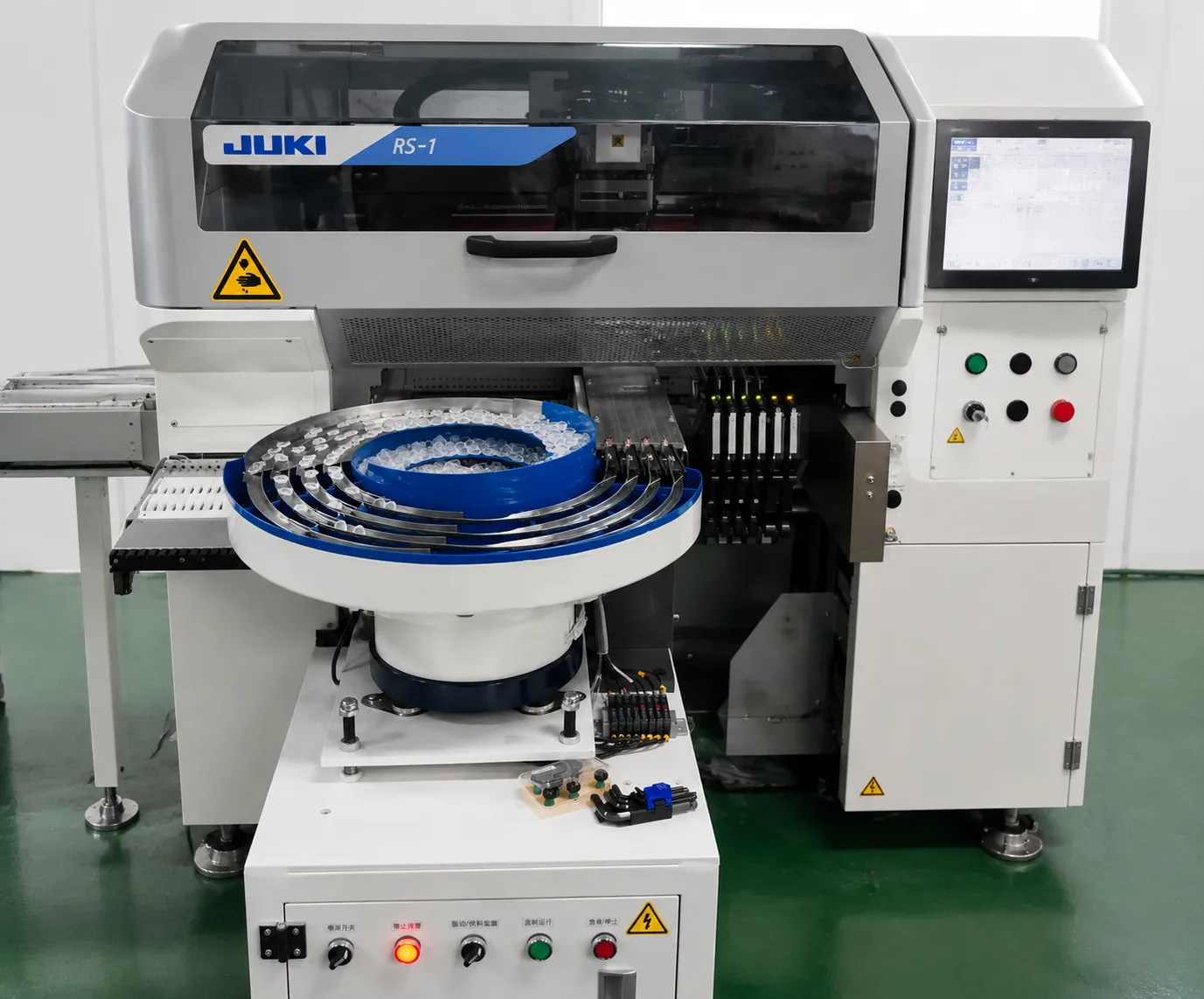
| JUKI | RS-1, RX-7 | Compatible — interface kit included |
| Samsung | SM series | Compatible — interface kit included |
| Hitachi | G5, SIGMA | Compatible — interface kit included |
| Fuji | NXT, AIMEX | Compatible — interface kit included |
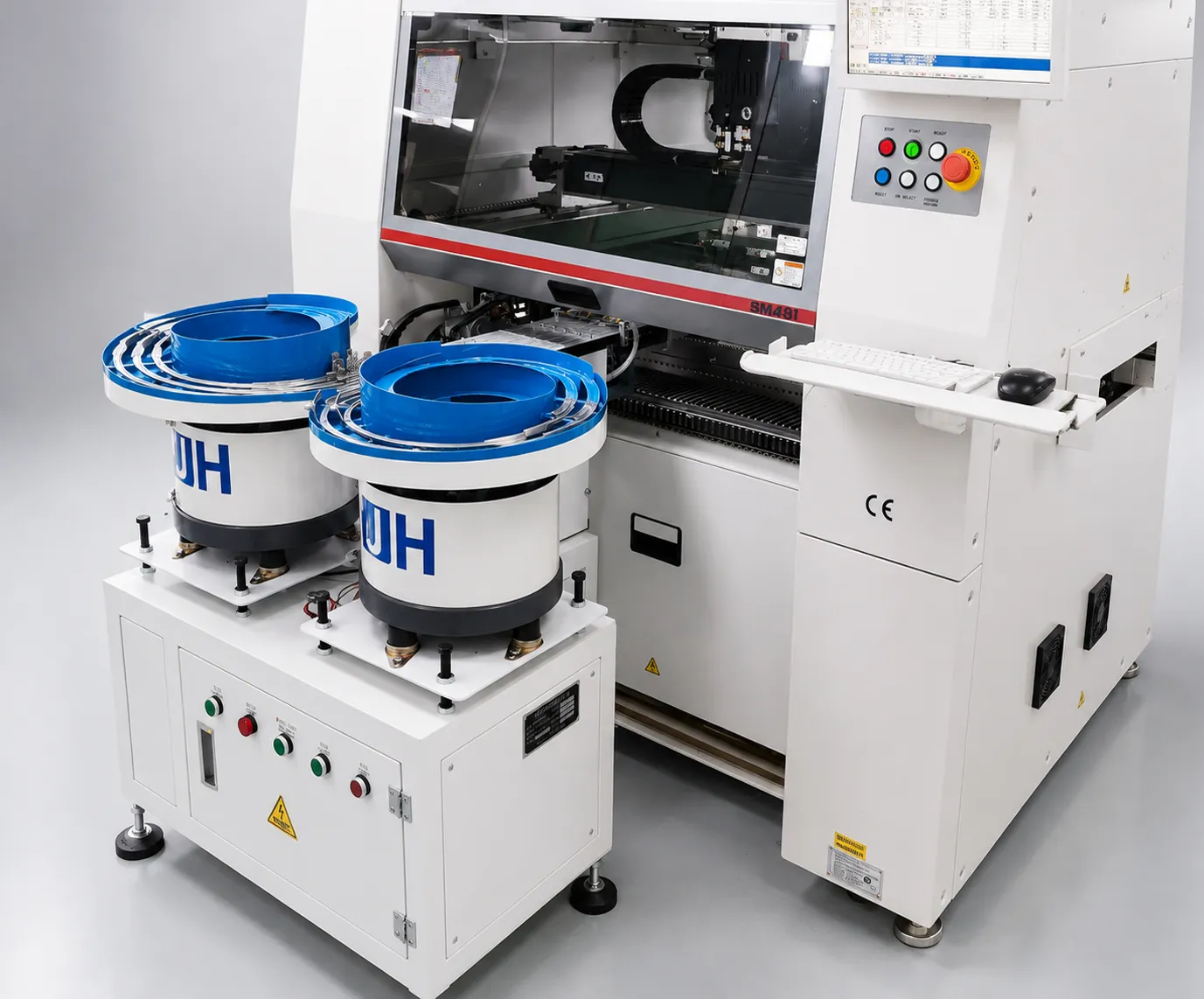
Compatibility is delivered as an interface kit rather than a bracket drawing, because what matters is the combination of pick-up geometry and machine signal. The kit positions the feeder so the nozzle travel to the lens is short and the approach is square, and it defines how the feeder is triggered relative to the placement cycle so feeding and picking never race each other.
That is also what makes the installation reversible: the placement machine is not modified, so the feeder can move to another line or another machine of the same brand without a redesign, and the customer’s existing maintenance arrangements remain valid.
What is verified for each machine before shipment, beyond the interface kit itself.
| Verification item | Method | Why it matters |
|---|---|---|
| Pick-up geometry | Platform positioned from the head and nozzle travel | Short, square pick means fewer nozzle corrections |
| Presentation height | Set with the production nozzle fitted | Intermittent pick failures usually trace back to height |
| Trigger interface | Feeder, machine or line PLC initiation agreed at commissioning | Feeding and picking must never race each other |
| Nozzle compatibility | Checked against the nozzle or vacuum cup in use | A lens can be lifted only by a suitable contact |
| Lens profile | Created from the customer’s own lenses | Tooling must suit the real part, not a sample |
| Changeover routine | Profile recall and tool-less adjustment practised during handover | The saving depends on operators using it |
| End-of-run handling | Procedure agreed for recovering lenses from the bowl | Prevents mixing between product batches |
| Reversibility | No modification to the placement machine | Keeps existing service and qualification valid |
“Compatible” means the mechanical/electrical interface is supported and shipped as a brand-specific kit. For your exact machine model, confirm during sample testing or with JHIMS engineering — installation typically completes in 4–8 hours with remote video guidance.
Read the two lists as an economic test rather than a product description. Feeding automation pays back through labor, yield and predictability, so it fits where at least two of those three are significant: high volume with repetitive placement, several lines supervised by few operators, manual feeding rejection that costs more than the machine, or a mix where orientation quality is visible in the finished item.
It does not fit where the monthly volume is genuinely low, where the product changes so often that tooling would be rebuilt before it amortised, or where lens handling is already automated to an acceptable standard — in those cases the honest answer is that the arithmetic does not yet justify the investment.
A free 48-hour sample test settles the question with your own lenses before any commitment.
The DPS-2 base configuration starts at approximately $6,000 USD (indicative, configuration dependent). Typical configured units: $8,000–$12,000 depending on channel count, interface kit, and options (anti-static/ESD, cleanroom, Siemens PLC, vision integration). DDP shipping available; contact [email protected] for an itemized quotation.
Typical payback runs 6–11 months, driven by labor savings (~85% lower annual labor cost) and material savings (rejection from 5–15% down to <0.5%). Estimate your own payback with the calculator on the manual vs. automatic decision guide.
Two points are worth adding to the published figures. First, treat the base price as a starting point rather than a quotation, because channel count and interface kit move the number more than any option: a two-channel machine and a six-channel machine are different projects even though both are DPS-2.
Second, calculate payback on the cost the feeder removes rather than on its own price — labor released per shift, lenses no longer scrapped through manual handling, and output recovered from the stops manual feeding caused. Configurations are quoted per project after a sample test, so the quotation reflects the machine you actually need.
Very few lens feeders are installed on a new line. In most projects the feeder arrives at a factory that is already producing, which means the installation has to fit around running production rather than the other way round. Four steps make that practical.
First, the mounting position is set from the placement head so the nozzle travel to the lens is the shortest useful move and the pick is square; this is measured rather than estimated, because a small error in presentation height appears later as intermittent pick failures. Second, the trigger interface is agreed — feeder-initiated, machine-initiated or line-PLC-initiated — so feeding and picking are sequenced and never compete.
Fourth, the line is run with production lenses while the feeder is monitored, so the accepted behavior is the behavior measured on real product.
Because the DPS-2 has its own control cabinet and runs on single-phase 220 V, the installation normally needs no electrical work beyond a supply point and no modification to the placement machine. That matters more than it sounds: an installation that leaves the host machine untouched does not invalidate the customer’s existing service agreement, does not require machine requalification, and can be reversed if the line is reconfigured.
For a production manager, the ability to add feeding automation without disturbing a qualified process is often the deciding factor — not the feeder’s rated speed.
Installation sequence as normally run, with what is verified at each step.
| Step | Activity | Verified by |
|---|---|---|
| 1 | Site survey: supply, air, floor space and machine position | Recorded before shipment |
| 2 | Mounting and platform positioning from the head | Measured against nozzle travel |
| 3 | Electrical and pneumatic connection to the supply point | Functional check |
| 4 | Trigger interface with the placement cycle | Cycle test in production mode |
| 5 | Profile creation and verification on customer lenses | 10 test lenses pass clean |
| 6 | Changeover practice with the customer’s operators | Operator performs a change unaided |
| 7 | Production run monitoring | Rejection and feed rate compared with burn-in report |
Ready to verify with your own lenses? Send 500–800 samples per type for the free 48-hour test — see day-to-day support coverage and the SMT lens feeding glossary for background terminology. See the machine running on our official JHIMS YouTube channel, or message a JHIMS engineer on WhatsApp.
 RelatedDPS-2 Full SpecificationsDPS-2 Full SpecificationsView product →
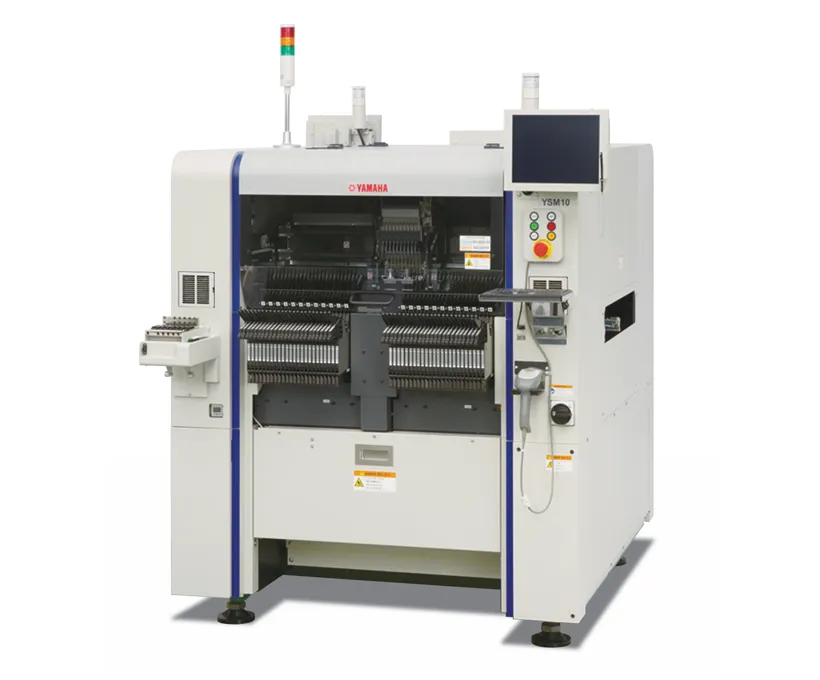 CompanionYamaha YSM10 MounterHigh-speed compact modular mounter – 46,000 CPH, 96 feeders, e-Vision + Side View.View product →
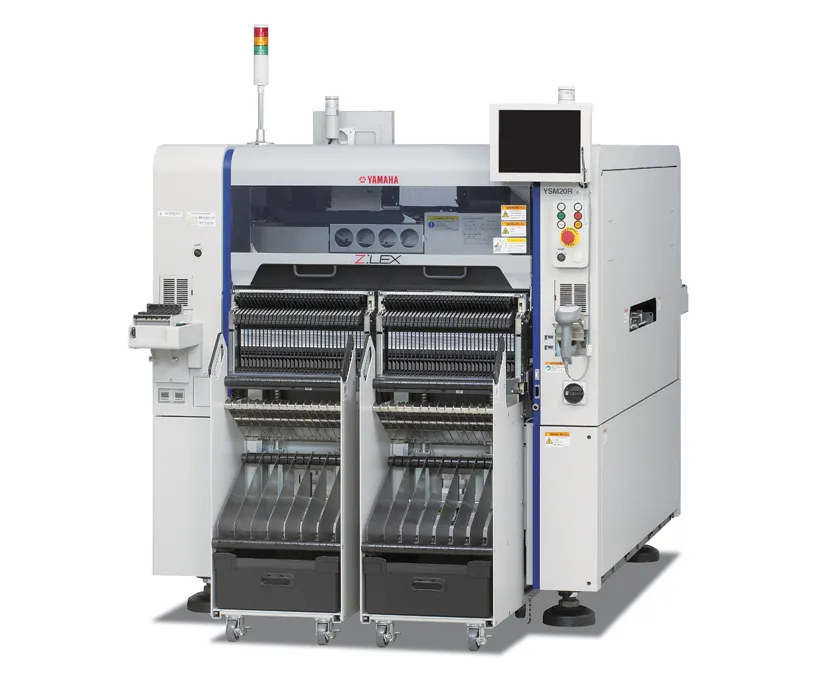 Yamaha YSM20R Pick and Place95,000 CPH modular mounter — pairs with DPS-2 lens feeding lines.View product →
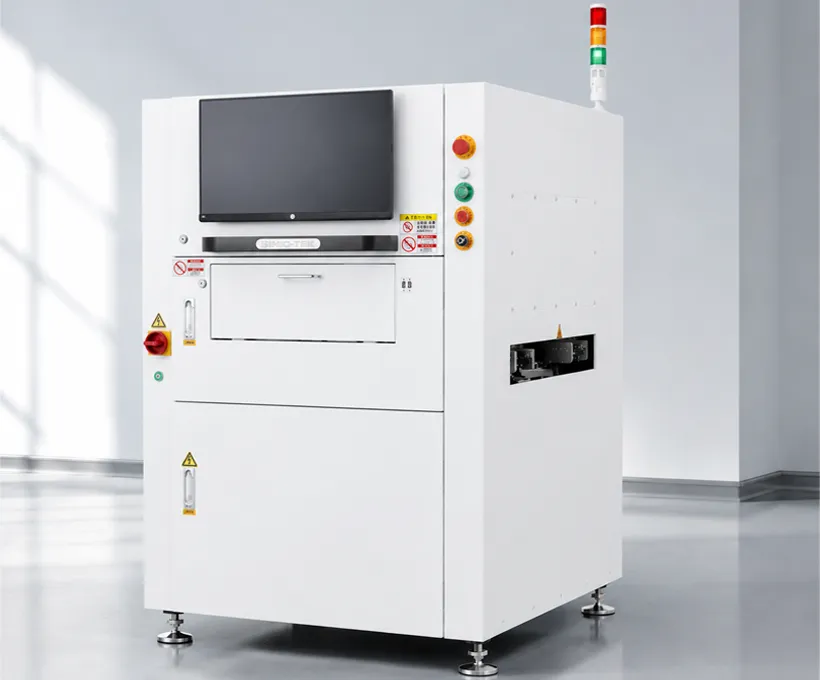 3D SPI Solder Paste InspectionCatch printing defects before reflow with 100% 3D paste inspection.View product →
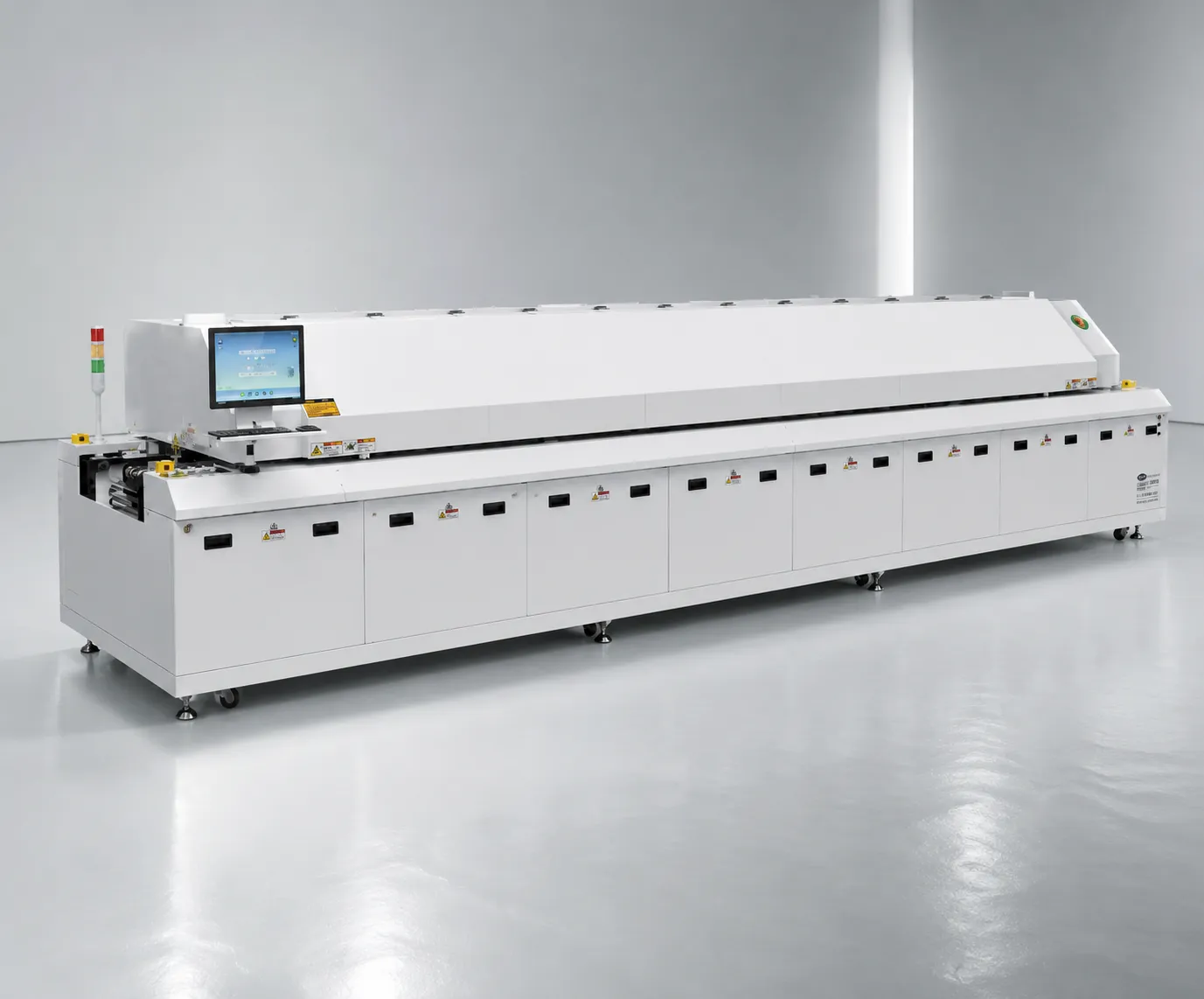 R10 Reflow OvenLead-free hot air reflow with stable thermal profiling for lens assemblies.View product →
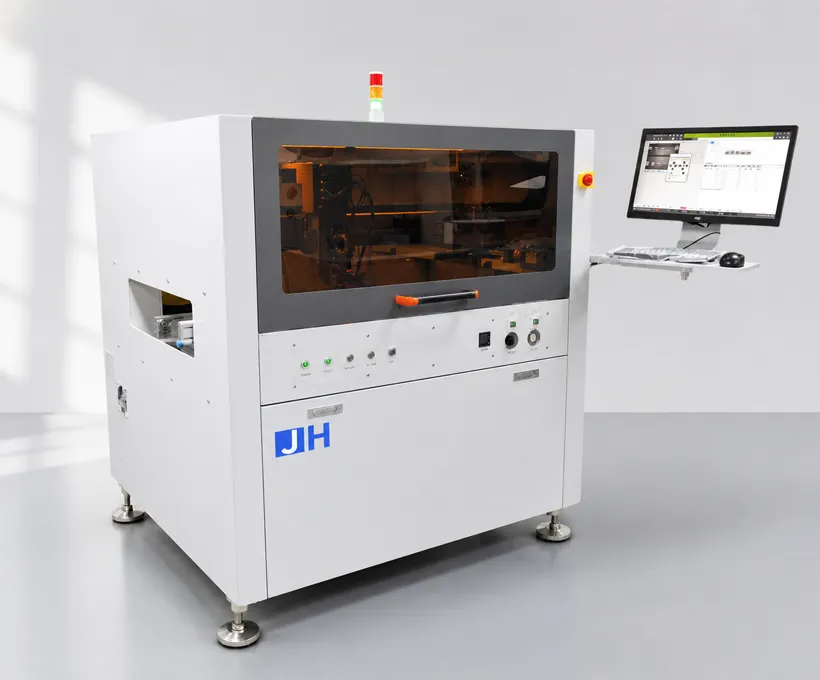 D900 Dispensing MachinePrecision dispensing for conformal coating and lens bonding steps.View product →Buying GuideHow to Choose an SMT Lens Feeder (2026)An 8-step buying path, supplier scorecard and dual vs single frequency comparisonRead article →Case StudySMT Lens Feeder ROI Case StudyReal KPI transition: defect rate 12%→0.3%, UPH 900→3420, 7-month paybackRead article →GlossarySMT Lens Feeding GlossaryTerminology for vibratory feeding, PID control, and UPH metrics.Read glossary →ComparisonDual vs Single Frequency Vibratory FeederTechnical comparison of the two vibration technologiesRead article →ComparisonManual vs Automatic SMT Lens FeederWhich feeding method is right for your production?Read article →ProductDPS-2 Product KnowledgeWhat the DPS-2 is, how it works, and what it can feed.Read more →
Send your lens samples for a free 48-hour feeding test or request a customized quotation.