Address
Building A1, Runteng Industrial Park, No. 4 Xishan Road, Longteng Community, Shiyan Subdistrict, Bao'an District, Shenzhen 518000, China
Work Hours
Monday to Saturday: 09:00 – 23:00 (UTC+8)
Sunday: closed
Address
Building A1, Runteng Industrial Park, No. 4 Xishan Road, Longteng Community, Shiyan Subdistrict, Bao'an District, Shenzhen 518000, China
Work Hours
Monday to Saturday: 09:00 – 23:00 (UTC+8)
Sunday: closed

Dongguan LED strip line automated on a legacy Hanwha SM481: cycle time -40% (6 min per strip), glue waste 30% to 5%, uptime 85% to 99%, payback in 4 to 6 months.
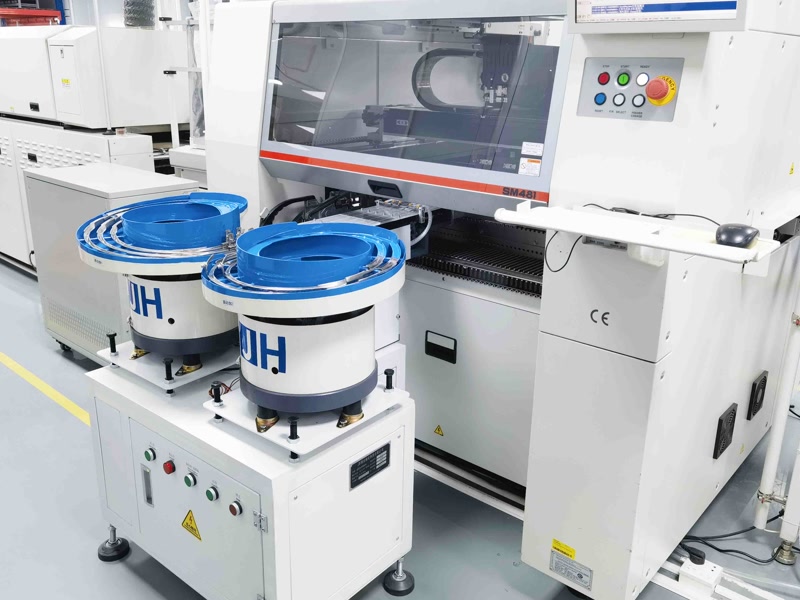
How a Dongguan LED manufacturer automated 1.2 m LED strip lens assembly on a legacy Hanwha SM481 line: cycle time down 40%, glue waste 30% to 5%, labor cost down 50% and 99% uptime.
At a glance: who the customer is, where the machine was delivered, and what drove the investment.
LED strip assembly is a different problem from LED module placement: a 1.2 m strip carries lenses along its whole length, so the work is a continuous dispense-and-place sequence over a long, flexible substrate that cannot be supported like a rigid PCB. The customer is a Dongguan LED manufacturer running a legacy Hanwha SM481 line at high volume. The published requirement: automate lens assembly without a full line overhaul — the new equipment had to fit the existing platform, floor layout and operator routines, and pay back before any wider modernization.
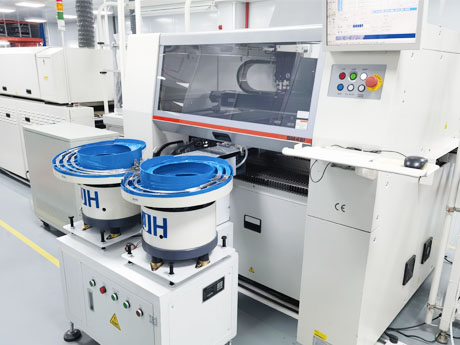
A Dongguan LED manufacturer set lenses onto 1.2 m LED strips by hand inside a machine-paced line. Published figures: bottlenecks that slowed high-volume output, 30% material waste from inconsistent glue application, and labor cost rising with volume. Hand assembly paces the line — the strip cannot advance until the operator finishes — and in a dispense step material is committed at placement, so misalignment and rework consume glue and lenses that cannot be recovered. JHIMS supplied a bowl feeder customized for the customer’s lens types plus automated red-glue and epoxy dispensing.
The four reported challenges each map to a measurable property of the delivered cell: manual assembly paced the line, so output was set by hand speed rather than machine capability; the 30% waste figure is glue and lens material committed at each dispense position; integration risk ruled out any solution needing a new platform, layout or control regime; and labor cost was the accumulated effect of a manual step at high volume. They point at a feeder built for this lens, this strip and this machine.
The four reported challenges, the mechanism behind each one, and the response built into the delivered cell.
| Reported challenge | Mechanism on a 1.2 m strip line | Response in the delivered configuration |
|---|---|---|
| Manual assembly bottleneck | The hand lens step paces the line instead of following it | Five-head pickup and machine sequencing at 15+ lenses per minute |
| 30 percent material waste | Glue is dispensed per position, so a misplacement spends material that cannot be recovered | Integrated dispensing reduced waste to 5 percent |
| Integration risk on a legacy line | New equipment that needs a new platform carries cost the project cannot carry | Feeder built for the existing Hanwha SM481 line, validated on site |
| High labor cost at volume | Each additional strip adds operator time rather than machine time | Reported 50 percent labor cost reduction with payback in 4 to 6 months |
| Continuous lens consumption | A long strip draws lenses in long runs, so refilling interrupts the cycle | Stainless steel double-bowl system keeps the pickup positions supplied |
| Positional accuracy along the strip | Length makes any accumulated error visible at the far end of the strip | Plus or minus 0.03 mm accuracy for lens placement on the strip |
| Line availability during upgrade | A rebuild stops production and puts the schedule at risk | Zero downtime during transition, with 99 percent uptime after handover |
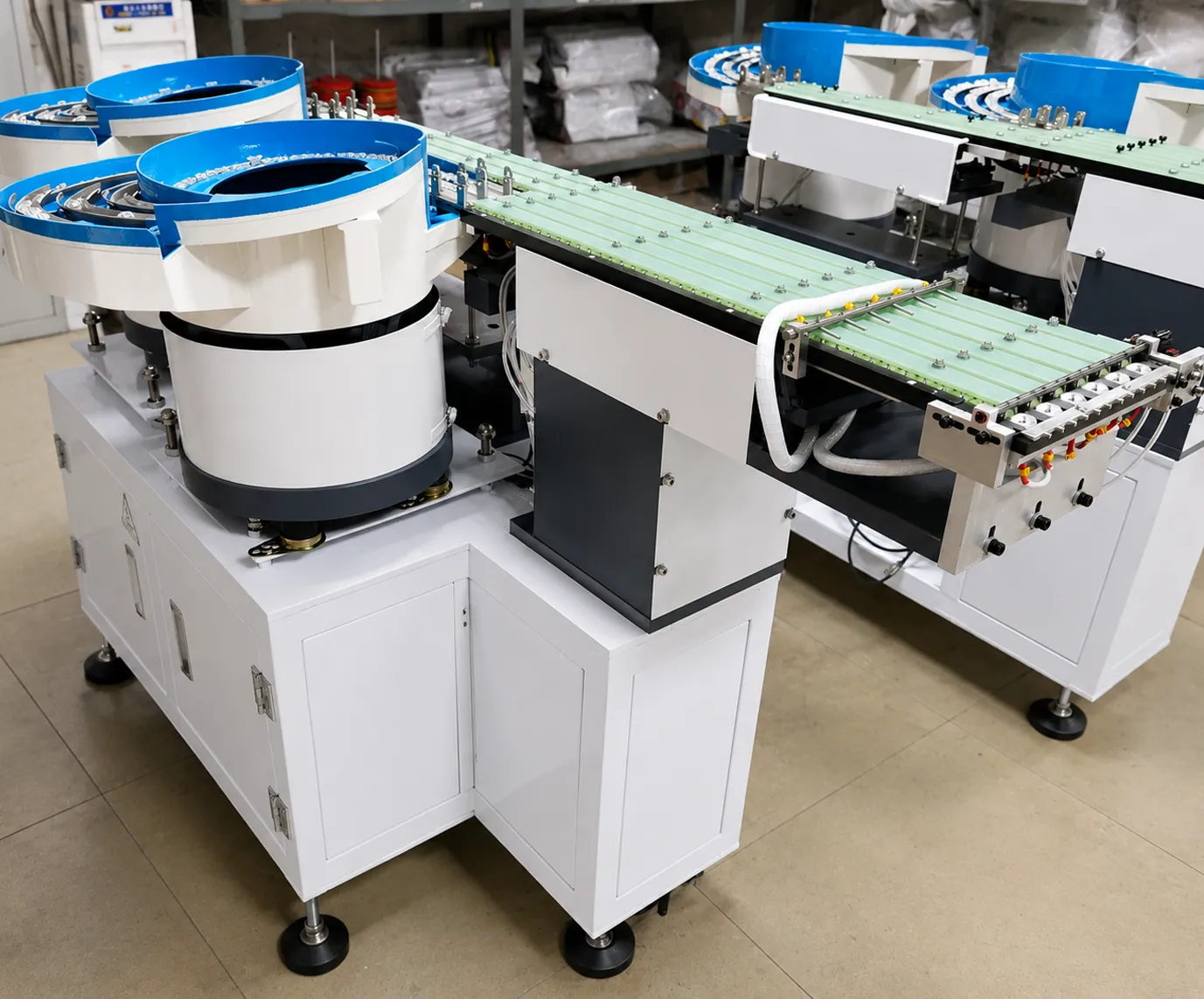
Before selecting the JHIMS Hanwha SM481 lens feeder, the customer verified four non-negotiable requirements:
All four requirements were testable at the machine: compatible with the existing Hanwha SM481 line — mounts, programs and runs without a rebuild; reliable feeding for 1.2 m LED strips at volume (length and volume, not a rate figure alone); simultaneous multi-lens pickup, which turns a hand sequence into a machine cycle and produces most of the published time saving; and automated red-glue and epoxy dispensing, the requirement that answers the 30% waste figure. Together they describe one integrated cell, validated on site with zero downtime.
Why JHIMS: 10+ years in custom SMT solutions for LED assembly, tailored integrations like multi-lens pickups for Hanwha machines, and cost-effective upgrades with proven 50% savings.
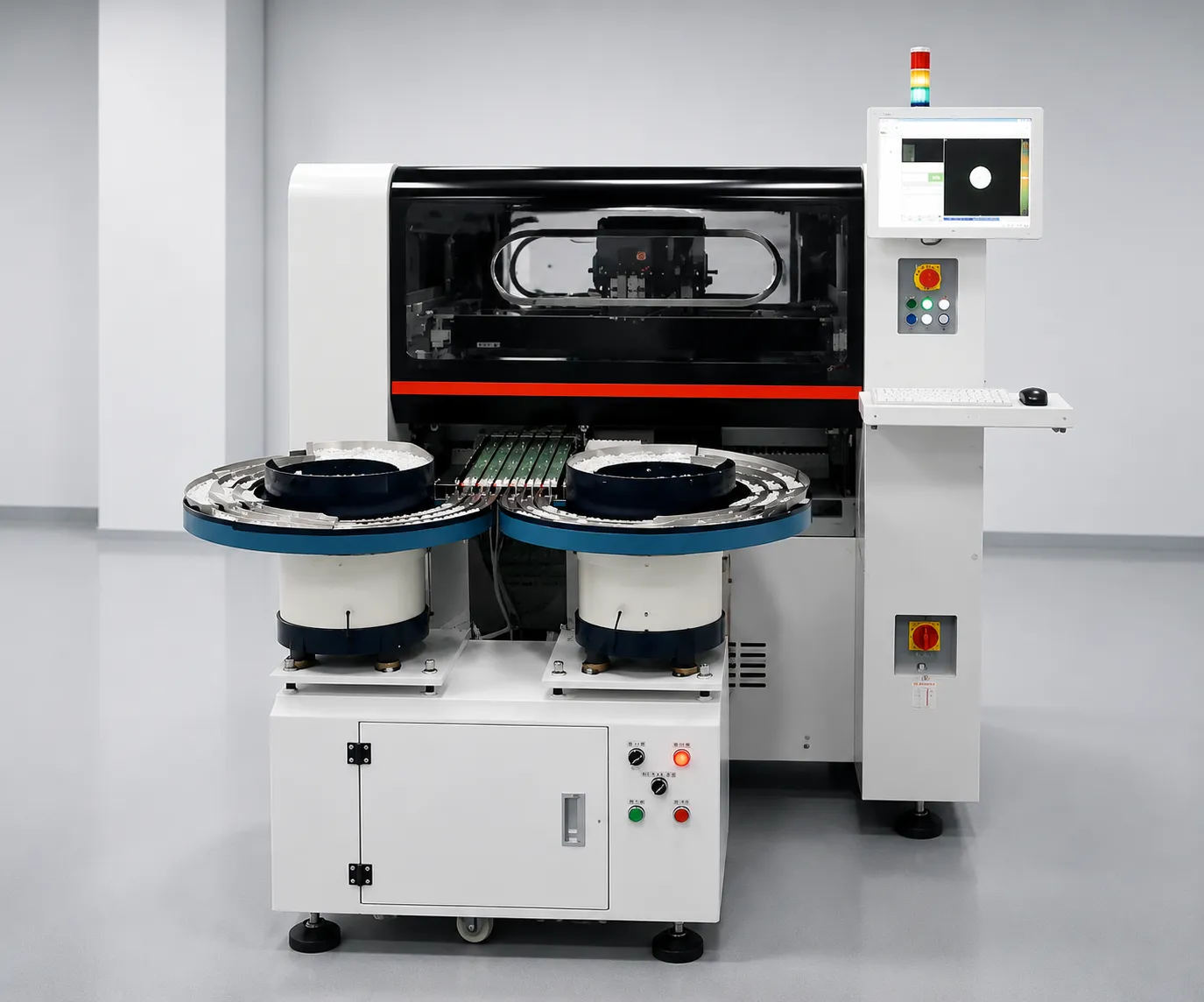
A custom double-bowl vibratory feeder with stainless steel bowls feeds lenses into the Hanwha SM481, paired with an online dispensing machine for red glue and epoxy. Two bowls matter on a 1.2 m strip, where lenses are drawn continuously and a single small bowl would mean frequent refills. A five-head pickup turns the step into a machine cycle: published 15+ lenses per minute against 2 to 3 by hand. Dispensing is sequenced by the same cell, with published accuracy of plus or minus 0.03 mm.
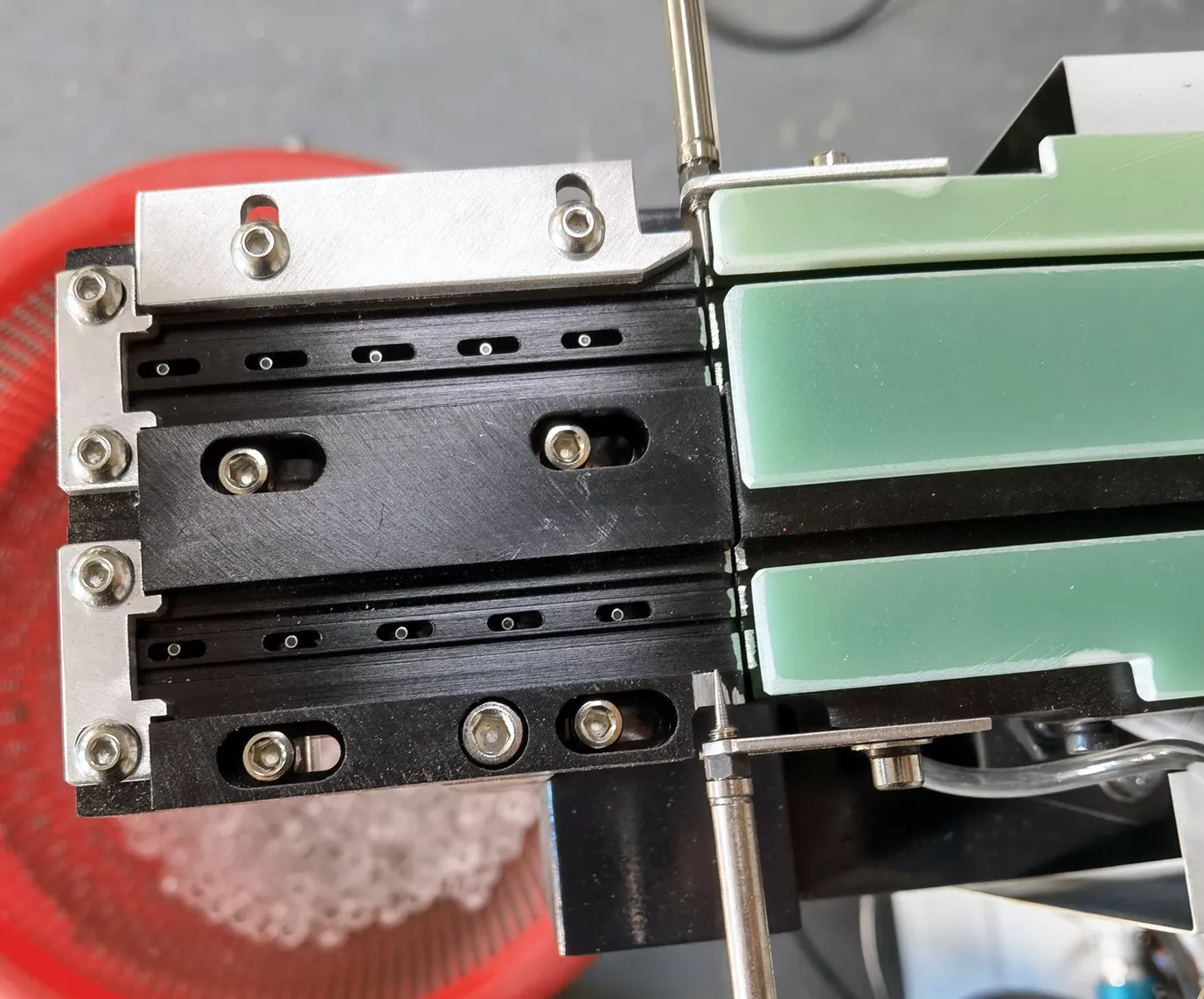
| Feature | Details |
|---|---|
| Compatibility | Hanwha SM481/SM482 pick-and-place machines; supports 1.2m LED strips |
| Capacity | 5 simultaneous lens pickups; vibration frequency 50–60Hz |
| Materials | Stainless steel double-bowl design |
| Accuracy | ±0.03mm |
| Dispensing Integration | Integrates with online automatic dispensing machines |
| Feeding Speed | 15+ lenses per minute (5× pickup) |
| Uptime | 99% |
The published configuration shows how narrowly this was scoped: compatibility with Hanwha SM481 and SM482 machines and support for 1.2 m LED strips — which is what allowed the feeder to be added to an existing line. Vibration frequency is a narrow 50 to 60 Hz band, tuned for these lens bodies. Capacity: five simultaneous pickups above 15 lenses per minute, held over a full shift by stainless steel double-bowl construction. Dispensing pairs with online automatic machines for red glue and epoxy, making the cell a combined dispense-and-place unit.
The published before-and-after figures for this project, measured on the customer’s own 1.2 m LED strips.
| Metric | Manual / pre-upgrade | Automated cell |
|---|---|---|
| Cycle time per strip | 10 minutes | 6 minutes, a 40 percent reduction |
| Lenses placed per minute | 2 to 3 by hand | 15+ with five simultaneous pickups |
| Placement error rate | 15 to 20 percent | Under 1 percent with precision dispensing |
| Glue waste on strips | 30 percent | 5 percent, an 83 percent reduction |
| Line uptime | 85 percent | 99 percent |
| Labor cost | Multiple operators on the lens step | 50 percent reduction, payback in 4 to 6 months |
| Placement accuracy | Dependent on operator skill | Plus or minus 0.03 mm |
| Pickup configuration | One lens at a time | Five simultaneous pickups |
| Platform compatibility | Hanwha SM481 line, chips, ICs and sockets | Unchanged, with no new production line required |
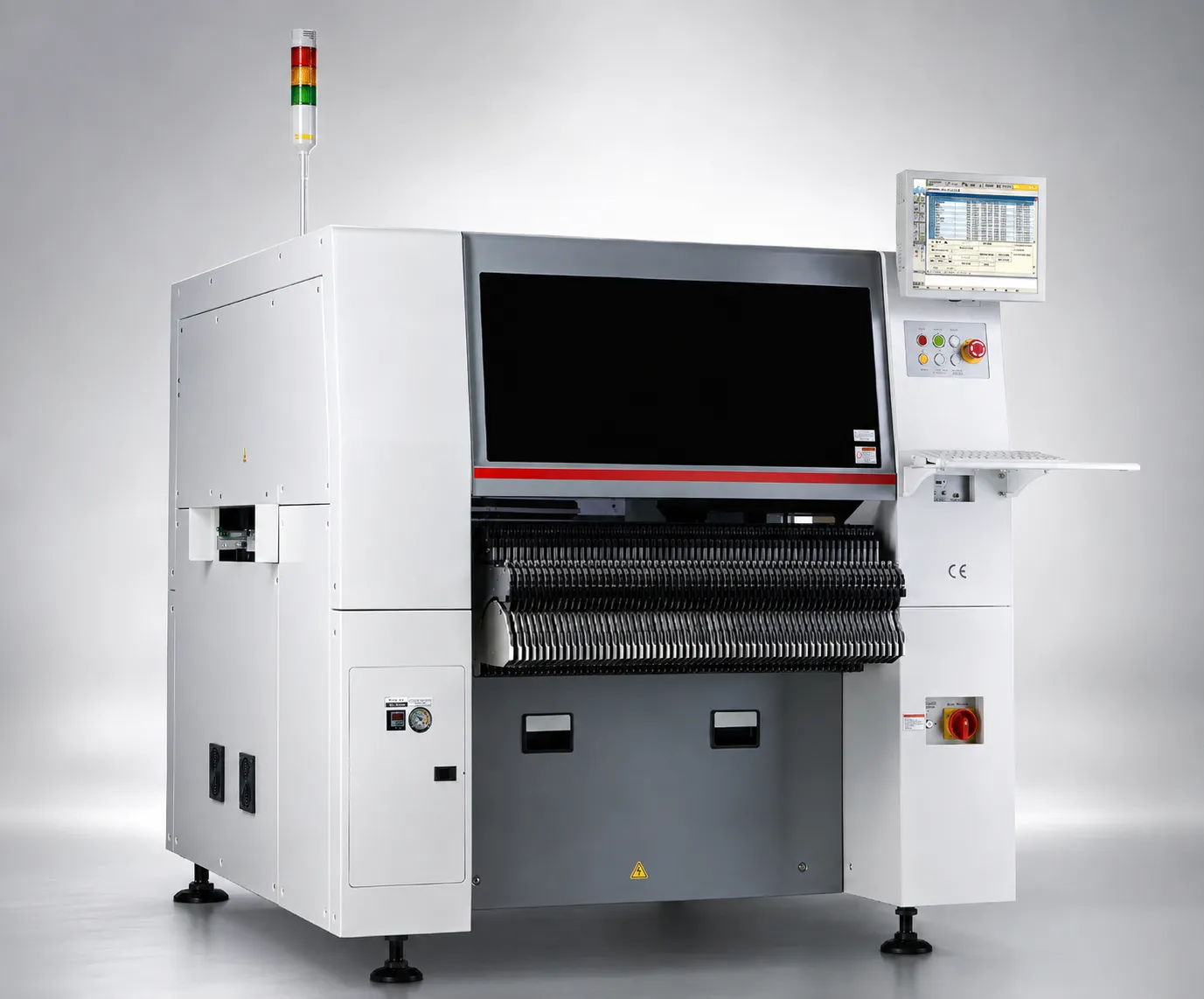
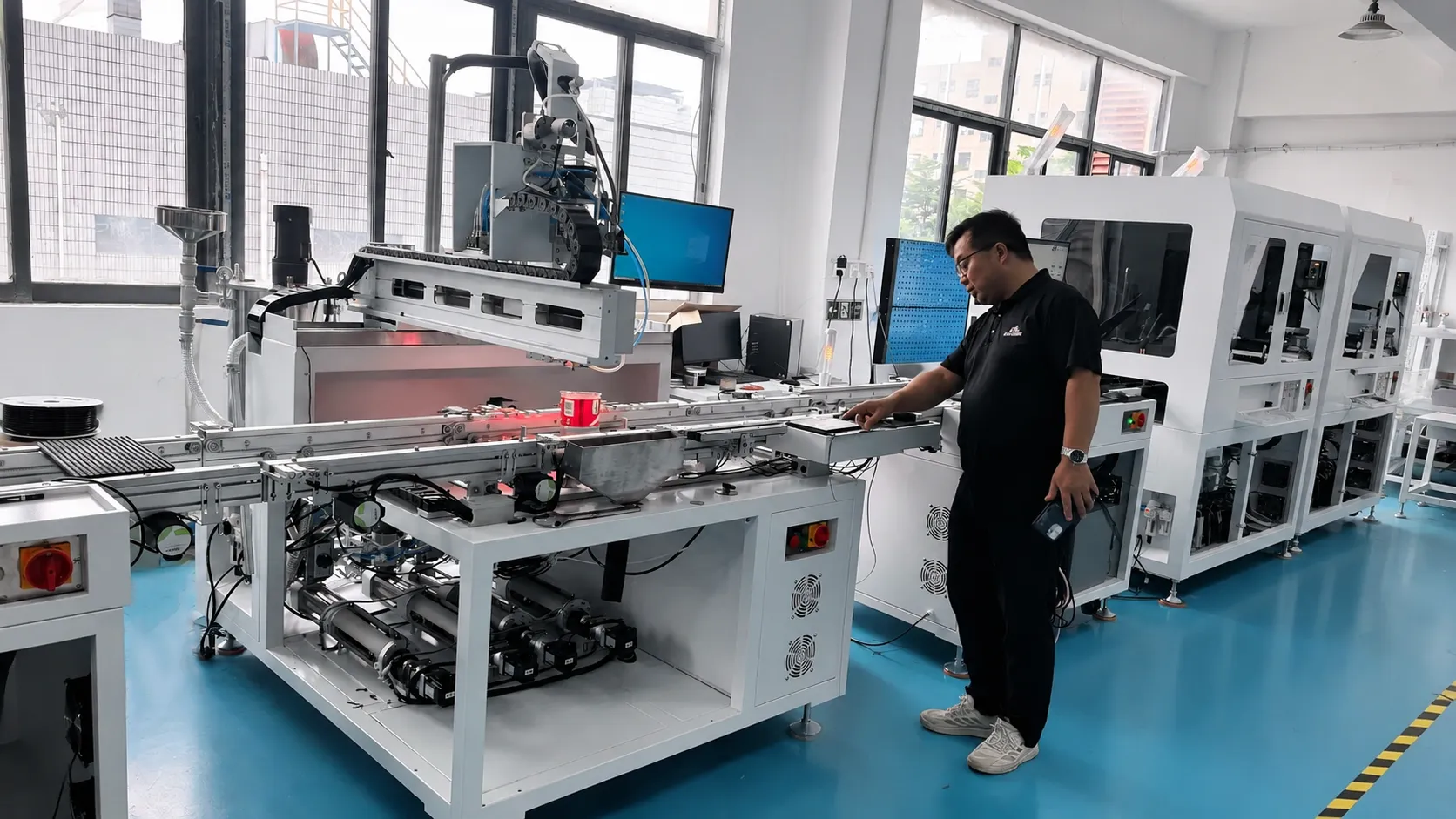
The custom Hanwha SM481 lens feeder was engineered and delivered for the customer’s Hanwha SM481 line, with the double-bowl system providing stable feeding for diverse lens types.
JHIMS engineered the Hanwha SM481 lens feeder with a stable double-bowl system for reliable feeding, optimized pickup nozzles for multi-lens handling, and seamlessly integrated dispensing technology for precise strip coating. The setup was validated on-site, ensuring zero downtime during transition.
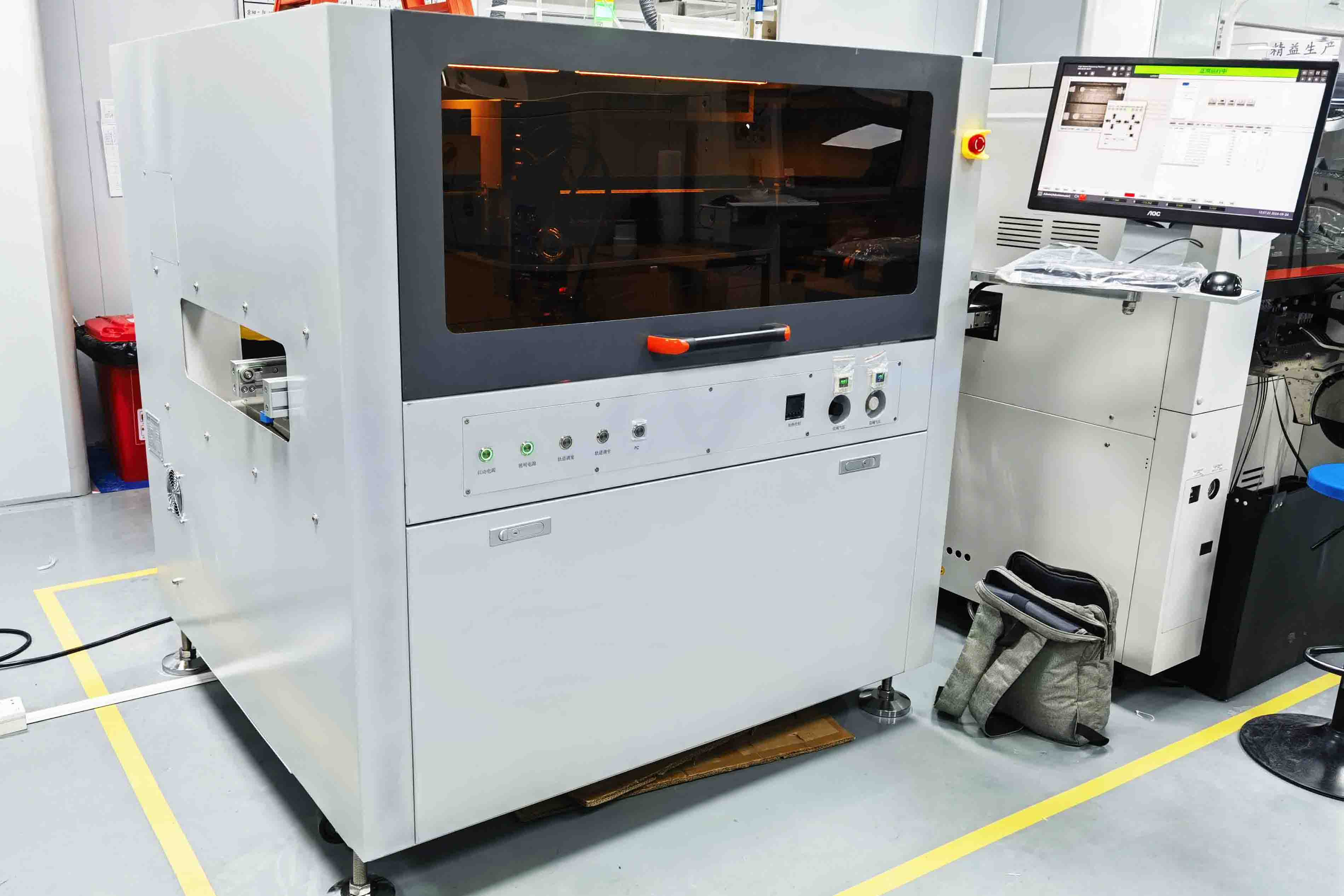
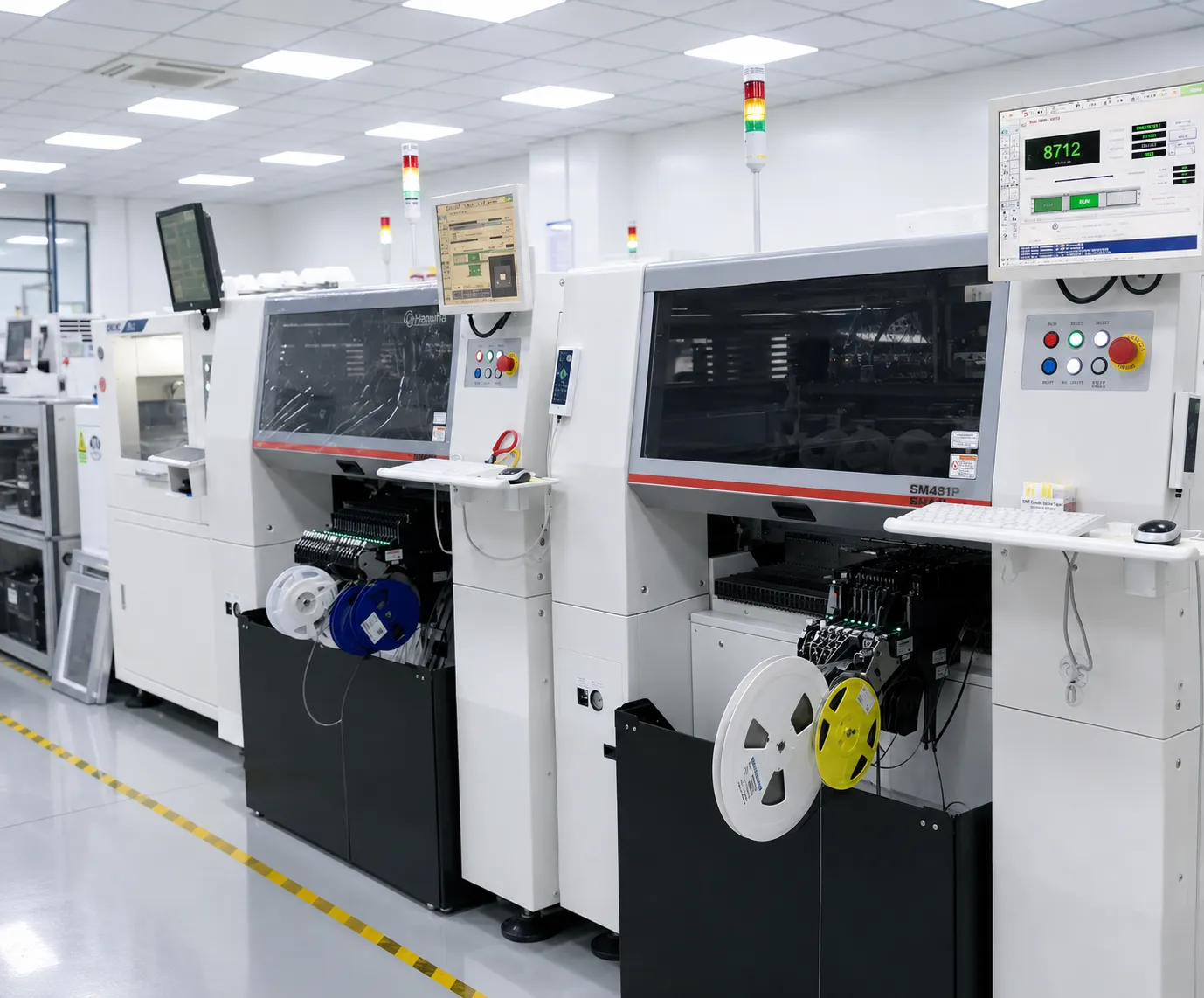
The upgrade followed the pattern a legacy line requires: the feeder was engineered around the customer’s own lens types with a stable double-bowl system, pickup nozzles were optimized for multi-lens handling, and dispensing was integrated so coating and placement happen in one sequence. Validation ran on site with zero downtime during transition — the line was transitioned in place, not stopped and rebuilt — which depends on the feeder being prepared against the customer’s lens samples before delivery. The published 99% uptime afterwards is the durable version of that result.
Watch the Hanwha SM481 lens feeder and LED light bar dispensing integration. Watch the full feeder video on YouTube.

Watch the sequence between dispense and placement: glue must be applied and the lens seated inside the adhesive’s open time, so an unstable index shows lenses not sitting down properly. Watch the bowl exit during a strip — a 1.2 m strip draws lenses in long runs, so the feeder has to hold its rate for the whole strip. Watch the pickup head: five simultaneous picks should complete without a missed nozzle. And watch the rejects, because in dispensing the measure is not only lenses per minute but how much material is wasted reaching that number.
Post-implementation, the Dongguan facility reported 40% faster production cycles via the Hanwha SM481 lens feeder’s 5-head pickups, 50% reduced labor costs, and full compatibility with chips, ICs, and sockets — no new line required.
| Metric | Pre-Upgrade | Post-Upgrade | Improvement |
|---|---|---|---|
| Cycle Time | 10 min/strip | 6 min/strip | -40% |
| Waste Reduction | 30% | 5% | -83% |
| Uptime | 85% | 99% | +16% |
| Aspect | Manual Feeding | Hanwha SM481 Lens Feeder (Automated) |
|---|---|---|
| Speed | 2–3 lenses/min | 15+ lenses/min (5× pickup) |
| Cost Savings | High labor (20% waste) | 50% reduction; ROI in 6 months |
| Error Rate | 15–20% | <1% with precision dispensing |
| Scalability | Limited to small runs | Handles high-volume LED strips |
Results match the mechanism: cycle time per strip fell from 10 minutes to 6 (down 40%) because five-head pickup replaced a hand sequence; glue waste fell from 30% to 5% (down 83%) because dispensing and placement are machine-sequenced, so material goes where a lens will be placed and rejected strips are far fewer; uptime rose from 85% to 99% by removing the hand operation and validating before handover; labor cost fell 50% with payback in four to six months. Placement errors fell from the 15 to 20% typical of manual work to under 1% with precision dispensing.
Beyond the metrics, the feeder’s design accommodates various lens shapes via adjustable vibration settings, tailored for Dongguan-scale volumes — supporting LED lighting fixtures, automotive lighting, and smart home devices.
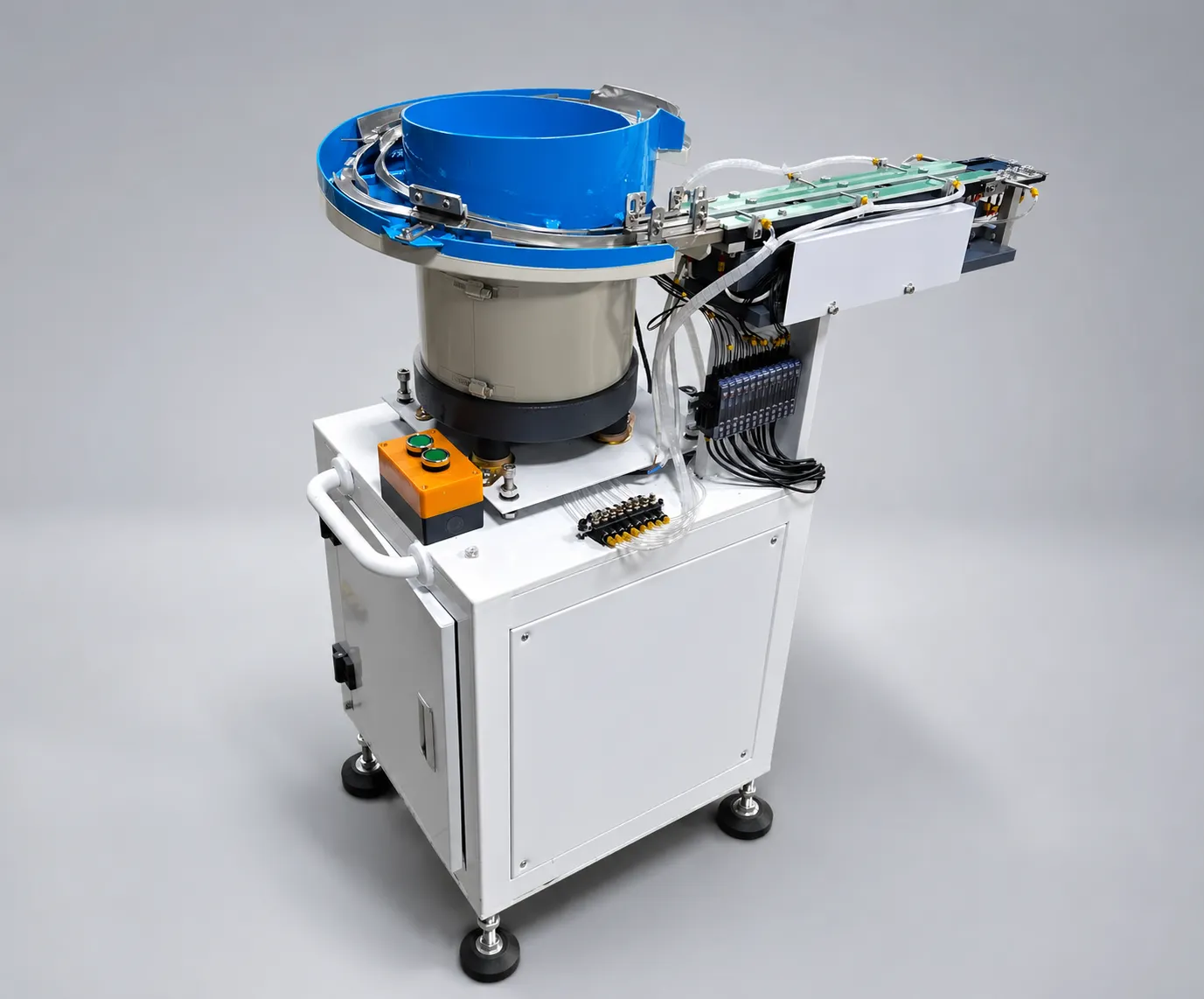 FeaturedDPS-2 Lens Vibratory FeederDual-frequency vibratory lens feeder — 0.5–1s per lens, 3–25mm lenses, 2 disc tracks expandable to 10.View product →
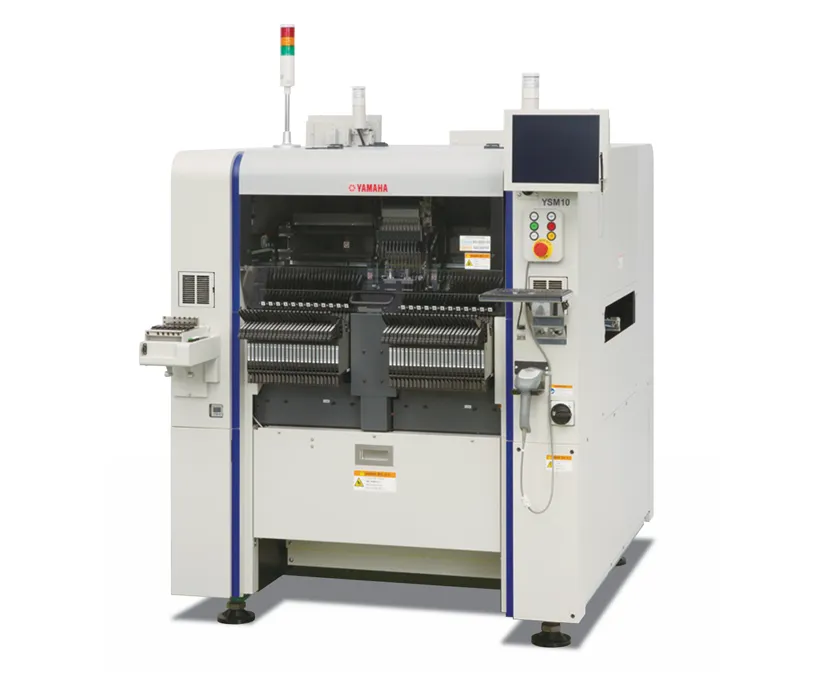 CompanionYamaha YSM10 MounterHigh-speed compact modular mounter – 46,000 CPH, 96 feeders, e-Vision + Side View.View product →
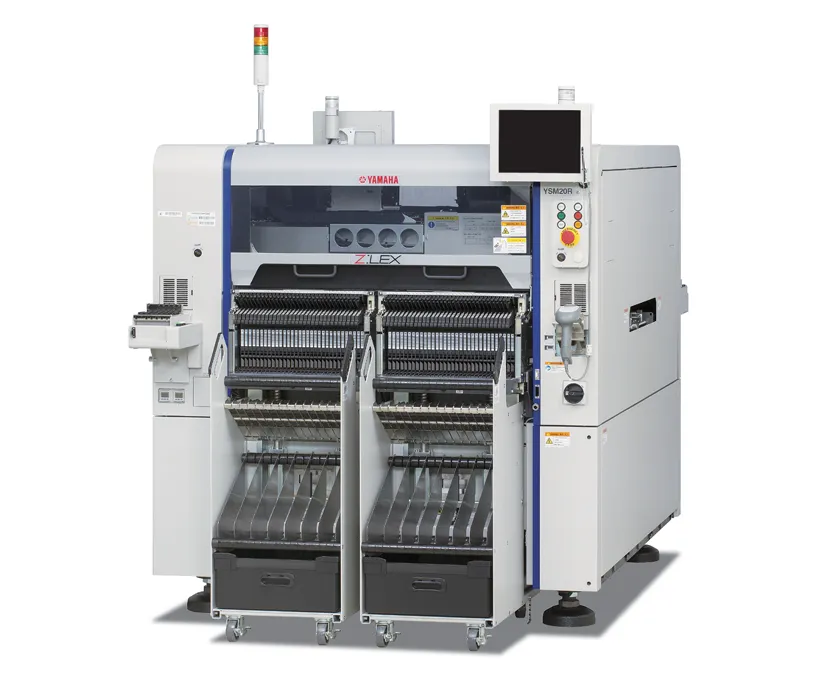 RelatedYamaha YSM20R MounterHigh-speed modular mounter – 95,000 CPH, 140 feeders, 0201 to 55×100mm components.View product →
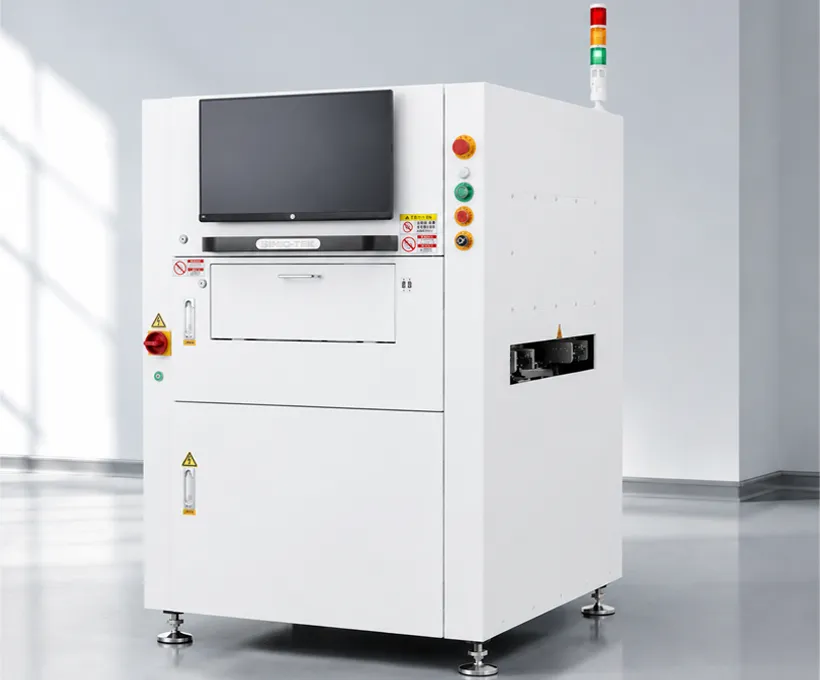 RelatedJHIMS S630 3D SPI3D solder paste inspection – verifies print quality before reflow.View product →
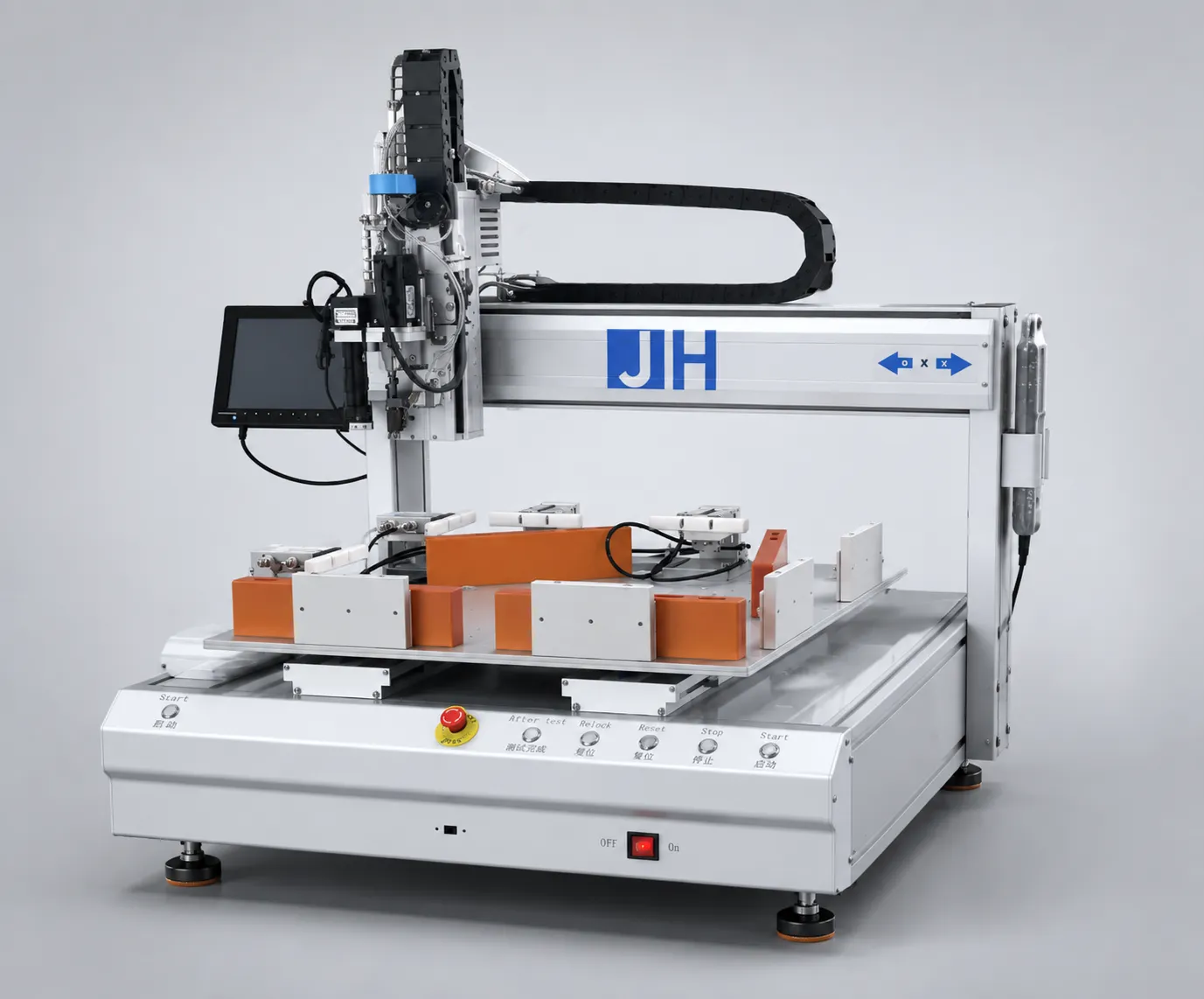 RelatedJHIMS ZM500 Screw MachineAutomated screw tightening and removal for electronics assembly.View product →
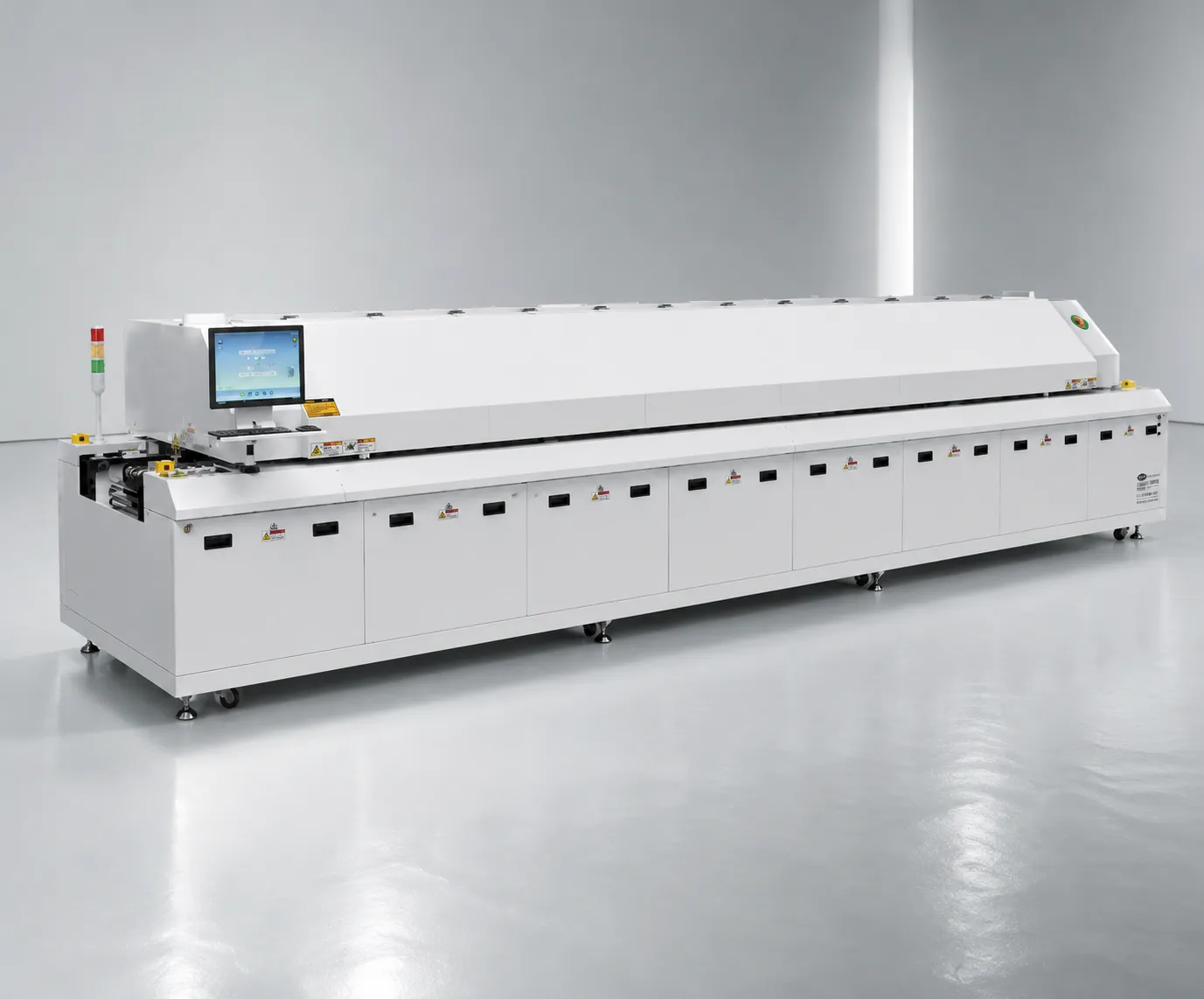 RelatedJHIMS R10 Reflow OvenLead-free hot-air reflow soldering for SMT lines – 20 heating zones, up to 300°C peak.View product →
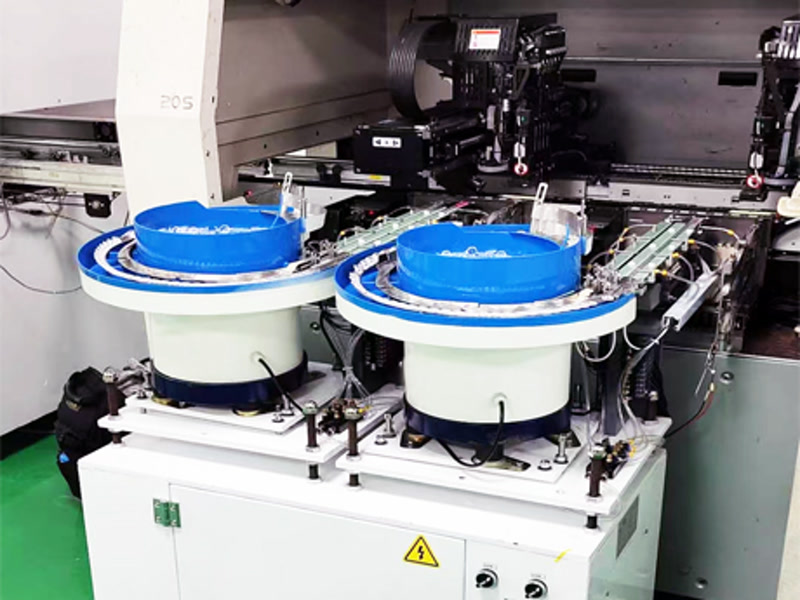 Case StudyXiamen TV Backlight CaseLens vibrating feeder raising TV backlight throughput from 6K to 10K CPH in Xiamen.Read article →
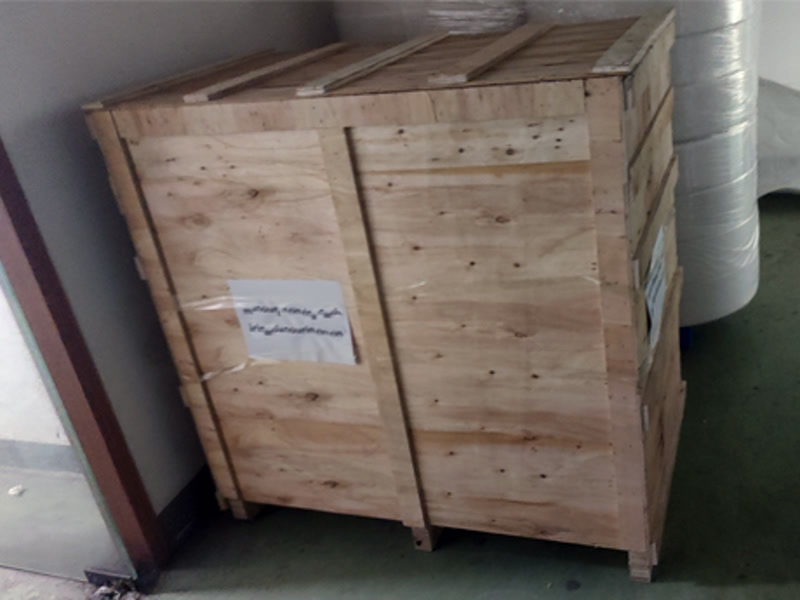 Case StudyRussia Lens Feeder CaseLens vibrating feeder automating lens assembly for a Russian LED lighting manufacturer.Read article →
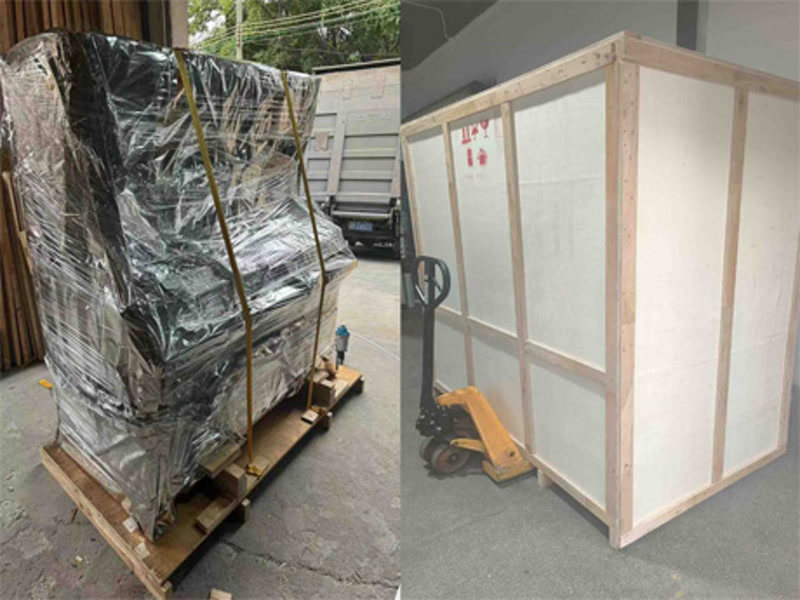 Case StudySaudi Screw Machine Case2P-LXS500 screw tightening automation for a Saudi LED display manufacturer.Read article →
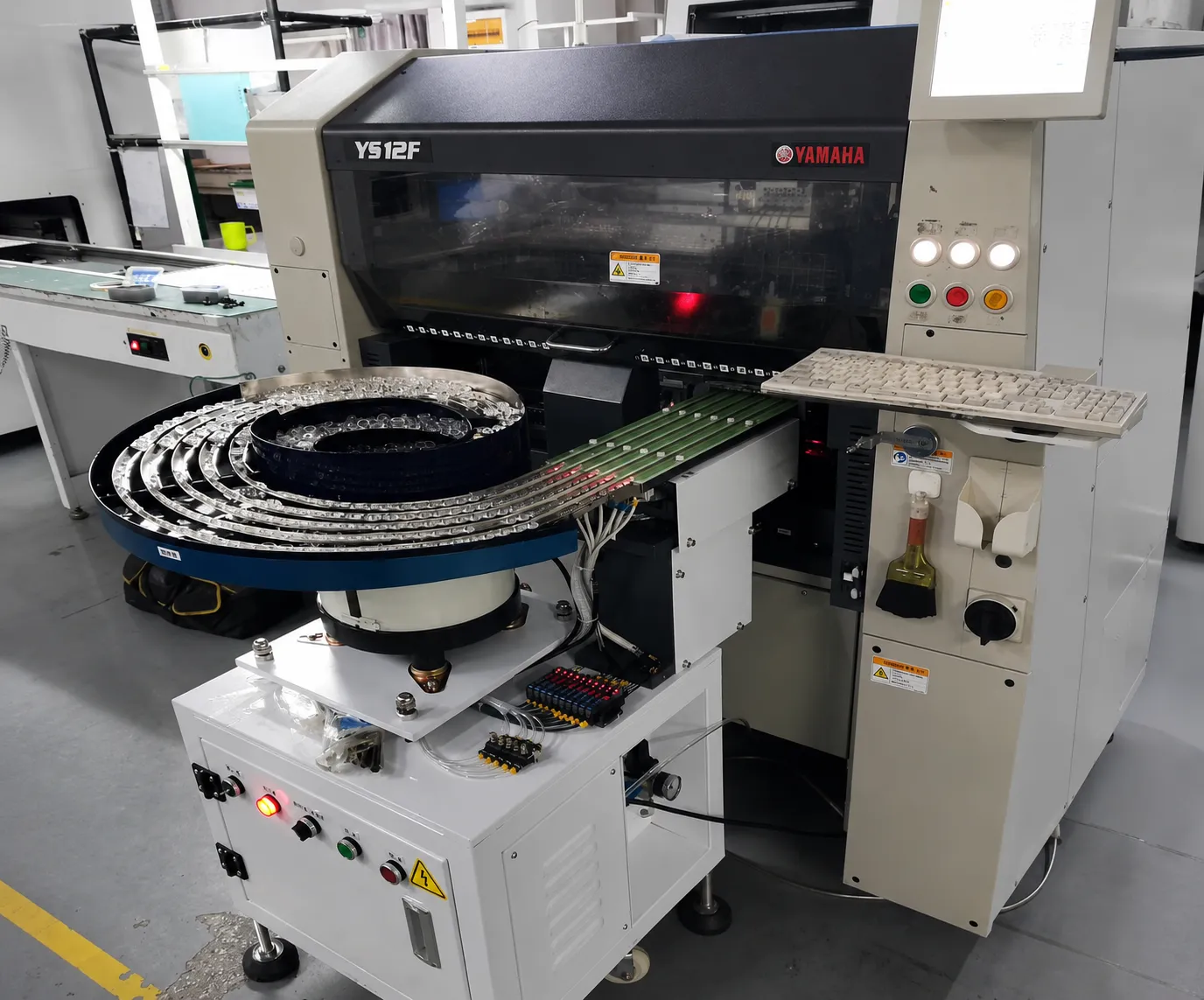 ComparisonSMT Lens Feeder Comparison 2026An objective comparison of technology, component quality, price positioning, and best-fit customer profiles across global brands.Read article →
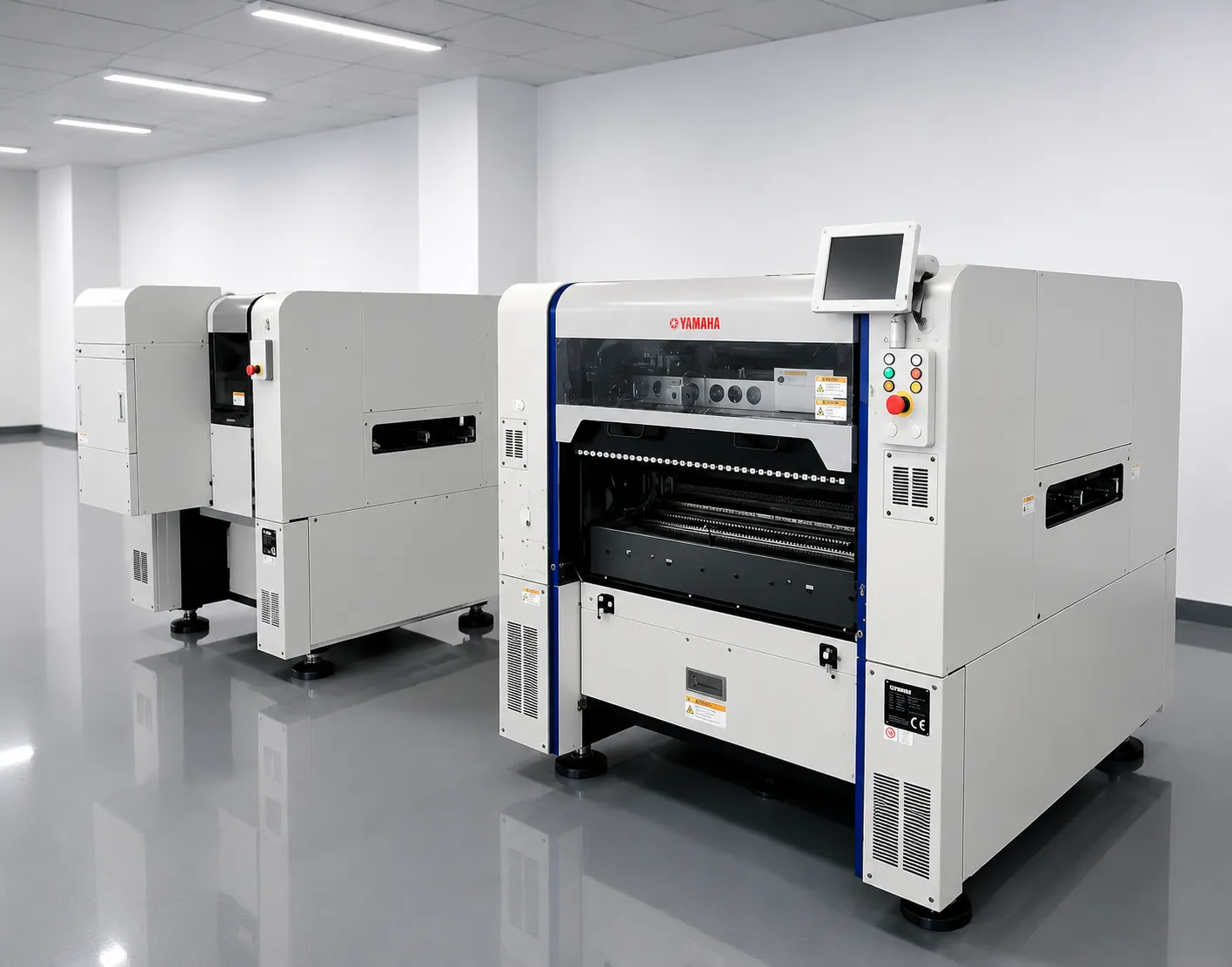 GuideSourcing SMT Equipment from ChinaA risk-managed procurement guide – sourcing, QC and delivery for SMT equipment from China.Read article →
 SupportTechnical SupportGlobal after-sales support, remote training, spare parts and service requests.Get support →
Contact JHIMS for a free consultation on Hanwha SM481 lens feeder integration.