Address
Building A1, Runteng Industrial Park, No. 4 Xishan Road, Longteng Community, Shiyan Subdistrict, Bao'an District, Shenzhen 518000, China
Work Hours
Monday to Saturday: 09:00 – 23:00 (UTC+8)
Sunday: closed
Address
Building A1, Runteng Industrial Park, No. 4 Xishan Road, Longteng Community, Shiyan Subdistrict, Bao'an District, Shenzhen 518000, China
Work Hours
Monday to Saturday: 09:00 – 23:00 (UTC+8)
Sunday: closed

Saudi LED display maker automated M0.6–M2.0 mm screw assembly with a JHIMS 2P-LXS500 six-axis machine: 0.9 s per screw, 5,000 screws/hour, assembly time down 50%+.
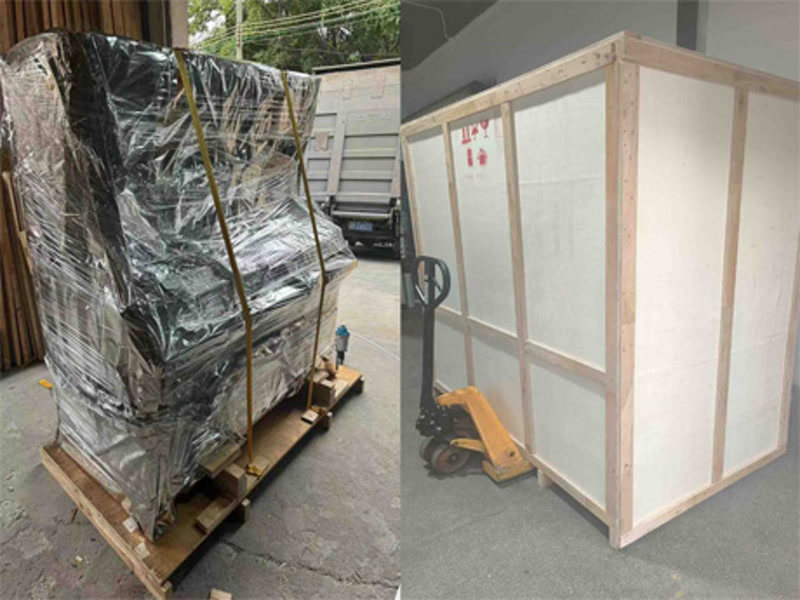
How a Saudi Arabian LED display manufacturer automated M0.6–M2.0 mm screw assembly with a JHIMS 2P-LXS500 six-axis screw tightening machine — 0.9 seconds per screw, 5,000 screws per hour, assembly time down more than 50%.
At a glance: who the customer is, where the machine was delivered, and what drove the investment.
LED display modules are assembled with very small screws, and that combination — a delicate product and a fastener at the edge of what machines handle reliably — is what makes this segment interesting. A module frame may take dozens of M0.6 to M2.0 mm screws, each of which has to be seated to a controlled torque without stripping the thread or cracking the plastic around it.
The customer operates in Saudi Arabia, where the labor profile makes continuous high-volume assembly expensive and where consistent quality is judged by exported product, so the argument for automation here is both cost and control. The published record describes a manufacturer whose production schedules already demanded rapid, continuous assembly and whose existing machines could not deliver it on the smallest screw sizes.
A prominent LED display manufacturer in Saudi Arabia faced significant hurdles assembling screws ranging from M0.6 to M2.0 mm — sizes critical for LED modules. Conventional screw tightening machines struggled with precision and speed: small screws slipped, torque control was inconsistent, and changeovers between screw sizes consumed valuable production time.
The result was slower assembly cycles, higher rejection rates, and rising operating costs at a moment when LED display demand was accelerating across the region.
The customer is a long-term JHIMS partner whose equipment base has grown continuously since 2022 — from LED display dispensing machines and PCB handling systems to the JHIMS M8 solder paste printer. The 2P-LXS500 screw tightening machine was the next addition, deployed to automate LED module screw assembly and keep pace with expanding production volumes while maintaining the precision that LED module quality demands.
The three published challenges are consequences of screw size rather than of machine design. Screw compatibility is a handling problem: a driver bit and a feeder track sized for M2.0 will not pick and hold M0.6 reliably, and a machine that covers the whole range must be able to change its handling without changing its accuracy.
High-speed assembly is a cycle problem: pickup, positioning, driving and verification each take time, and at six screws per module the total becomes the line rate. Precision on small screws is a torque and alignment problem, because slip on a small head burrs the fastener or damages the module, and the resulting defect often appears only after the unit has been assembled and tested.
The reported challenges, their cause at small screw sizes, and the design response.
| Reported challenge | Why it happens at M0.6–M2.0 mm | Design response |
|---|---|---|
| Screw compatibility across the range | One feeding track and driver bit cannot handle the full size span reliably | Three interchangeable modules covering M0.6–M2.0 mm |
| High-speed assembly | Pickup, positioning, driving and verification each add cycle time | Blowing program shortens pickup, giving 0.9 s per screw |
| Precision on small screws | Slip on a small head burrs the fastener or damages the module | Controlled driver and soft product support |
| Consistent torque | Narrow torque window in moulded plastic bosses | Machine-applied torque replaces operator variation |
| Continuous output | Single-station machines stop while loading | Dual-station configuration keeps the cycle running |
| Changeover between products | Positions differ between moulded modules | Camera-save teaching from the customer’s own fixtures |
Before selecting the 2P-LXS500 screw tightening machine, the customer verified five non-negotiable requirements:
The five requirements the customer verified before selecting the 2P-LXS500 describe a machine that must cover a range without compromising on either speed or precision. Full screw range means reliable handling from M0.6 to M2.0 mm for LED module assembly rather than a subset. Speed means rapid continuous assembly that matches the production schedule instead of creating a new bottleneck.
Precision means consistent torque and seating on small fasteners, which is where conventional machines slipped. The remaining requirements cover integration and support: the machine had to be set up on the customer’s own module fixtures and maintainable by the customer’s technicians, because a fastener machine that needs specialist intervention per shift is not an improvement over manual assembly.
Why JHIMS: timely delivery of top-quality equipment, industry expertise for tailored solutions, proven success in automated manufacturing, and end-to-end customer assistance.
The solution combines modular screw handling with a blowing program that changes the cycle time. Three interchangeable modules cover the M0.6 to M2.0 mm range, so the machine is adapted to the screw in production by module rather than by re-engineering the head.
The blowing program reduces pickup time, which is what produces the published 0.9 second assembly per screw — approximately 5,000 screws per hour — and that is what a display line measures: finished assemblies rather than screws. Reliability and stability were addressed at the same time: a fastener machine that stops for adjustment returns the process to manual speed regardless of its rated cycle.
| Item | Model | Qty |
|---|---|---|
| LED module screw tightening machine | JHIMS 2P-LXS500 | 1 |
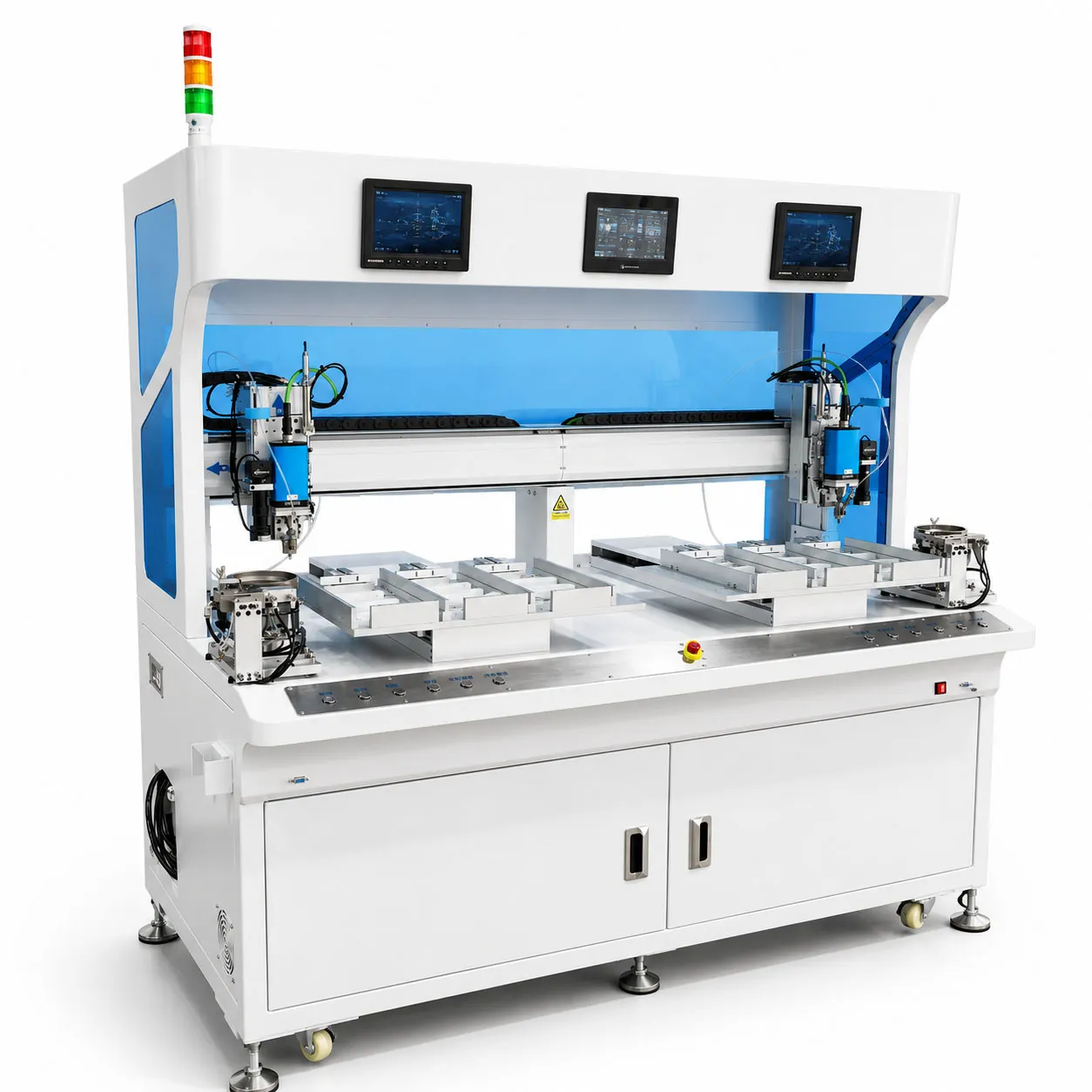
The 2P-LXS500 six-axis screw tightening machine was deployed to automate LED module screw assembly.
| Feature | Details |
|---|---|
| Model | JHIMS 2P-LXS500 (dual-station) |
| Screw Size Range | M0.6 to M2.0mm |
| Assembly Speed | 0.9 seconds per screw (0.9–1.2s per 2 pieces per station) |
| Capacity | Up to 5,000 screws per hour (dual-station) |
| Repeat Positioning Accuracy | ±0.02mm |
| Work Area | 320mm × 500mm (customizable) |
| Drive System | Servo motors + ball screw + HIWIN linear guide |
| Vision System | High-definition cameras |
| Power Supply | AC 220V, 50Hz, under 0.65KW (air-blow) |
| Air Pressure | 0.55 ± 0.1 MPa |
| Detection | Dual-sensor (optical fiber + magnetic ring) |
| Warranty | 12 months |
The configuration was a single JHIMS 2P-LXS500 dual-station six-axis screw tightening machine, deployed to automate LED module screw assembly on the customer’s line. The published specification covers a screw size range of M0.6 to M2.0 mm at an assembly speed of 0.9 seconds per screw, with camera teaching used to program positions from the customer’s actual module fixtures.
Dual stations keep output continuous: while one station assembles, the other is loaded or unloaded. Programming from real fixtures rather than from drawings is what makes the machine’s positioning match the modules that will actually run on it, including the small variations between moulded parts.
The 2P-LXS500 screw tightening machine was programmed via camera-save teaching with the customer’s LED module fixtures, then run through 48 hours of continuous aging tests before shipment. On arrival, the machine was integrated with the existing LED display production line and operators trained on changeover, programming and maintenance.
The machine was programmed by camera-save teaching using the customer’s LED module fixtures, which fixes assembly positions in the machine’s own coordinate system and keeps them reproducible across shifts. Before shipment it ran 48 hours of continuous aging — the same burn-in used across JHIMS machines — so cycle stability, screw feeding and torque repeatability were proven on the customer’s product, not on sample parts.
On arrival the machine was integrated with the existing LED display production line and the customer’s operators were trained on changeover and routine maintenance, which is what keeps the rated cycle available in production instead of only in acceptance testing.
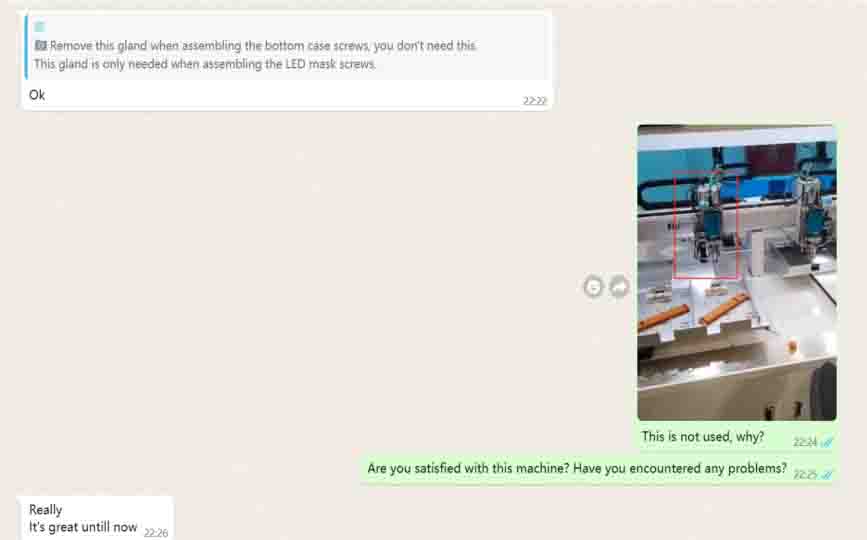
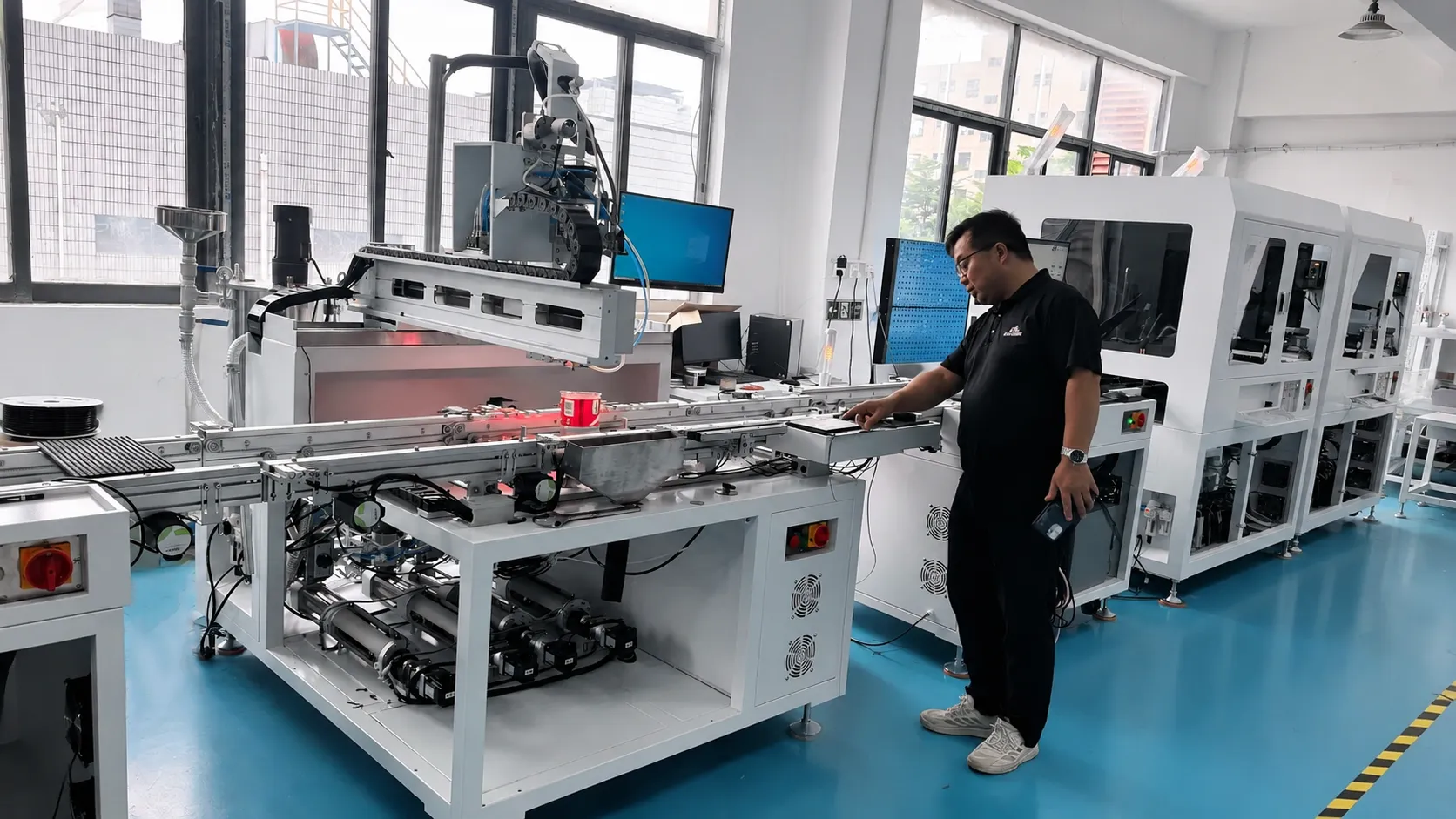
Watch the JHIMS screw tightening machine in action — continuous aging test, LED module screw assembly, and soft LED module support. Watch the full machine video on YouTube.


The video shows the machine running through its continuous aging test, assembling LED module screws and supporting the module on soft tooling. Two things are worth watching for, because they are what separates a screw machine that works in a demonstration from one that works in production.
The first is the screw feed: fasteners should arrive without hesitation or double-picks, since a missed pick costs more than the cycle time it occupies. The second is the module support: the LED module should be held firmly enough for torque to be applied without flexing, and gently enough that the display surface is untouched. Ask how each is verified on your own module before you buy.
Post-implementation, the Saudi Arabian client saw a dramatic improvement in production efficiency. The machine reduced assembly time by over 50%, eliminating the errors traditionally associated with small screws and delivering a flawless workflow. Operators praised the machine’s stability and ease of changeover, while management valued the predictable throughput that supported on-time delivery of LED display orders.
JHIMS exceeded our expectations — the 2P-LXS500 transformed our small-screw assembly with flawless, consistent results. — Saudi Arabian LED Display Manufacturer
The Saudi customer’s success with the 2P-LXS500 reinforced JHIMS’s position as a trusted partner in LED display manufacturing — from solder paste printing to screw assembly automation.
The published outcome is a reduction in assembly time of more than 50%, with the errors traditionally associated with small screws eliminated. The mechanism behind that figure is worth stating plainly, because it explains why the gain is durable.
In manual assembly the small-screw step is limited by hand positioning and by how long an operator can hold torque; the machine removes both, so assembly time falls to the mechanical cycle rather than human pace. The error reduction follows the same logic: torque is applied by a controlled driver against a fixed support, so a bad seating is a correctable machine fault rather than a recurring operator variation.
Below about M2.0 mm, screwdriving stops being a scaled-down version of larger assembly and becomes a handling discipline of its own. The fastener is light enough to be blown or vibrated and equally easy to lose, a slightly worn driver bit will slip and burr the small head, and thread engagement in a moulded plastic boss is short enough that the gap between a seated screw and a stripped one is a narrow torque window.
Conventional machines designed for a wider screw range usually reveal the limit here: they position accurately but pick unreliably, or pick reliably but apply torque through a bit that is too coarse for the head.
Three design decisions follow from that, and all three are visible in the 2P-LXS500 configuration described above. Handling is separated from positioning, so the module that presents the screw can be changed for the screw size in production without re-qualifying the motion system.
Cycle time is attacked at the pickup rather than at the drive, because blowing the fastener into place removes the slowest part of the cycle. The product is supported deliberately — soft support for a display module — so torque goes into the thread rather than into flexing the assembly.
The published specification of the machine delivered for this project.
| Parameter | Specification |
|---|---|
| Model | JHIMS 2P-LXS500 dual-station six-axis screw tightening machine |
| Screw size range | M0.6 to M2.0 mm |
| Assembly speed | 0.9 seconds per screw |
| Throughput | Approximately 5,000 screws per hour |
| Stations | Dual station |
| Programming | Camera-save teaching from customer fixtures |
| Pre-shipment testing | 48 hours continuous aging test |
| Published outcome | Assembly time reduced by more than 50% |
| Application | LED display module screw assembly |
Featured2P-LXS500 Screw MachineDual-station LED module screw tightening — 5,000 screws/hour, M0.6–M2.0, ±0.02mm repeatability.View product →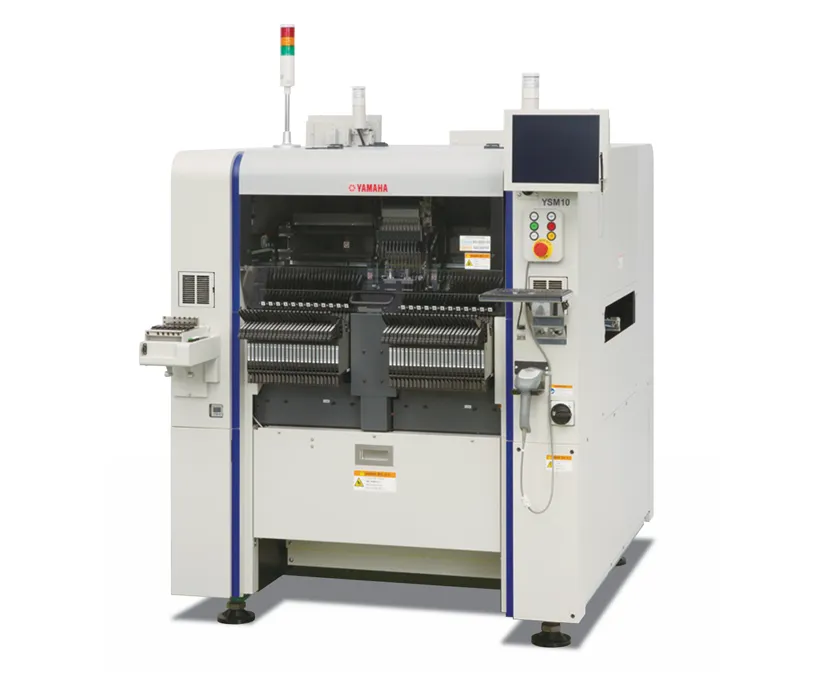 CompanionYamaha YSM10 MounterHigh-speed compact modular mounter – 46,000 CPH, 96 feeders, e-Vision + Side View.View product →
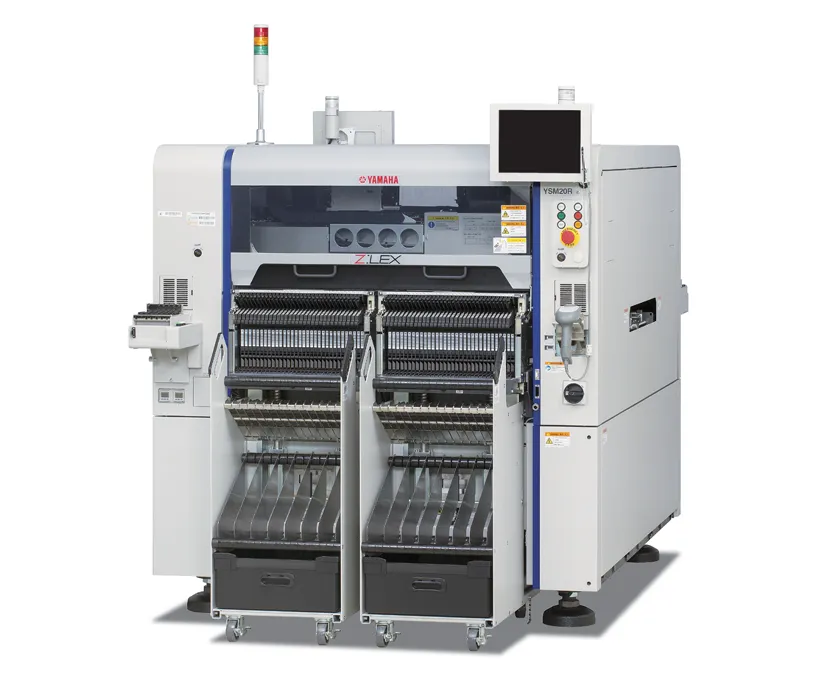 RelatedYamaha YSM20R MounterHigh-speed modular mounter – 95,000 CPH, 140 feeders, 0201 to 55×100mm components.View product →
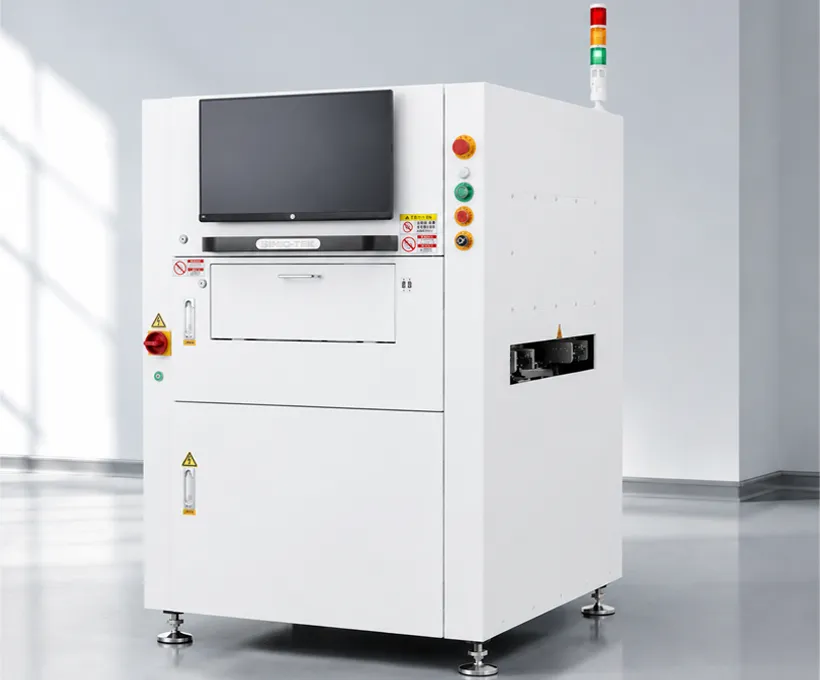 RelatedJHIMS S630 3D SPI3D solder paste inspection – verifies print quality before reflow.View product →
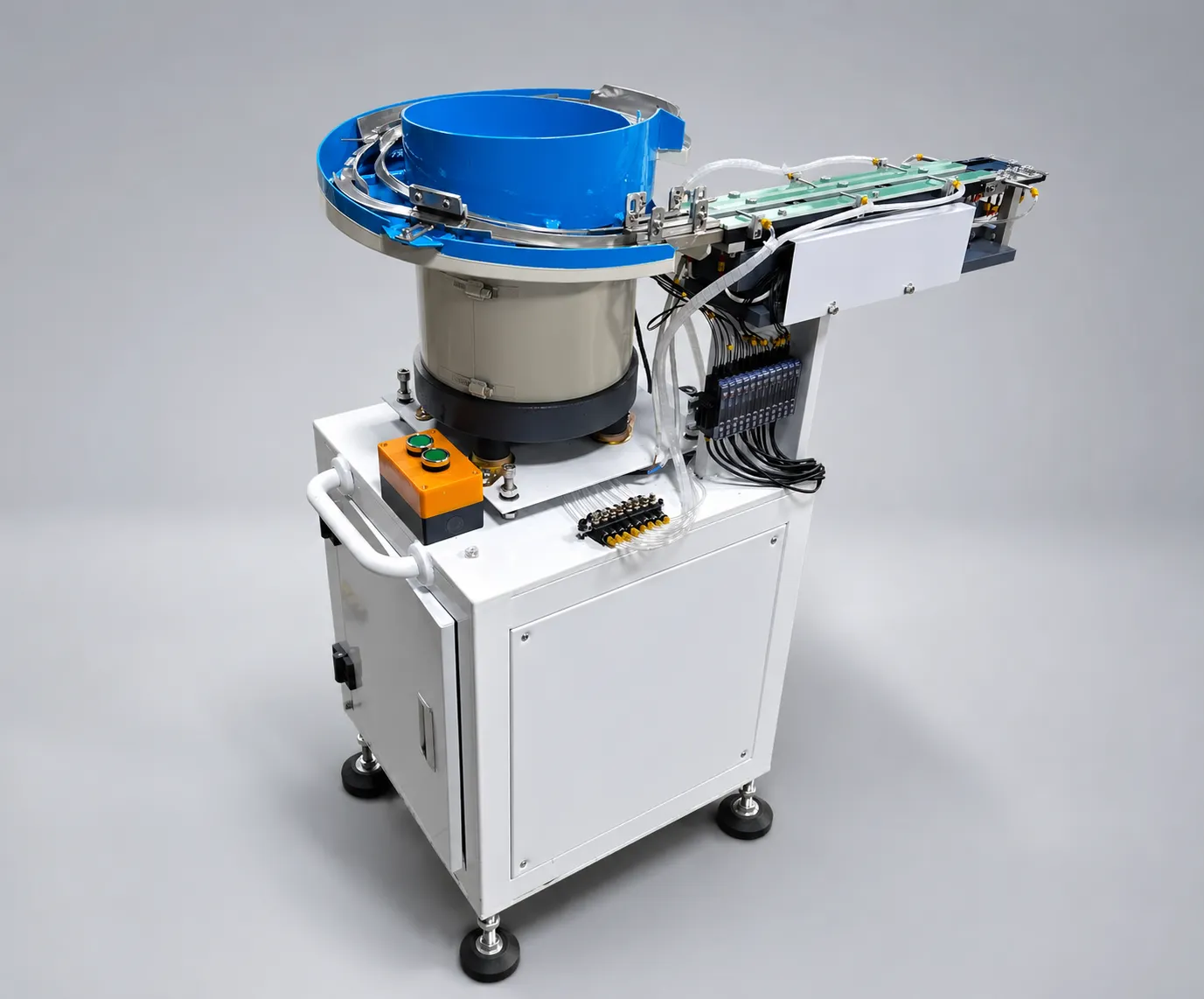 RelatedDPS-2 Lens Vibratory FeederDual-frequency vibratory lens feeder — 0.5–1s per lens, 3–25mm lenses, 2 disc tracks expandable to 10.View product →
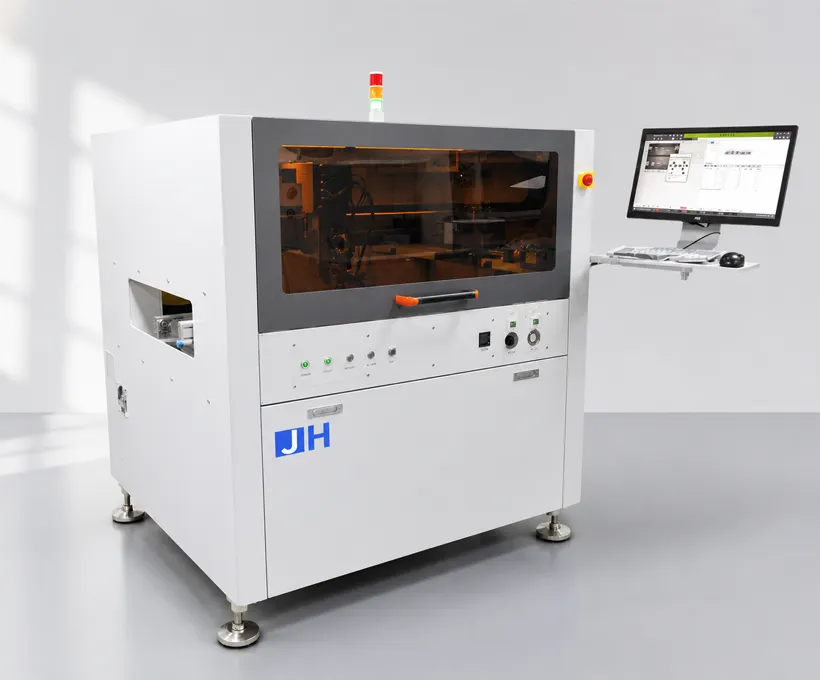 RelatedJH-D900 Dispensing MachineHigh-speed precision dispensing – 200 dots/s jet dispensing for SMT PCB assembly lines.View product →
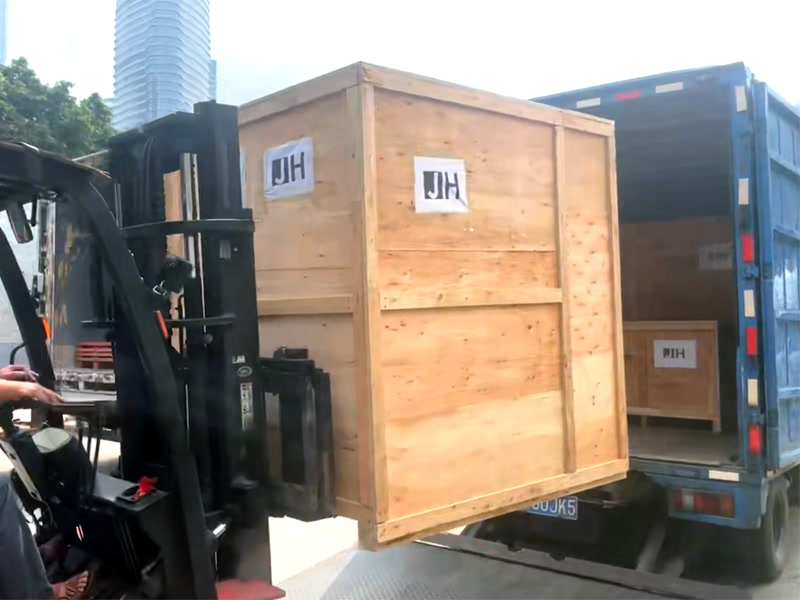 Case StudyM8 Mini LED Saudi CaseThe same Saudi customer’s JHIMS M8 solder paste printer deployment.Read article →
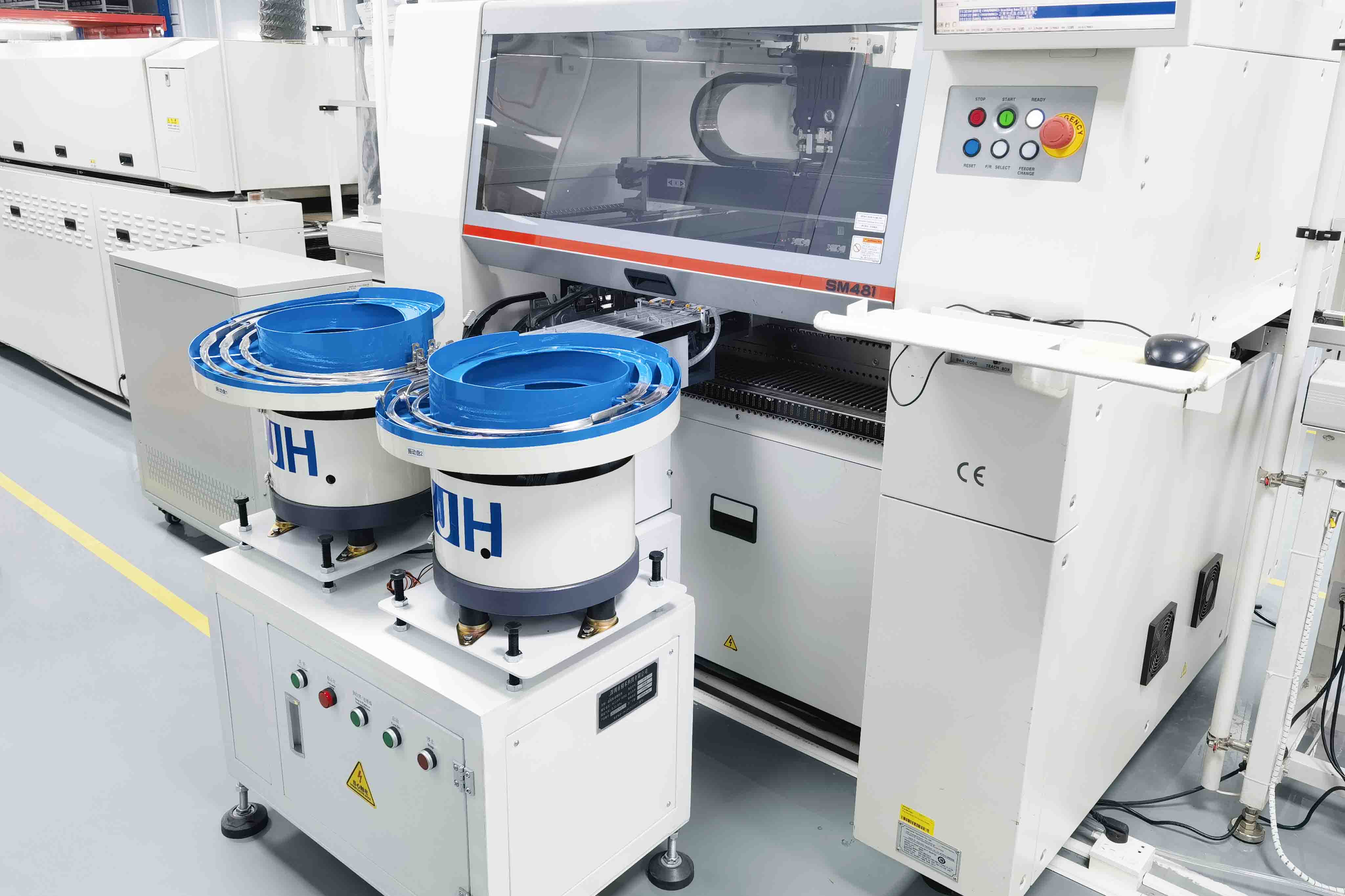 Case StudyHanwha SM481 Dongguan CaseCustom lens feeder for a Dongguan LED manufacturer.Read article →
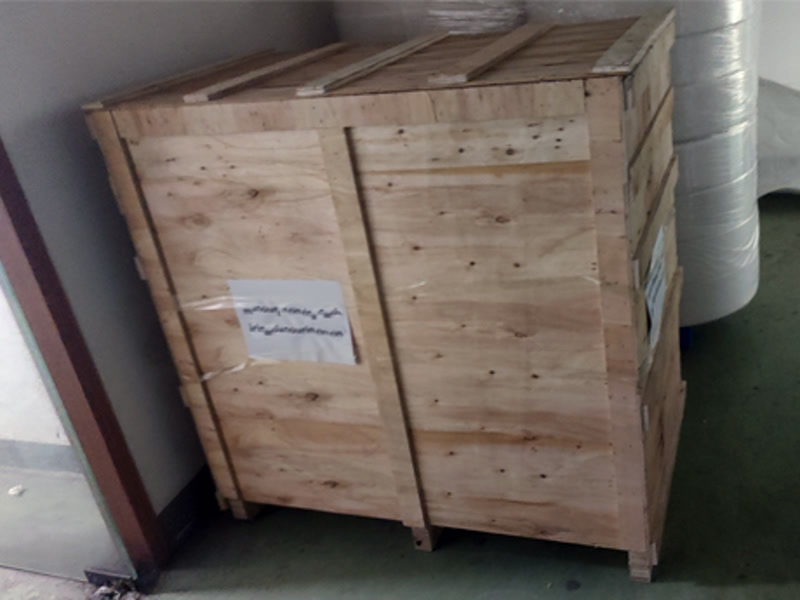 Case StudyRussia Lens Feeder CaseLens vibrating feeder automating lens assembly for a Russian LED lighting manufacturer.Read article →
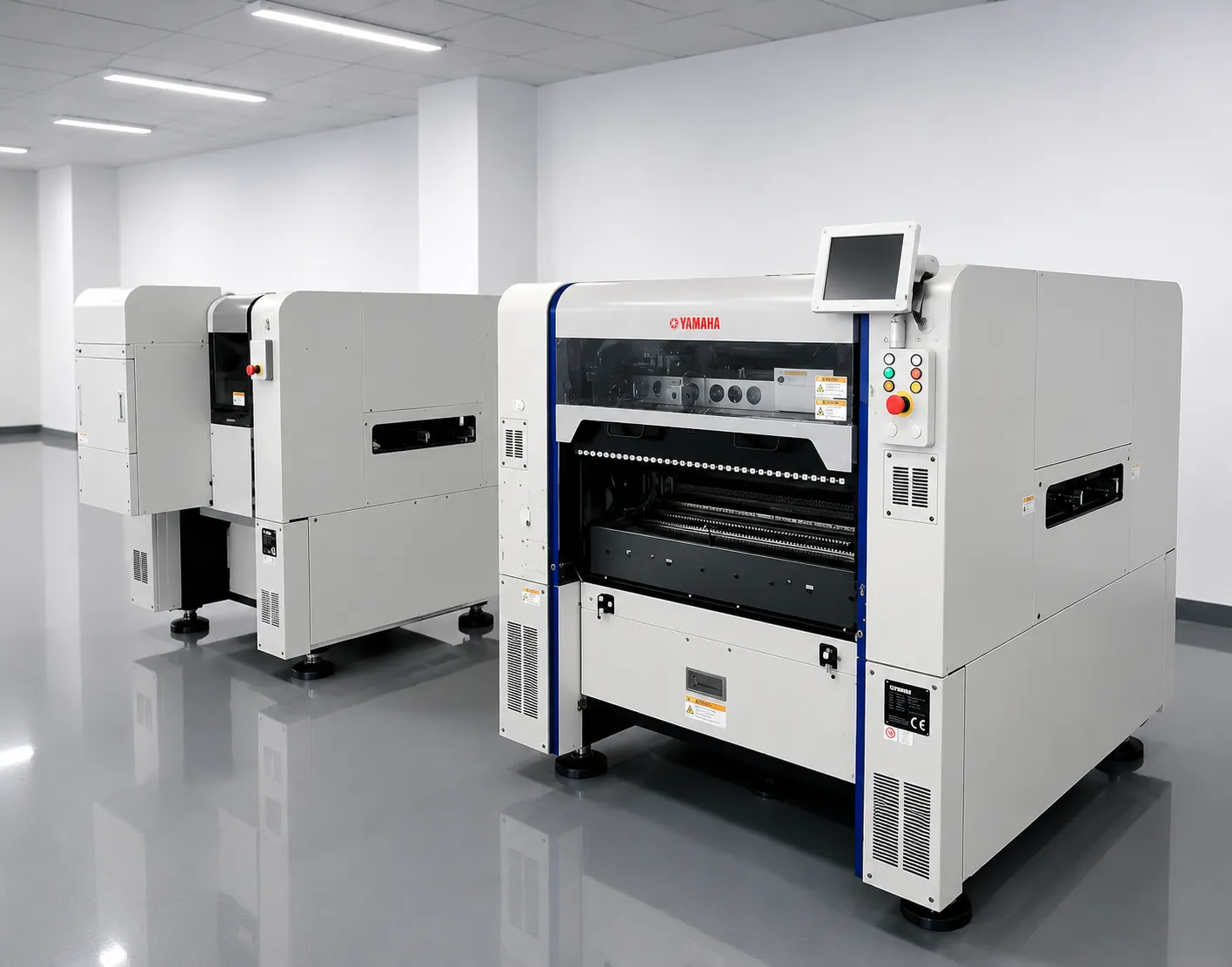 GuideSourcing SMT Equipment from ChinaA risk-managed procurement guide – sourcing, QC and delivery for SMT equipment from China.Read article →
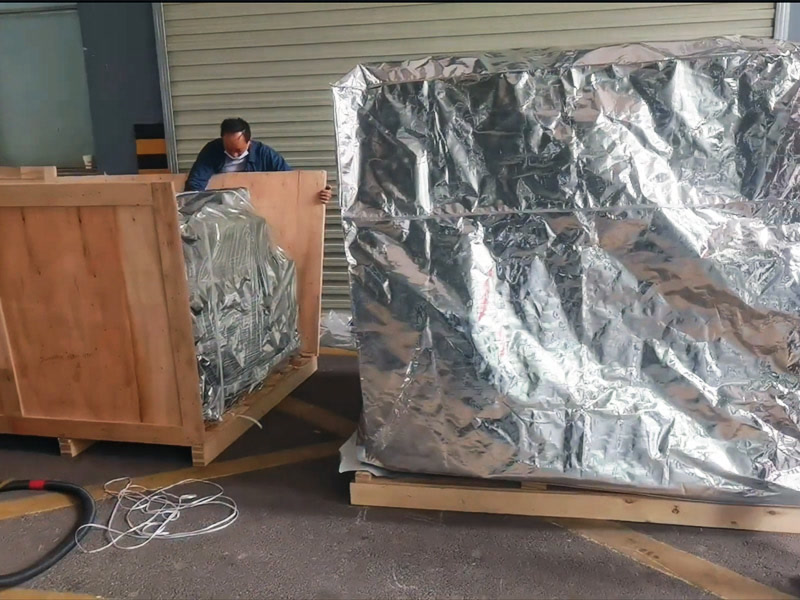 Case StudySpain LED YSM20R CaseFour used YSM20R machines powering a Spanish LED display manufacturer’s production lines.Read article →SupportTechnical SupportGlobal after-sales support, remote training, spare parts and service requests.Get support →
Contact JHIMS for a free consultation on screw tightening machine automation — we reply within 12 working hours (Mon–Sat, 09:00–23:00 China Standard Time, UTC+8).