Address
Building A1, Runteng Industrial Park, No. 4 Xishan Road, Longteng Community, Shiyan Subdistrict, Bao'an District, Shenzhen 518000, China
Work Hours
Monday to Saturday: 09:00 – 23:00 (UTC+8)
Sunday: closed
Address
Building A1, Runteng Industrial Park, No. 4 Xishan Road, Longteng Community, Shiyan Subdistrict, Bao'an District, Shenzhen 518000, China
Work Hours
Monday to Saturday: 09:00 – 23:00 (UTC+8)
Sunday: closed

A working glossary of SMT lens feeding: 30 terms, plus the throughput, rejection and changeover numbers behind them and how to verify each figure on your lens.
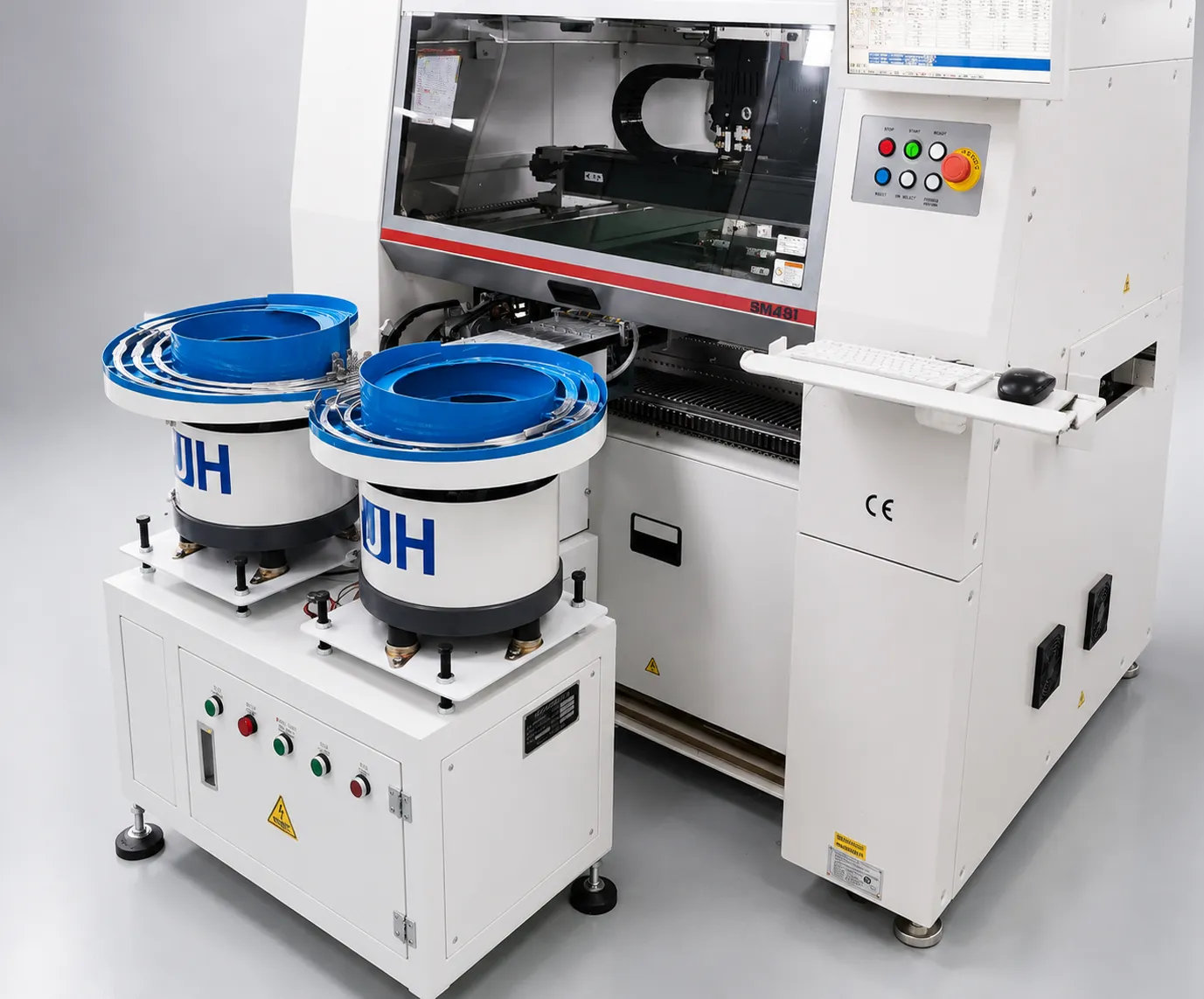
30 essential terms every SMT engineer, production manager and procurement professional should know — defined, grouped and translated into the numbers that decide throughput, yield and payback.
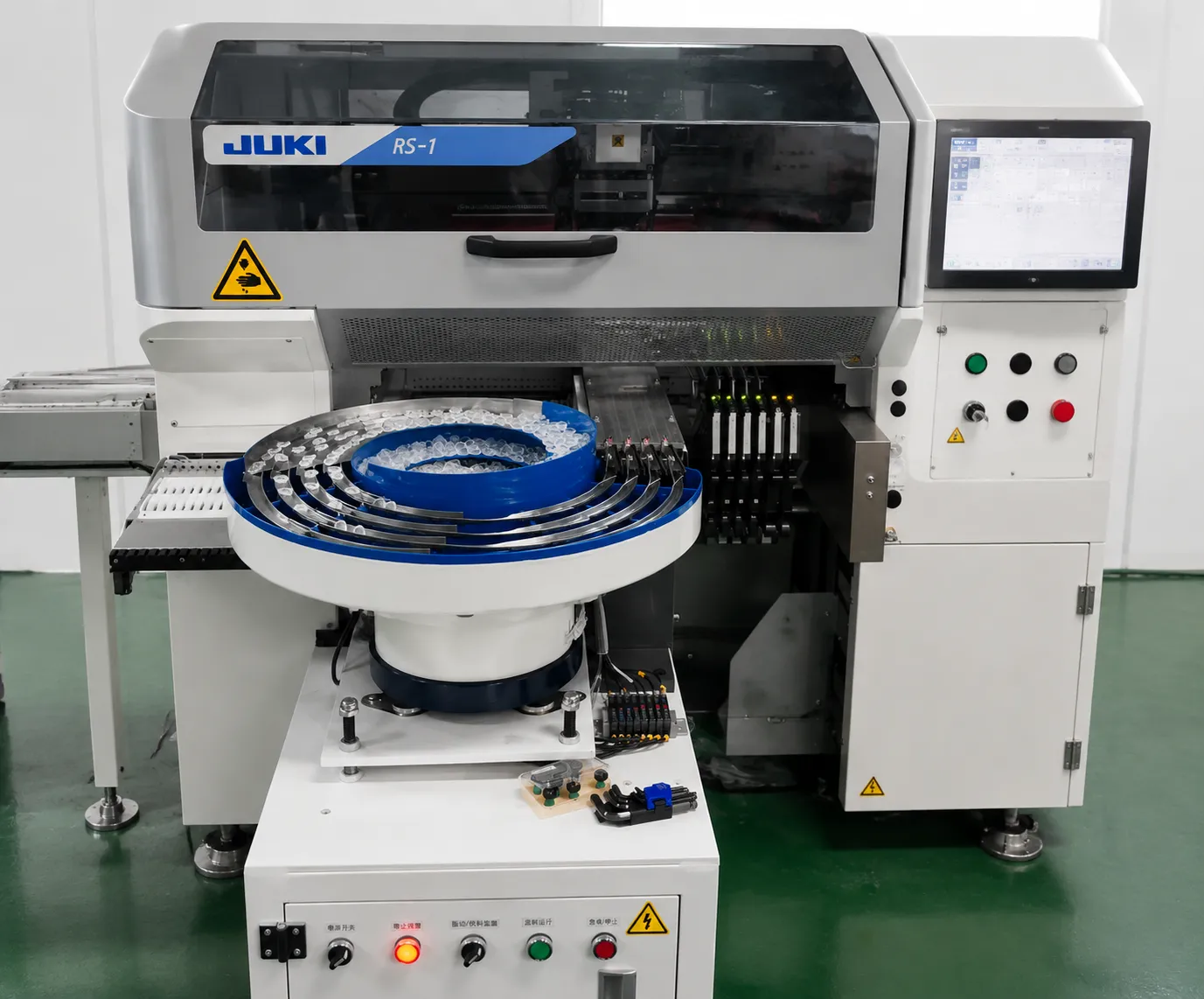
An SMT line prints solder paste, inspects the deposit, places components, then reflows. Lenses are a separate component family — LED, backlight, optical and micro lenses, mostly 3–25 mm across, supplied loose in bags or trays. The placement machine handles them at speed only if each lens arrives at the pickup position separated, correctly oriented and within reach of the nozzle: that is the whole job of the feeding system.
Lens feeding is a throughput constraint as much as a machine function. Manual cells run at human speed — about 800–1,200 UPH — and reject 5–15% of lenses through misorientation, handling damage or double placement. Automatic feeding adds a vibratory bowl, spiral track, orientation gates and optical sensing, so a correctly oriented lens always waits at the pickup point. The rest of this glossary defines those terms.
The hardware chain runs bowl → track → escapement → pickup point → channel. These are the terms that describe it.
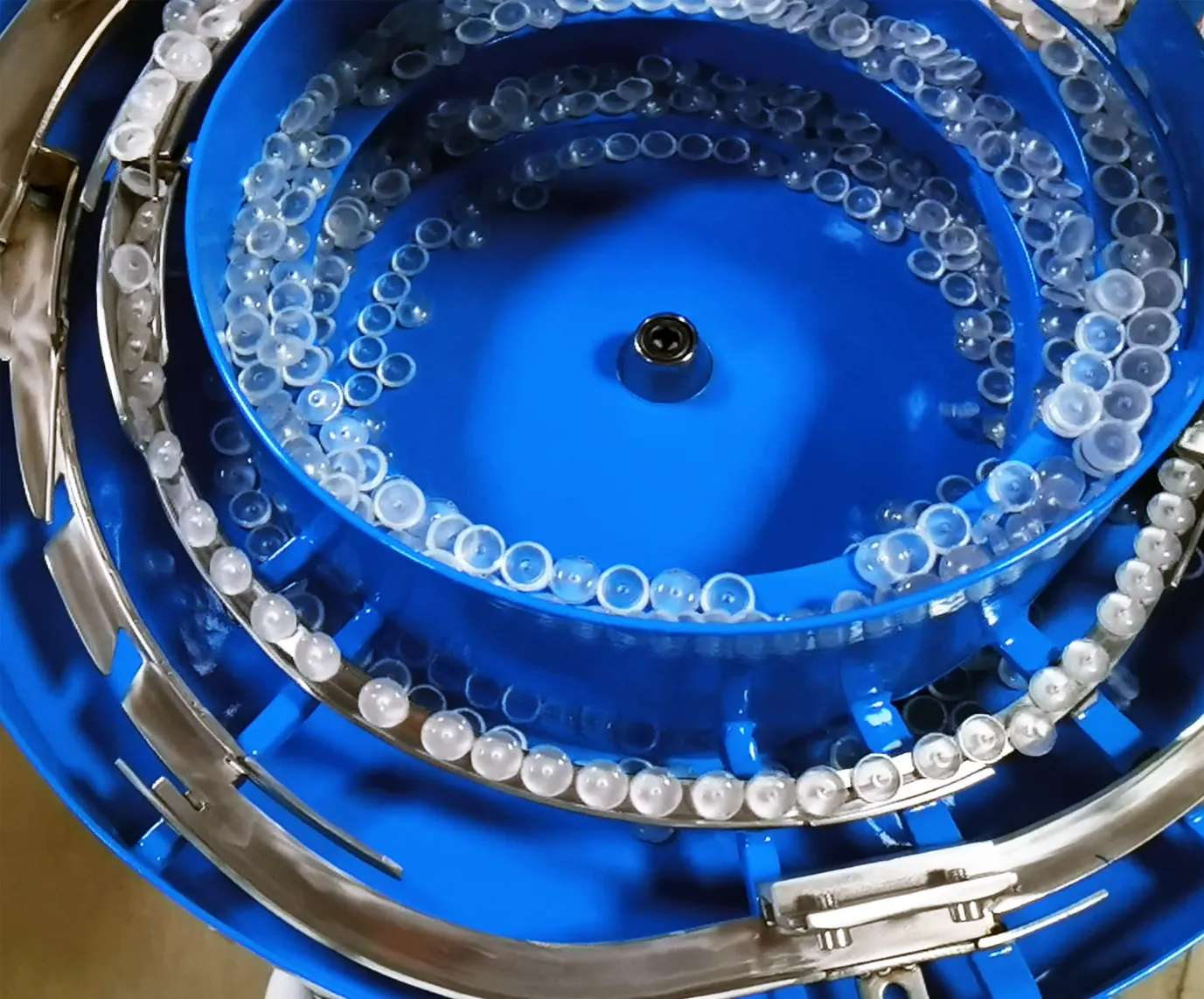
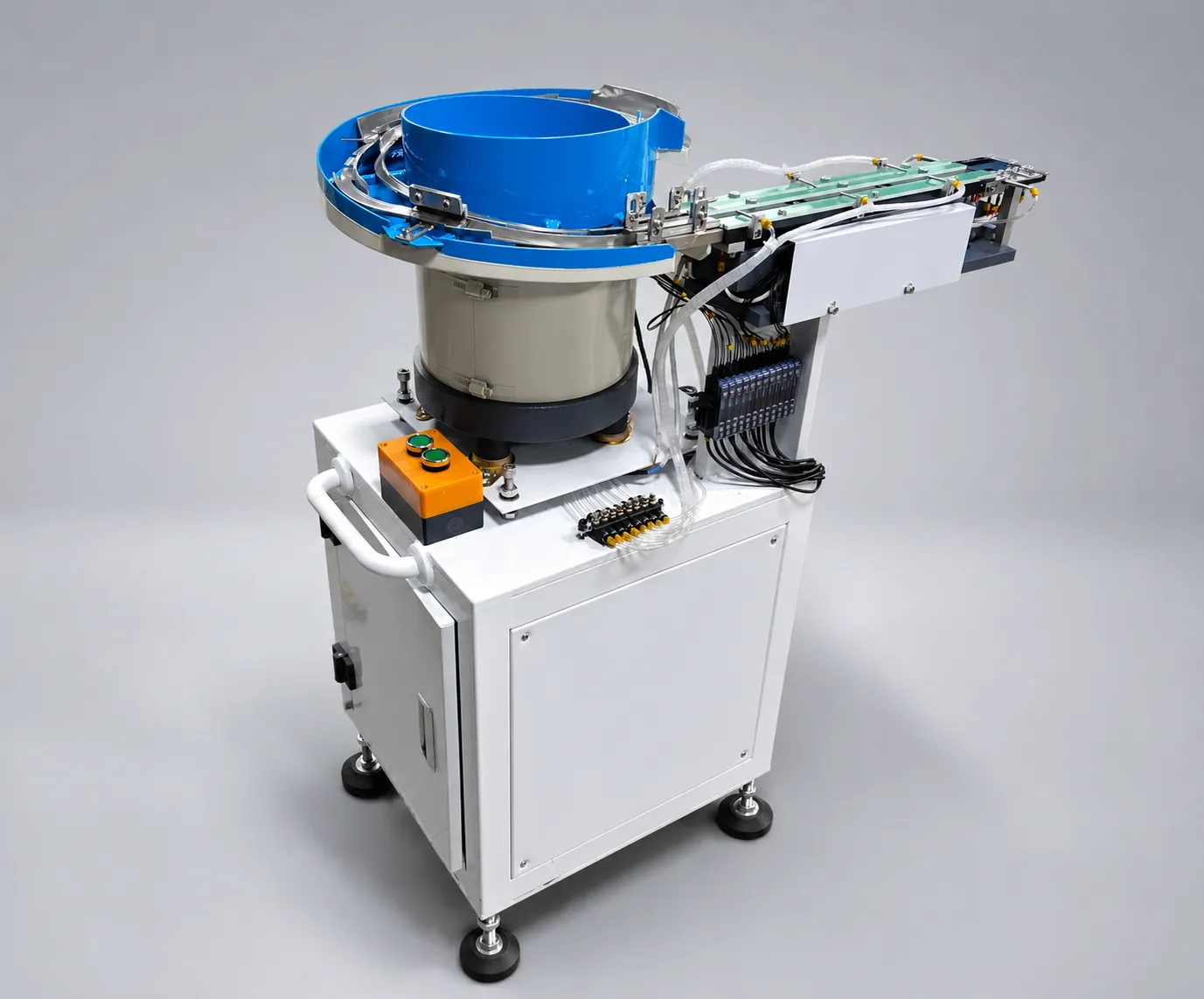
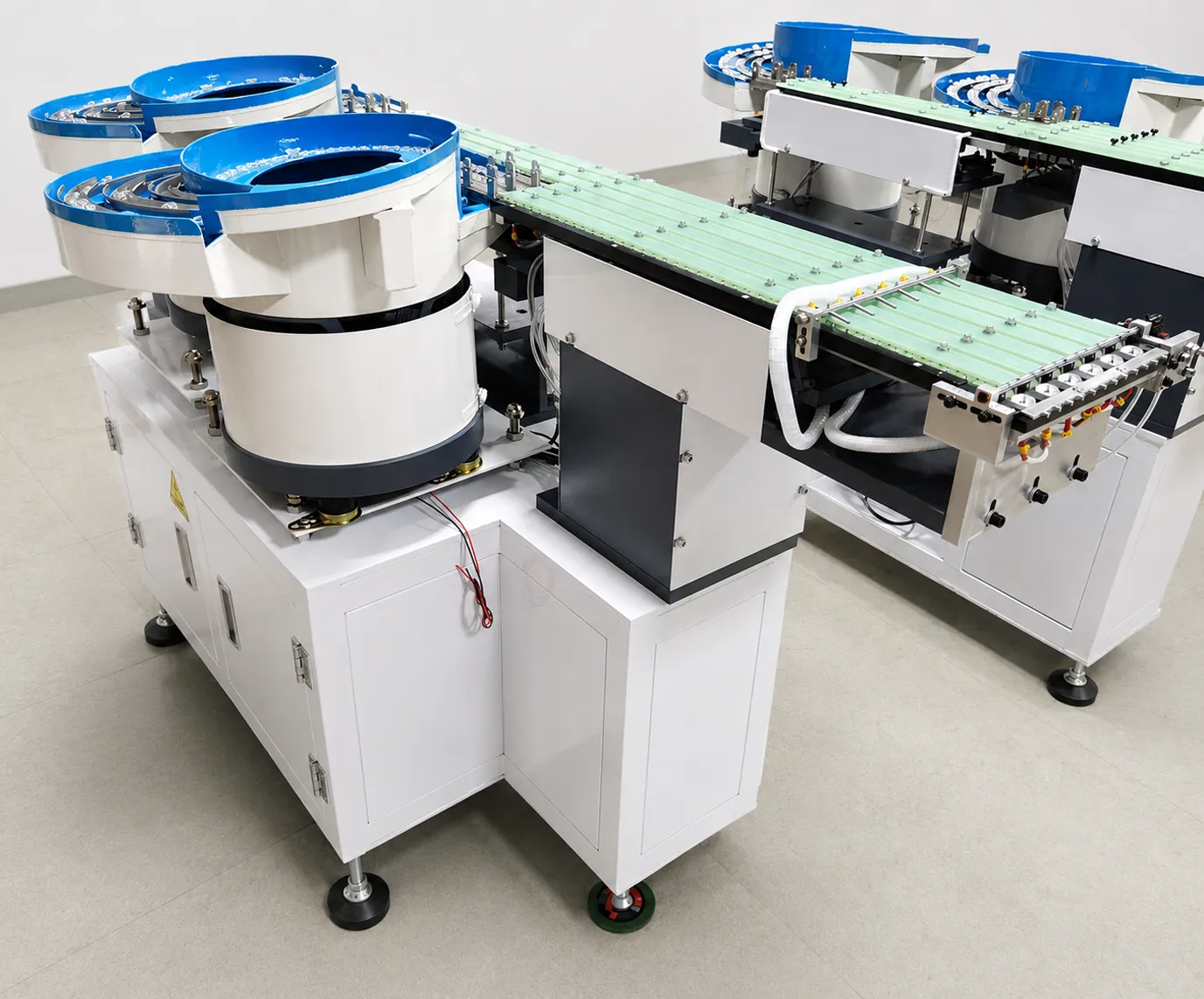
A vibratory bowl feeder converts electrical pulses into a small helical movement.
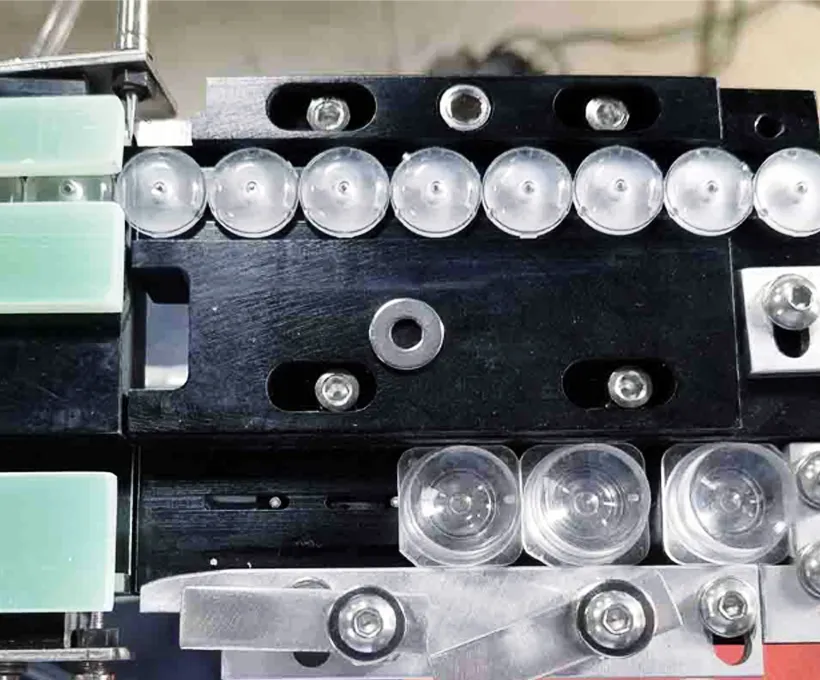
The linear track carries oriented lenses from the bowl to the nozzle.
Dual-frequency vibration means the bowl and the linear track are driven independently.
The controller holds that amplitude steady as the load changes — a full bowl behaves differently from a nearly empty one.
These are the numbers a feeding proposal is judged on.
Component life and process discipline are the second half of the quality picture.
Changeover time is the term that decides whether automation pays on a high-mix line.
Feeding has to be balanced against the rest of the line.
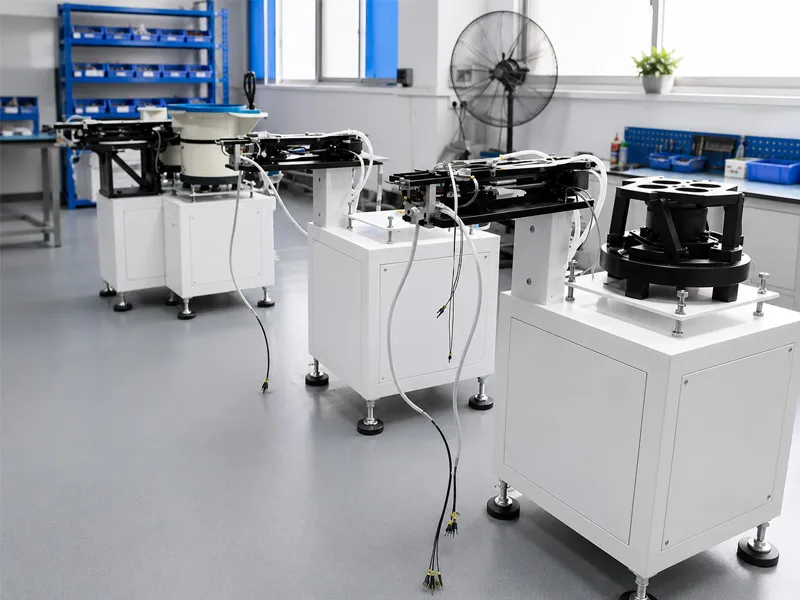
Trade and compliance terms appear on every quotation and on every crate.
Commercial terms decide the real cost of ownership far more than the list price of the bowl.
Feeder payback comes from four numbers: throughput (manual 800–1,200 UPH vs 3,600–7,200 UPH per channel), rejection (5–15% vs under 0.5%), changeover (15–30 minutes vs under 5), and labor released from tray loading and visual checks. Across published JHIMS lens-feeding projects the combined effect lands in a 6–11 month payback, most sensitive to reject cost: a factory scrapping 10% of lenses pays back far sooner than one scrapping 2%.
Two practical terms complete the picture. A sample test — sending 500–800 lenses for a 48-hour trial run on the customer lens — is the cheapest way to verify orientation quality before committing to tooling. Acceptance criteria are the measurable conditions written into the order: throughput, rejection ceiling, alignment tolerance, changeover time and the documentation delivered at handover.
Use this table as a translation sheet when reading a feeder specification or a quotation. The middle column is the definition you will find in a datasheet; the right column is the reason the term appears in a commercial discussion at all.
| Term | What it means | Why it matters |
|---|---|---|
| SMT | Surface mount technology: components mounted directly on the PCB surface. | Defines the process the feeder has to serve. |
| CPH / UPH | Components (or units) processed per hour. | The headline throughput number in any offer. |
| Vibratory bowl feeder | Bowl driven by electromagnetic pulses that lifts parts along a spiral track. | Stores, separates and orients lenses. |
| Linear track | Straight section between bowl and pickup point. | Buffers lenses so the mounter never waits. |
| Escapement | Gate that releases exactly one lens per cycle. | Prevents double picks and misfeeds. |
| Orientation gate | Shaped feature that rejects wrongly oriented lenses. | The core mechanism behind rejection rate. |
| Pickup point | Fixed position where the nozzle meets the lens. | Determines alignment tolerance in placement. |
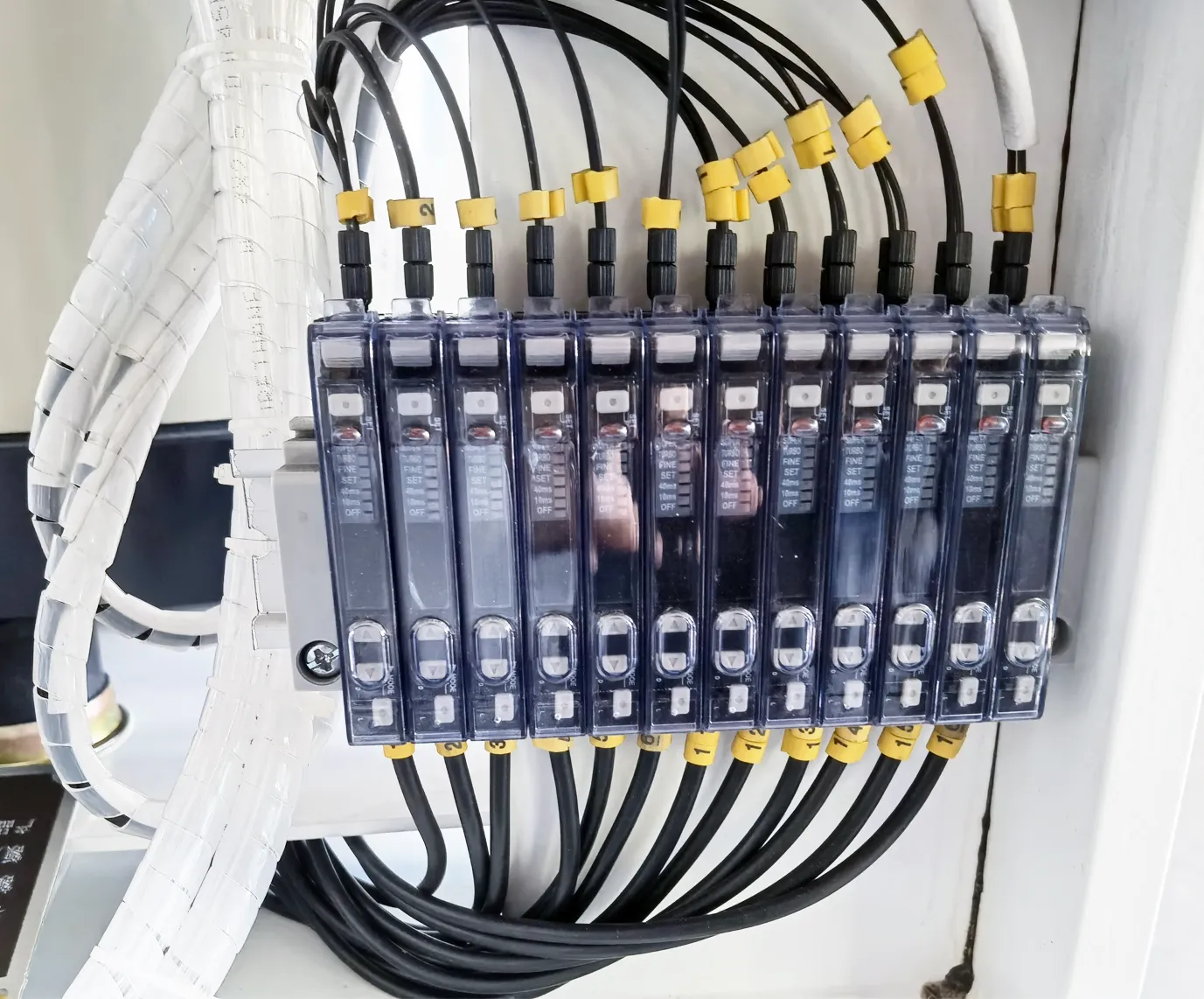
| Fiber-optic sensor | Optical sensor that detects and counts lenses on the track. | Detects empty track and jams immediately. |
| Dual-frequency vibration | Independent drives for bowl (50–120 Hz) and track (100–200 Hz). | Speed without sacrificing orientation quality. |
| PID control | Feedback loop holding vibration amplitude steady. | Keeps output stable as the bowl empties. |
| PLC | Industrial controller running the feeding sequence. | Stores recipes and enables one-button changeover. |
| HMI | Operator touchscreen panel. | Multi-language operation and alarm visibility. |
| Modbus TCP | Open industrial communication protocol. | Connects the feeder to MES and OEE reporting. |
| Rejection rate | Share of lenses that cannot be placed or fail inspection. | Manual 5–15% versus under 0.5% automatic. |
| Cpk | Process capability index; 1.33 is the usual acceptance line. | Proves the feed is repeatable, not just fast. |
| OEE | Availability x performance x quality; world-class above 85%. | Shows what the feeder costs the line when it stalls. |
| Changeover time | Time to switch lens type, including tooling and recipe. | Manual 15–30 minutes versus under 5 minutes. |
| ESD-safe configuration | Surface resistance held at 10^6–10^9 ohm with grounding. | Protects lenses and boards from static damage. |
| IATF 16949 / ISO 13485 | Automotive and medical quality standards. | Decide documentation and validation requirements. |
| ISPM-15 | International wood packaging standard. | Crates clear customs without delay. |
| DDP | Delivered duty paid Incoterm. | One all-inclusive price to the destination. |
The table below collects the published figures that are normally quoted side by side in a feeding proposal. Treat the automatic column as the specification to be verified at acceptance, not as a marketing claim: every line can be measured on your own lens during a sample test.
| Metric | Manual feeding | DPS-2 automatic feeding |
|---|---|---|
| Throughput | 800–1,200 UPH | 3,600–7,200 UPH per channel |
| Rejection rate | 5–15% | under 0.5% |
| Changeover between lens types | 15–30 minutes | under 5 minutes with stored recipes |
| Operators per feeding station | 1 operator continuously | none during production |
| Cpk | 1.33 typical | verified per recipe at acceptance |
| Placement alignment | operator-dependent | ±1 mm pickup alignment |
| Cycle time per lens | manual pick and place | 0.5–1 second per lens |
| Lens size range | limited by dexterity | 3–25 mm |
| Payback | not applicable | 6–11 months on published projects |
| Sample test | not needed | 500–800 lenses, free 48-hour trial |
When a feeder is offered, ask for five numbers in writing: throughput per channel in UPH on your lens, rejection rate measured in a trial, changeover time with tooling included, alignment tolerance at the pickup point, and the MTBF of the wearing components. Then ask which lens profiles are already stored in the PLC, and what happens when the track empties mid-panel — does the mounter wait, or does the feeder signal a controlled stop?
Finally, match the terms to your own data. If your line changes lens type twice a week, changeover time dominates the payback calculation. If your scrap cost per lens is high, rejection rate dominates. If you run one lens for months, throughput and uptime dominate. The glossary exists so that those three sentences can be written in the same units by both sides of the table.
This glossary is the reference page of a four-part lens feeding cluster. Read them in order when specifying a new feeding station, or go straight to the troubleshooting guide if a feeder is already running.
See the linked guides below.
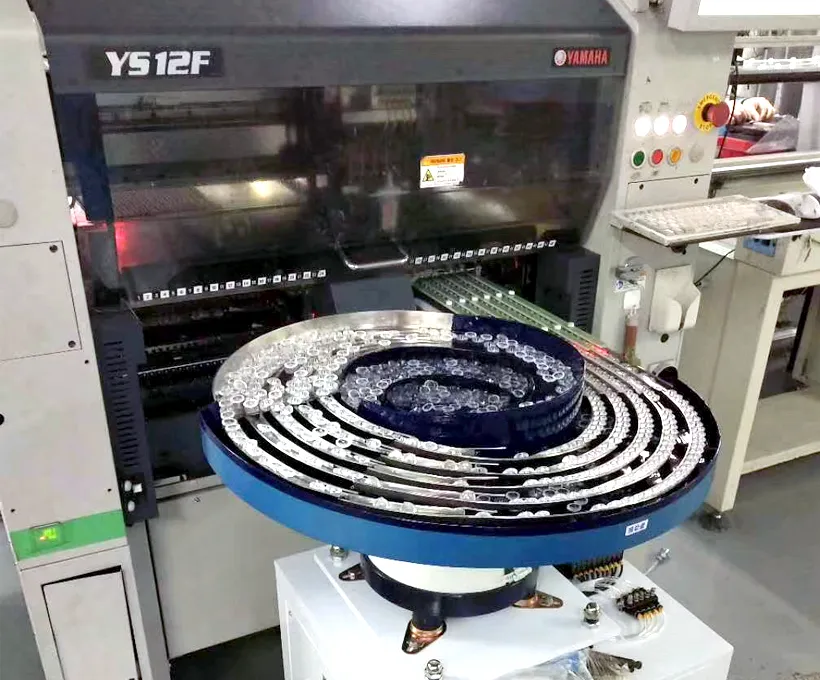 Buying GuideHow to Choose an SMT Lens Feeder (2026)An 8-step buying path, supplier scorecard and dual vs single frequency comparisonRead article →
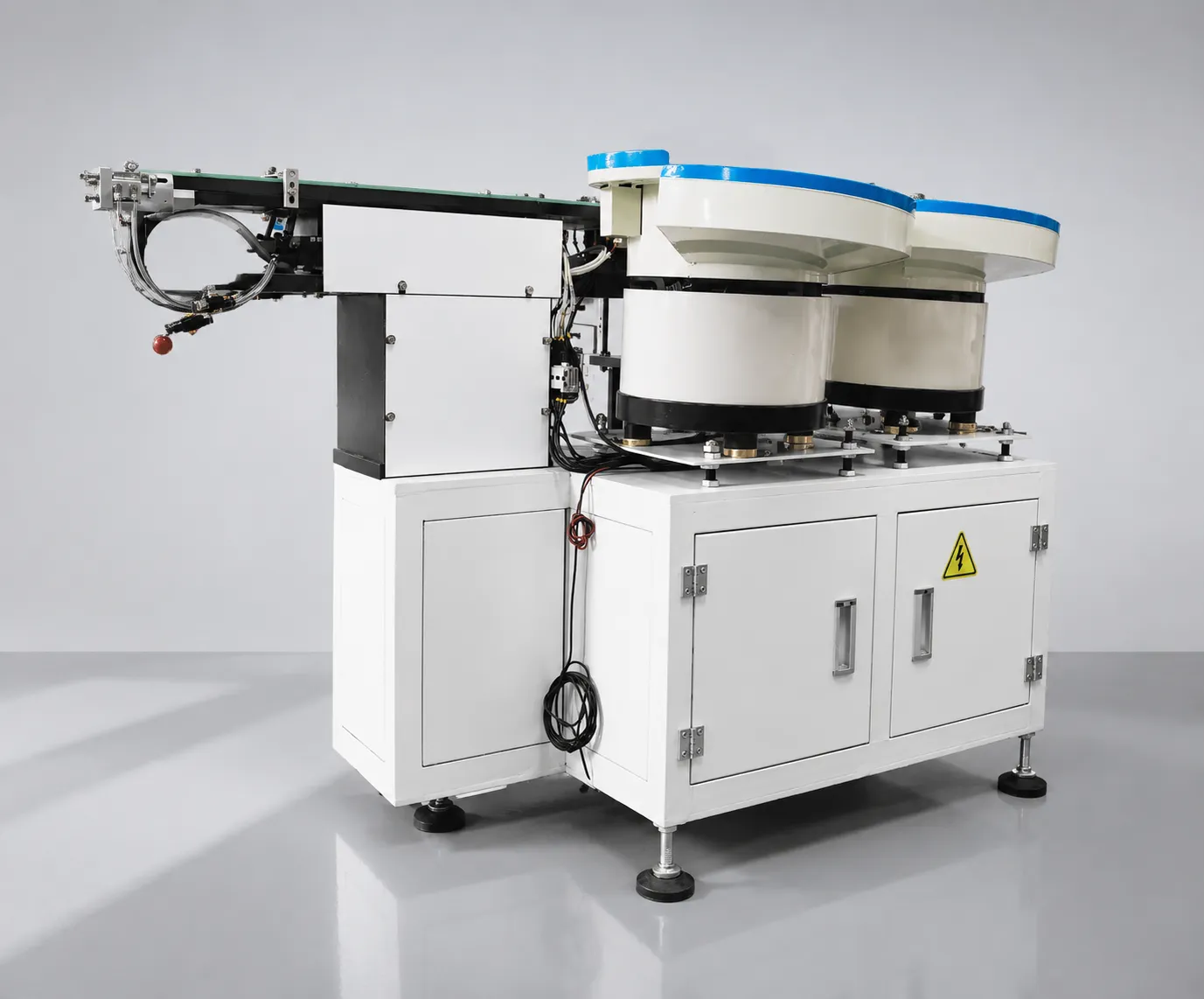 Case StudySMT Lens Feeder ROI Case StudyReal KPI transition: defect rate 12%→0.3%, UPH 900→3420, 7-month paybackRead article →GlossarySMT Lens Feeding GlossaryTerminology for vibratory feeding, PID control, and UPH metrics.Read glossary →
 ComparisonDual vs Single Frequency Vibratory FeederTechnical comparison of the two vibration technologiesRead article →
 ComparisonManual vs Automatic SMT Lens FeederWhich feeding method is right for your production?Read article →
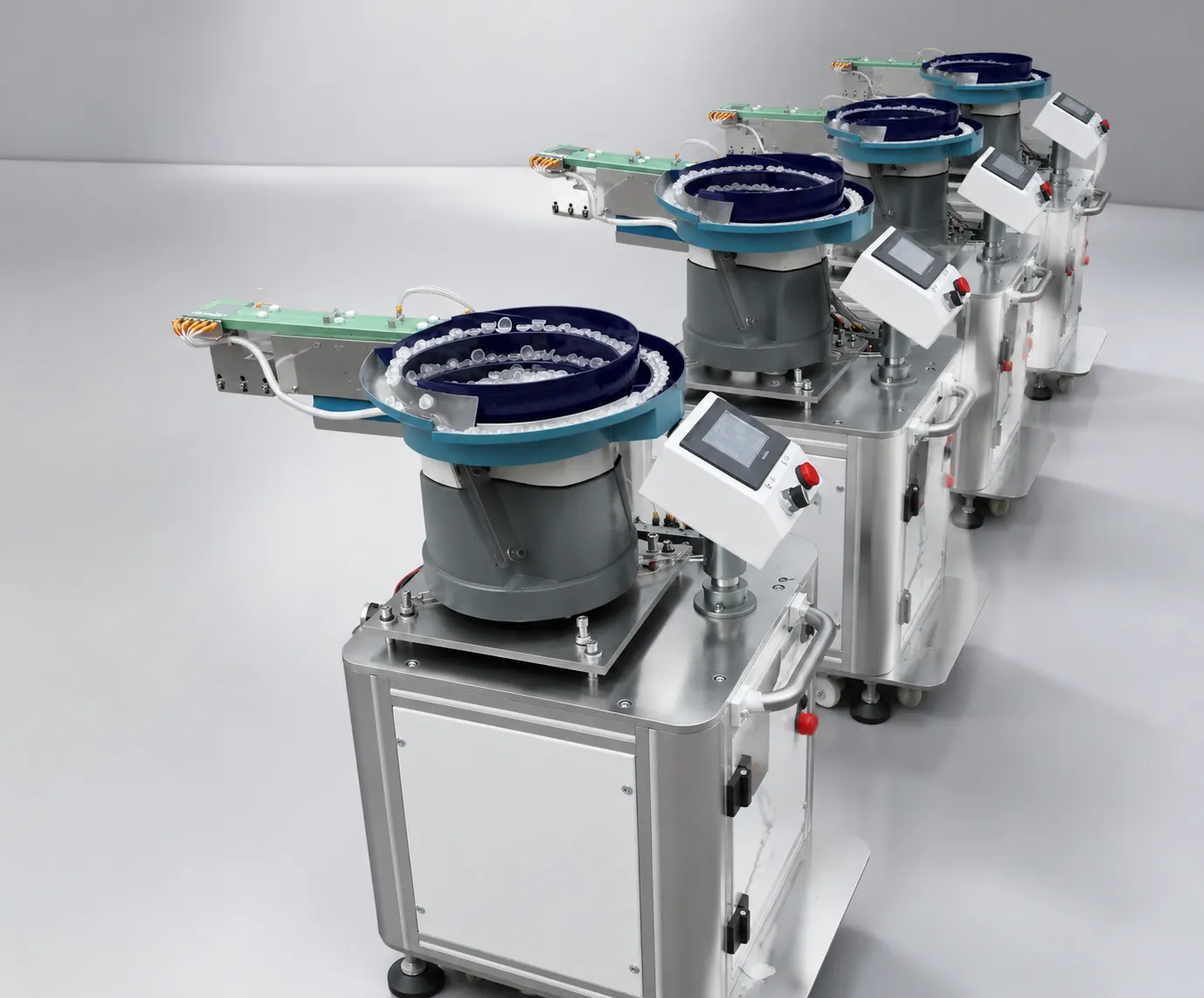 ProductDPS-2 Product KnowledgeWhat the DPS-2 is, how it works, and what it can feed.Read more →
Contact our engineers to suggest a term for this glossary, or ask about lens feeding automation for your line.
These terms in practice: watch the lens vibratory feeder on a pick-and-place machine and automatic LED lens feeding in production. More machine and factory footage is on the JHIMS YouTube channel.