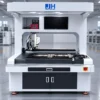
JH-431CCD Automatic High-Precision Eyelash Glue Dispensing Machine

اطلب عرض سعر

JH-431CCD — Automatic High-Precision Eyelash Glue Dispensing Machine
300 shots/second±0.02 mm accuracy0.01 ml min. dot400×300×100 mm ×20-500 mm/s
  • 🔁 Dual stations glue one tray while the next one loads
  • 🎯 Panoramic CCD vision locates every lash root
  • 💧 Piezo jet valve doses 0.01 ml without touching the lash
طلب عرض سعر

AUTOMATIC EYELASH GLUE DISPENSING MACHINE

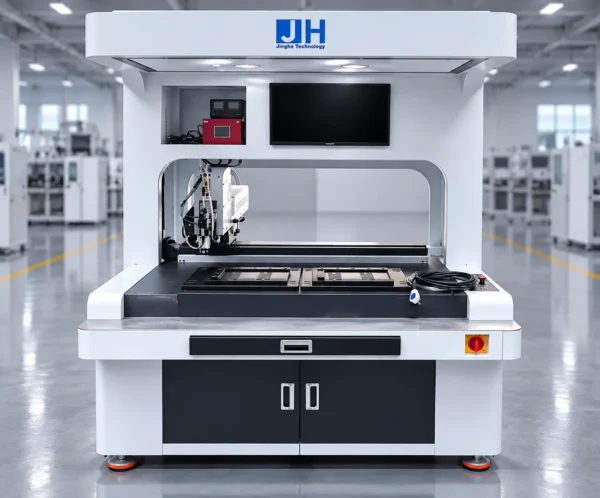
JHIMS JH-431CCD Automatic High-Precision Eyelash Glue Dispensing Machine

Panoramic CCD vision finds every lash root. The piezo jet valve lays 300 dots a second at ±0.02 mm — on a floor-standing frame with two working stations.
🏅 معتمد وفق ISO 9001
💬 24/7 After-Sales Support
🌍 30+ Countries Served
🔧 36 مهندس R&D
📅 تأسست عام 2012 — أكثر من 12 عامًا من التميز


التحديات & حلول JHIMS

Why Hand Gluing Caps Your Lash Output

  • Hand gluing sets the pace for the whole lash line.
  • Dots land unevenly, so strips are reworked or scrapped.
  • Every operator glues a slightly different line.
  • Thin glue strings bridge neighbouring lashes.
  • Training a new gluer takes weeks of practice.
  • One person loads only one tray at a time.
  • Output stops when the gluer takes a break.

How the JH-431CCD Solves It

  • Vision jetting runs continuously at 300 shots a second.
  • 0.01 ml dosing repeats the same dot on every lash.
  • Every tray follows the same stored program.
  • Non-contact jetting breaks the string before it forms.
  • One shift of training covers load, start and unload.
  • Two stations glue one tray while the next loads.
  • The machine keeps its cycle through breaks and shifts.

نظرة عامة على المنتج

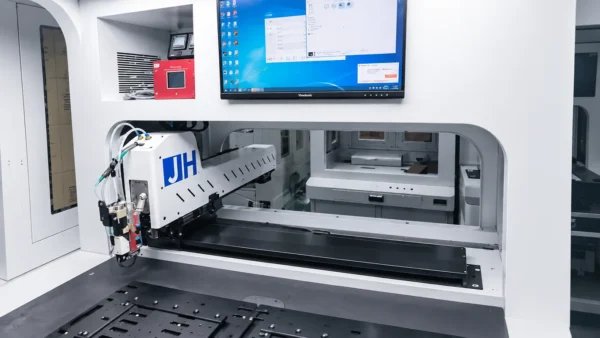
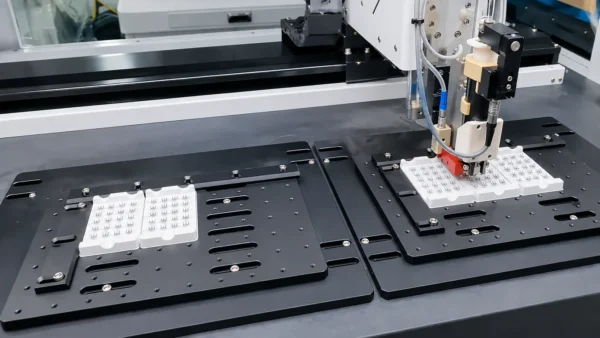
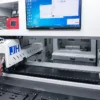
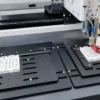
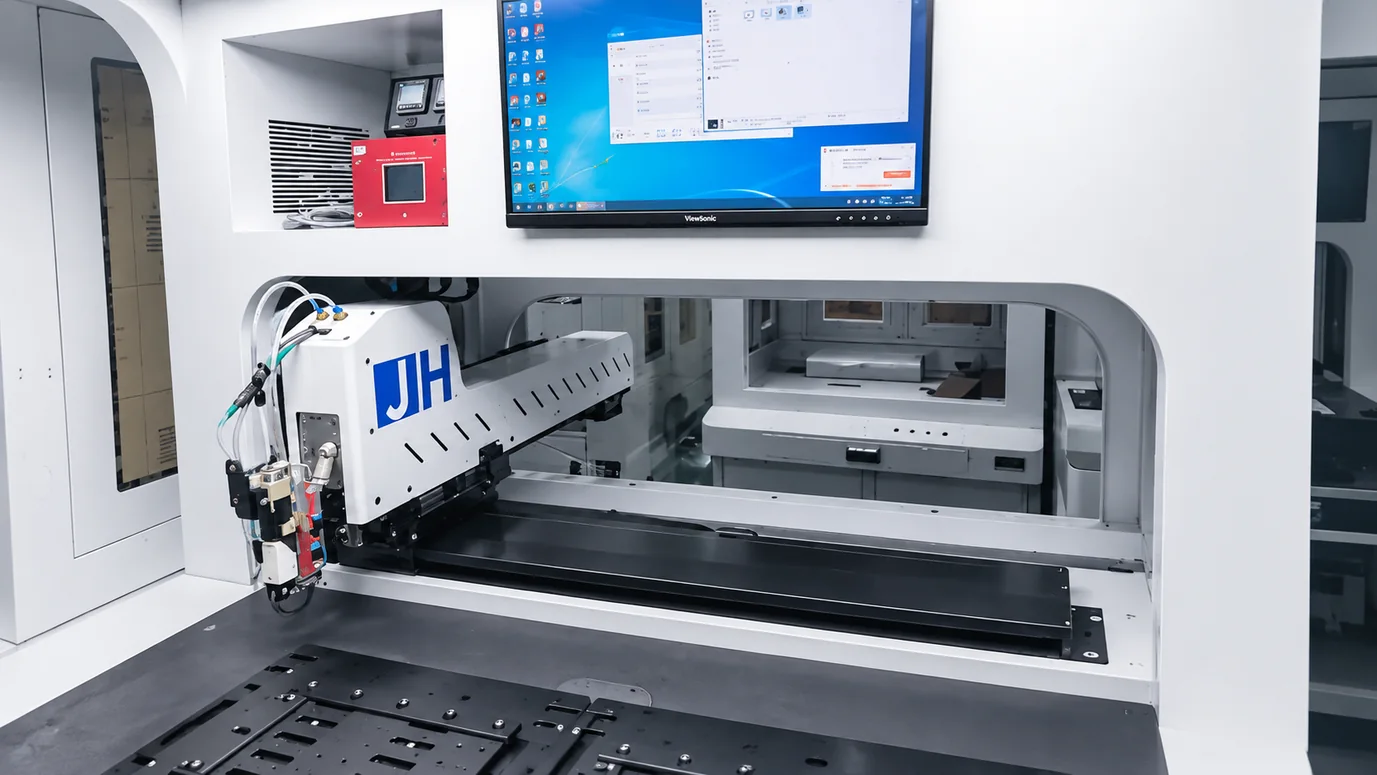
Interior of the JH-431CCD eyelash glue dispenser showing the dispensing gantry and black fixture worktable

الـ JHIMS JH-431CCD glues strip and cluster lashes on a floor-standing frame with two independent stations. A panoramic camera finds the lash roots, the software turns them into a jetting path, and a piezoelectric valve lays the glue without touching the lash. It is a lash glue dispenser built for tray-based lash production rather than a general-purpose robot fitted with a syringe. Glue type is not fixed: the same head runs epoxy, UV glue, black glue, silicone or hot melt, and the dispensing controller is selected to match your glue process.

  • Panoramic CCD vision — a 2000W pixel industrial camera maps the whole tray in one capture
  • Piezo jet valve — 300 shots a second, 0.01 ml minimum spit volume
  • ±0.02 mm accuracy and repeatability — grinding screw drive on a double guide rail
  • Dual stations — 400/300/100*2 mm range, one tray jetted while the next loads
  • Visual programming — capture, box the sample, draw the path, save the program
  • Recognition Mode 3 — a second locating pass on the lash root before jetting

📊 عرض المواصفات الكاملة

أبرز الميزات

🔍

Panoramic Vision Finds Every Lash Root

A 2000W pixel industrial camera maps the whole tray in one capture.

⚡

300 Shots a Second From a Piezo Jet

Non-contact jetting fires 300 times a second with a 0.05 second response.

🎯

±0.02 mm Accuracy and Repeatability

Grinding screw and double guide rail hold position tray after tray.

💧

0.01 ml Minimum Spit Volume

Dose set in software and matched to your glue viscosity.

🔁

Two Stations, No Idle Spindle

One tray is jetted while the operator loads the next.

📐

400/300/100*2 mm Working Range

Two 400 × 300 mm stations, each with 100 mm of Z travel.

🧭

Recognition Mode 3 Re-Locates the Root

A second locating pass runs on the filtered lash image.

🖥️

Program in Pictures, Not Code

Capture the tray, box the sample, draw the path, save the file.

🚀

0-500 mm/s Travel, 10 kg Payload

Quick moves between rows, with capacity for trays and fixtures.

🧪

Runs Epoxy, UV, Black Glue and Silicone

The dispensing controller is selected to match your glue process.

المواصفات الفنية

المعامل المواصفة المعامل المواصفة
الطراز JH-431CCD Moving Range X/Y/Z (mm) 400/300/100*2
Programming Mode Visual Capture + Computer Programming Dispensing Efficiency 0.05 Second Response (Based on Glue Viscosity)
Visual System 2000W Pixel Industrial Camera Electronic Control System Industrial Control + Visual Software
Dispensing Needle Plastic Steel / TT / Metal Needle Dispensing Controller Selected Based on Glue Process
Minimum Spit Volume 0.01ml (Based on Glue Viscosity) Frequency of Occurrence 300 Times/Second
Maximum Load 10kg Moving Speed (mm/sec) 0-500
Motion Accuracy ±0.02mm قابلية التكرار ±0.02mm
Applied Fluid Epoxy Glue, Solder Paste, Silver Glue, UV Glue, Black Glue, Silica Gel, etc. Sensor/Photoelectric Omron in Japan
Type of Drive Lei Sai Servo Motor Transmission Mode Grinding Screw
Display Mode ViewSonic Display Slideway Double Guide Rail
ضغط هواء التشغيل 0.3-0.6MPA Input Power Supply AC220V

تكوين الماكينة — مكونات عالمية عالية الجودة

كل JHIMS JH-431CCD is built with world-class components. We source only from industry-leading brands to ensure long-term reliability and precision.

Lead Screw
Taiwan Province of China
Lead Screws
Runyang
الصين
Linear Guide — Double Rail
Lei Sai
الصين
Servo Motor & Servo Drive
Daheng
الصين
20 MP Industrial Camera & Lens
Omron
اليابان
Photoelectric Sensors
NSK
اليابان
المحامل
التحكم الصناعي
الصين
Industrial Personal Computer
Mingwei
Taiwan Province of China
Switching Power Supply
ViewSonic
الصين
الشاشة
Zi Qi
الصين
Precision CNC Machined Parts
Jinan Black
الصين
Marble Base

التطبيقات & القطاعات

الـ JHIMS JH-431CCD is built for lash production: strip lashes with black or clear stems, cluster lashes and individual rows, all jetted from the same head with a stored program for each lash type.

🪶
Black-Stem Strip Lashes
🫧
Clear-Stem Strip Lashes
✨
Cluster Lashes
🎯
Individual Lash Rows
📦
Lash Trays & Pallets
🏷️
Private-Label Beauty Lines

مركز المعرفة المتعمقة


Industry Solutions for Lash Gluing

High-Volume Strip Lash Lines

Two stations keep the cycle: one tray jetted while the next loads.

Cluster Lash Assembly

Recognition Mode 3 re-locates each fan root before the dot lands.

Clear-Stem Strips

A separate clear-stem parameter set handles low-contrast roots.

Multi-SKU Beauty Lines

Stored programs switch the machine between lash types in minutes.

Private-Label Production

The same program repeats the same dot on every private-label batch.

Industry Playbook — Where the JH-431CCD Runs

High-volume strip lash manufacturing. A strip lash line is judged on dot position and dot weight, not on how fast a hand can move. The JH-431CCD takes a 400 × 300 mm station, captures the tray with a 2000W pixel industrial camera, and fires 300 dots a second from a piezo jet valve with a 0.01ml minimum spit volume. Because the path is a saved program, the first tray of a shift and the thousandth tray follow the same coordinates, and the ±0.02mm accuracy is held by a grinding screw on a double guide rail instead of operator feel.

Cluster lash and lash extension supply. Cluster roots are curved, low contrast and packed close together, which is where a single vision pass fails. The JH-431CCD runs recognition mode 3: closure and filter parameters make the root continuous on the filtered image, then a second locating pass re-finds that root immediately before the dot is fired. Parameters are stored per lash type, so black stem, clear stem and lower lash programs sit side by side and switch in minutes instead of a mechanical changeover.

Private-label and contract cosmetics. A contract line usually carries several customers on one shift, each with its own tray, lash type and glue. Two stations let the operator load customer A while customer B is being jetted, and every program carries its own trajectory file, sample height and dispensing height. Glue is not fixed either: the same head runs epoxy, UV glue, black glue or silicone, and the dispensing controller is selected to match the glue process, so a new customer starts with a parameter set rather than a new machine.

Panoramic Vision Jetting Technology Guide

How Panoramic Vision Finds Lashes

The camera captures the tray and the software boxes each root — panoramic vision dispensing means no lash is hand-aligned.

Choosing a Recognition Mode

Modes 0 and 1 filter the image first; Mode 2 works on the raw image.

Why Mode 3 Needs Tuned Filters

Mode 3 locates the root on the filtered image, so filters come first.

Exposure Before Any Template

Exposure sets the gap between lash and backing; fix it before matching.

What the Four Extra Parameters Do

Horizontal closure, vertical closure, vertical filter, horizontal filter.

The Two Heights on the Machine

Sample height sets focus; dispensing height sets nozzle-to-lash gap.

Lash Gluing Manufacturing Guide

The Programming Routine

New file, exposure, sample box, ranges, parameters, path file, heights, Y offset.

The Single-Row Y-Offset Test

Run one row, check where the dots land, then set the offset.

Matching Parameters to Lash Type

Black stem, clear stem and lower lashes each have their own preset.

Daily Care for the Jet

Wipe the nozzle, confirm the jet, keep the air dry and the tray flat.

Keeping Glue Viscosity Steady

Nozzle and syringe heaters hold viscosity through the shift.

Production Workflow — JH-431CCD in Your Lash Line

See where the JHIMS JH-431CCD sits in lash production, from tray loading through vision capture to jetting and unloading.

Incoming Lash Trays
Vision Capture
Path Generated
JH-431CCD Jetting
⭐ هذا المنتج
Unload & Cure

01 Load the Tray — Clip the lash tray on the station and start the program.

02 Capture the Lashes — The panoramic camera maps the tray and boxes the sample.

03 Generate the Path — The software turns the recognised roots into a jetting path.

04 Jet the Glue — The piezo valve fires along the path without touching the lash.

05 Unload and Cure — The second station loads while the finished tray unloads.

Hand Gluing vs. the JH-431CCD

المؤشر Hand Gluing JHIMS JH-431CCD المزايا
Operator involvement per tray Glue every lash by hand, one row at a time Load, start, unload Hands off the glue
Dot placement Eyeball and hand alignment Panoramic vision, ±0.02 mm قابل للتكرار
Dot size Varies with squeeze and hand speed 0.01 ml minimum, set in software Dosed
Changeover between lash types Re-teach every operator Recall a stored program Minutes
Tray-to-tray consistency Drifts through the shift Same program, same path متسق
الإنتاج Capped by hand speed 300 shots a second No hand bottleneck
تدريب المشغّلين Weeks of practice Load, start and unload One shift

حاسبة العائد على الاستثمار (ROI) — اكتشف فترة الاسترداد

Enter your own figures — including the price you were quoted — to see the payback period. We do not publish machine prices; request a quote for yours.


Machine Detail — Inside the JH-431CCD

Four close-ups of the machine as built: the jetting valve, the dispensing head over the fixture plate, the piezoelectric controller and the vision programming screen.
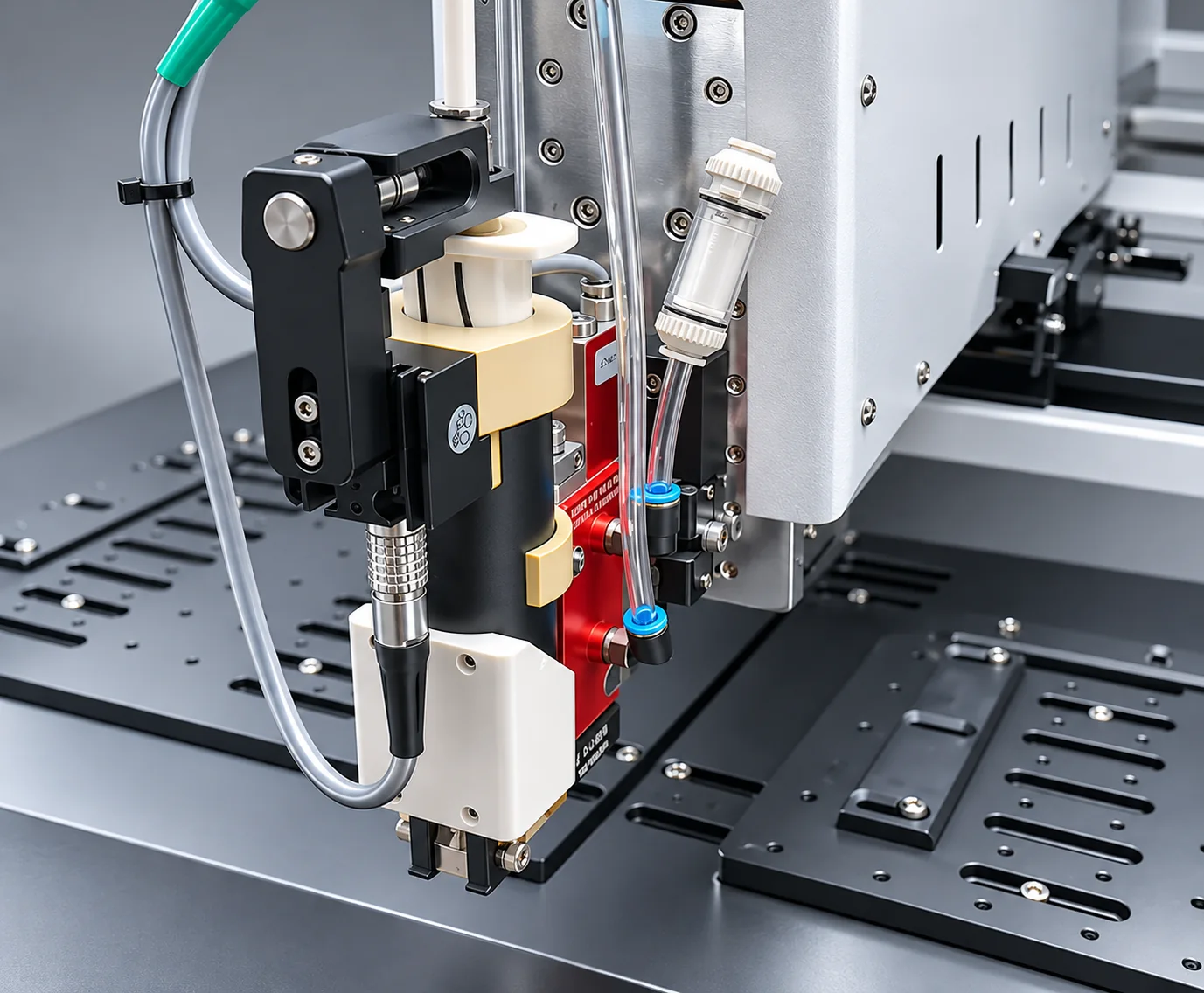
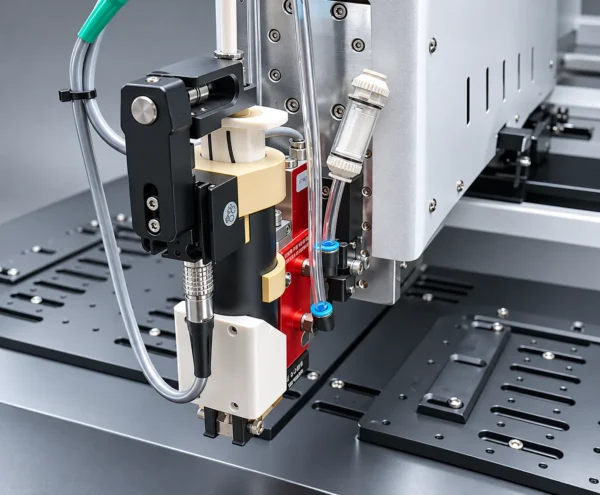
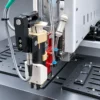
Piezoelectric jet valve and dispensing nozzle close-up on the JH-431CCD eyelash glue dispensing head

Jetting valve and nozzle — glue is fired, not dragged
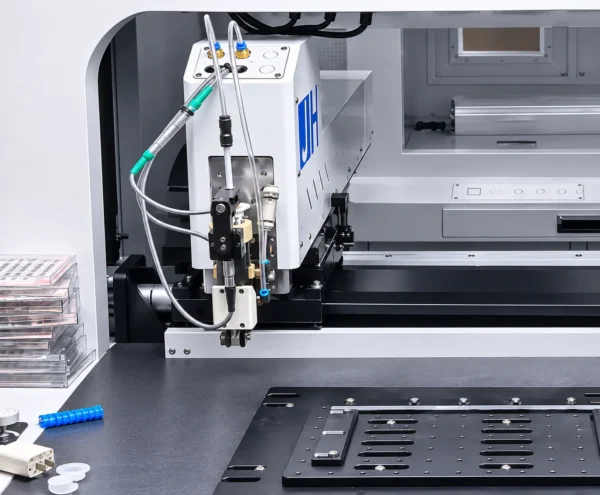
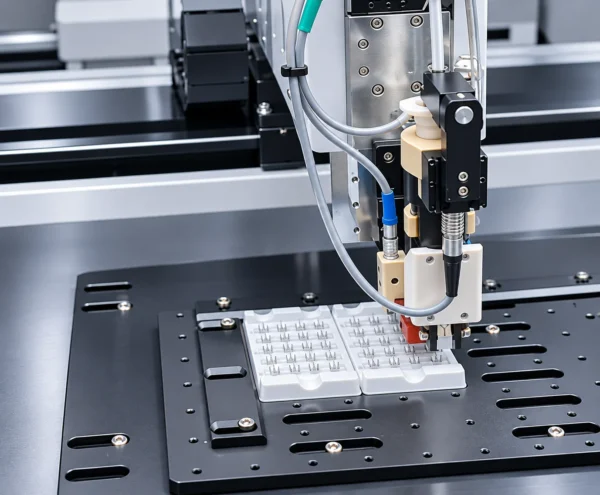
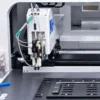
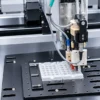
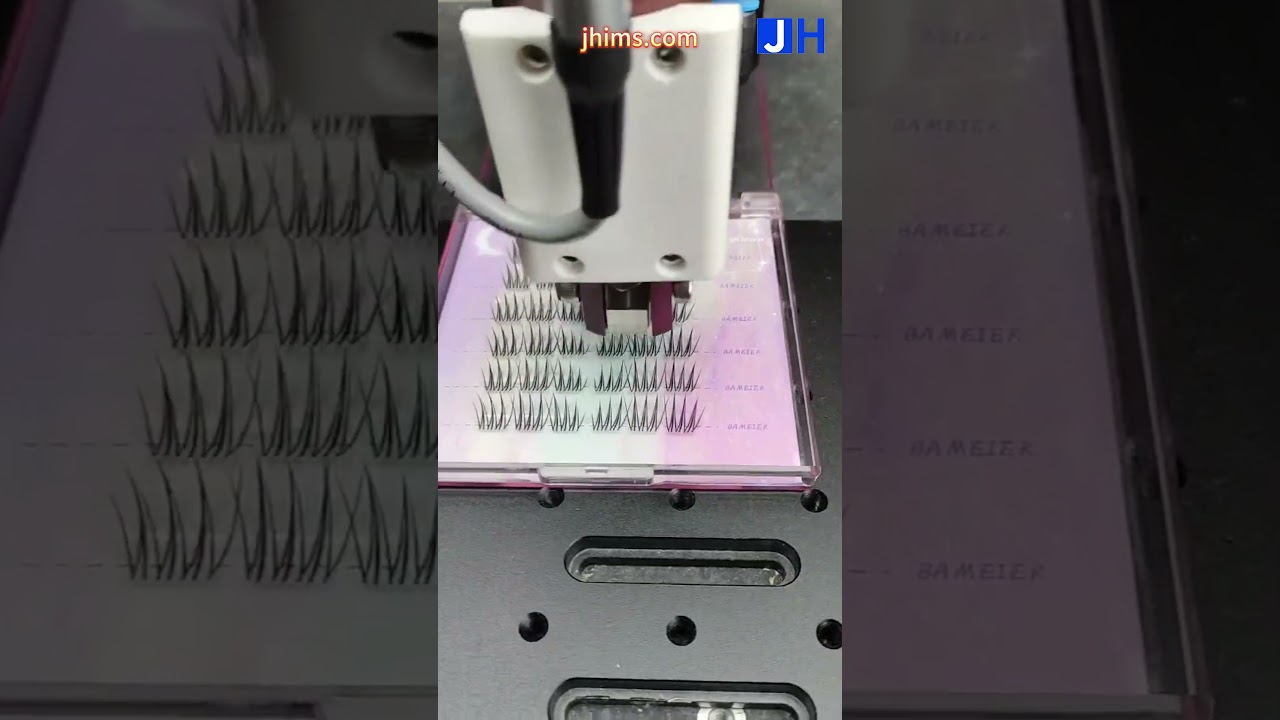
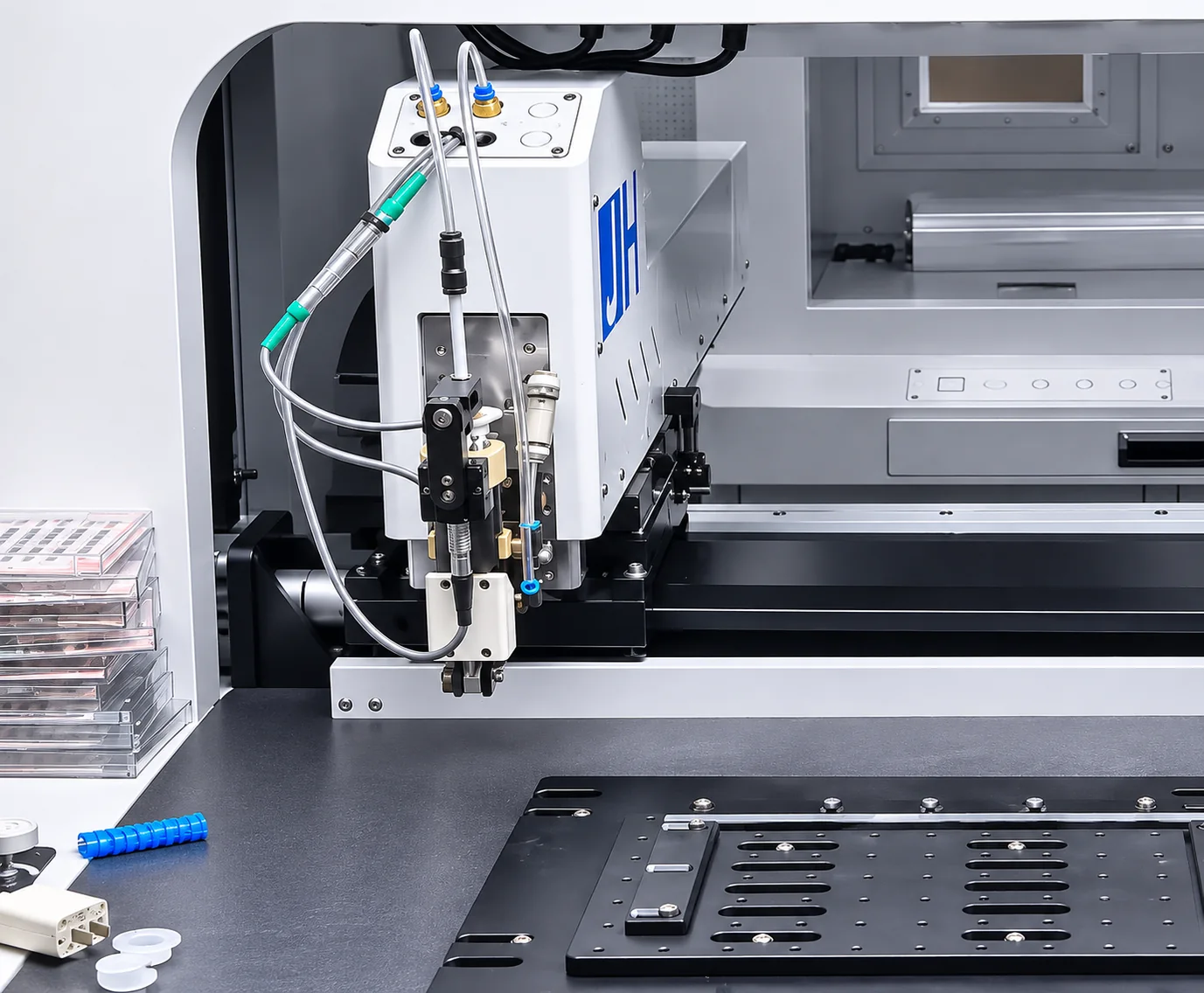
JH-431CCD dispensing head above the black fixture table, with the glue feed tubing and lash trays

Dispensing head over the fixture plate — lash trays clip flat below
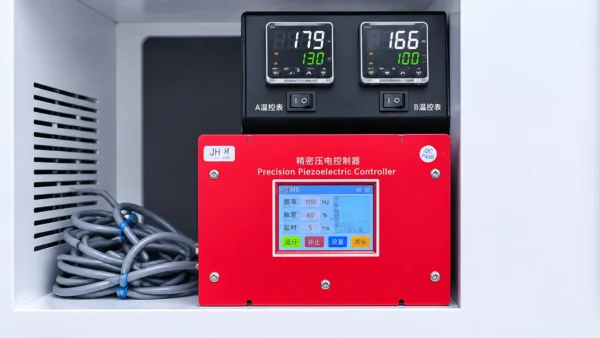
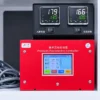
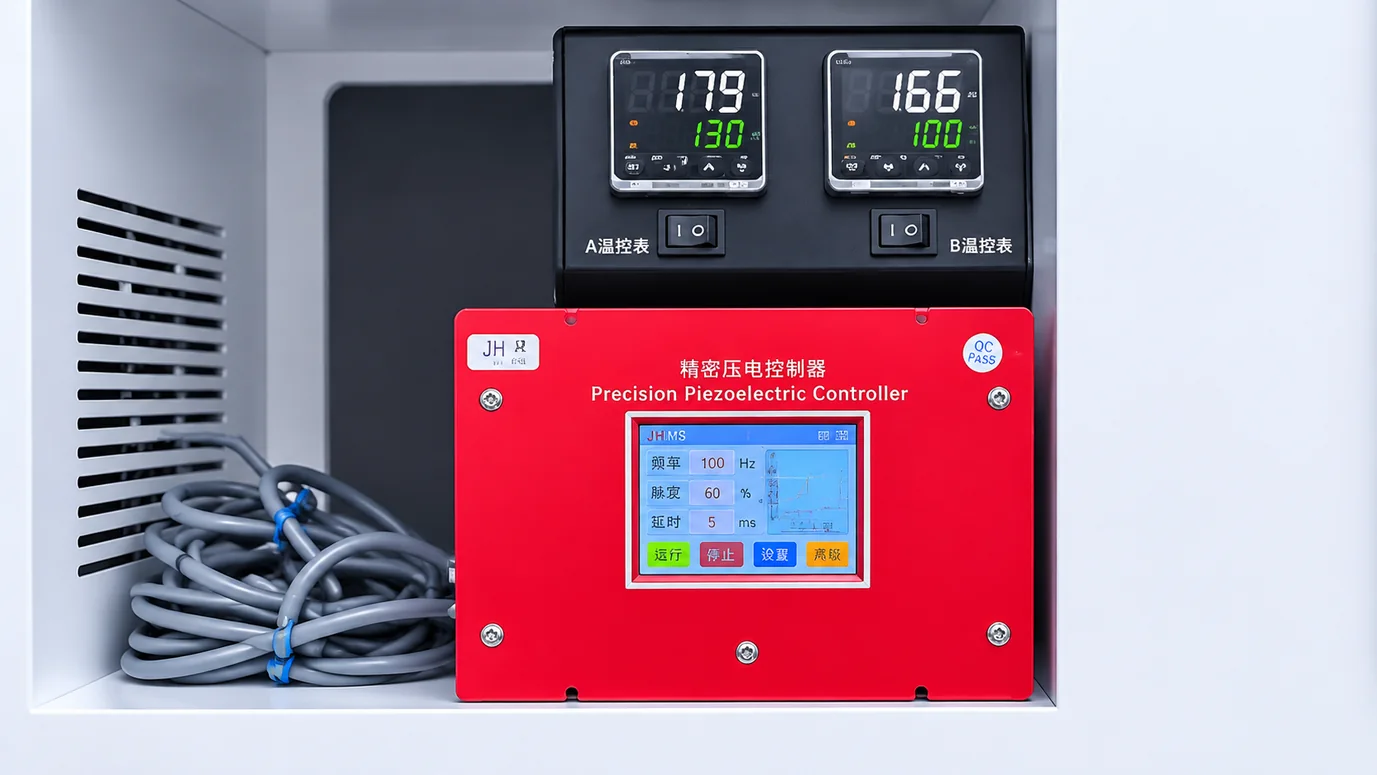
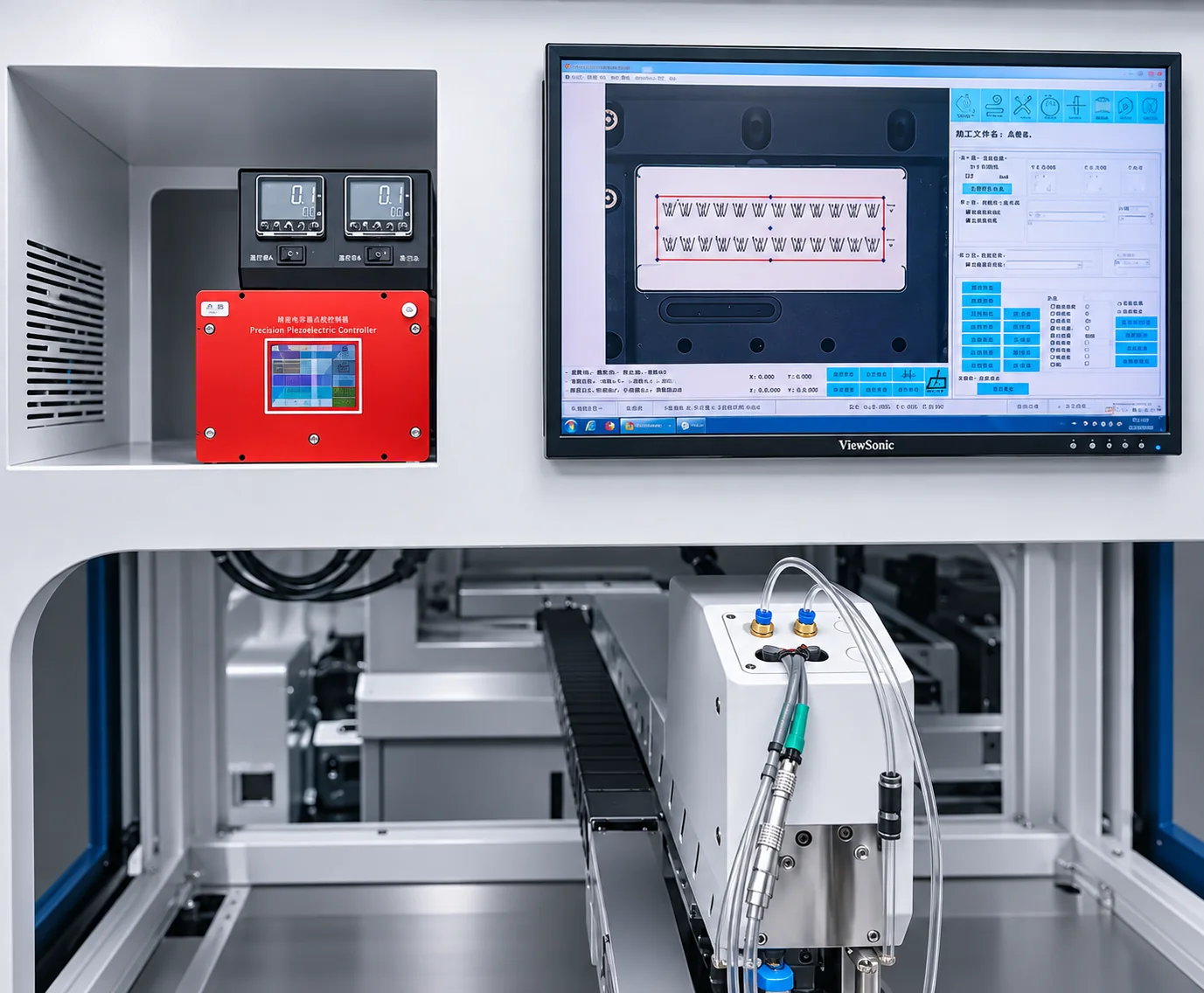
JH-431CCD precision piezoelectric controller with touch screen and the two temperature controllers A and B

Piezoelectric controller — jet parameters and two temperature loops
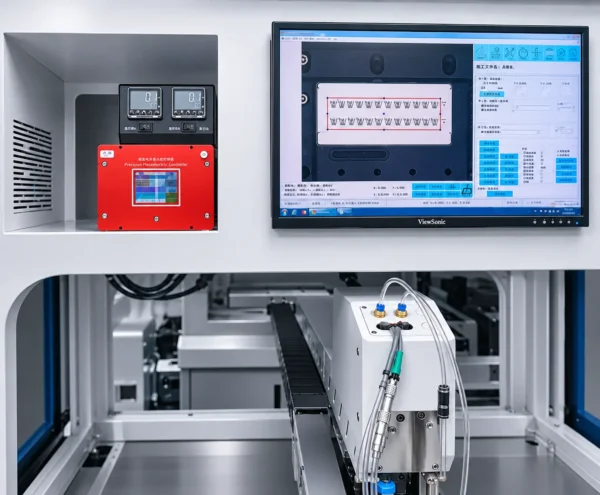
JH-431CCD control cabinet with the precision piezoelectric controller and the vision programming screen showing the lash dispensing path

Vision programming screen — tray image, lash roots and the jetting path

Product Videos — See the JH-431CCD in Action

Watch the JHIMS JH-431CCD performing real-world production tasks. All videos are hosted on YouTube for fast, reliable streaming worldwide.
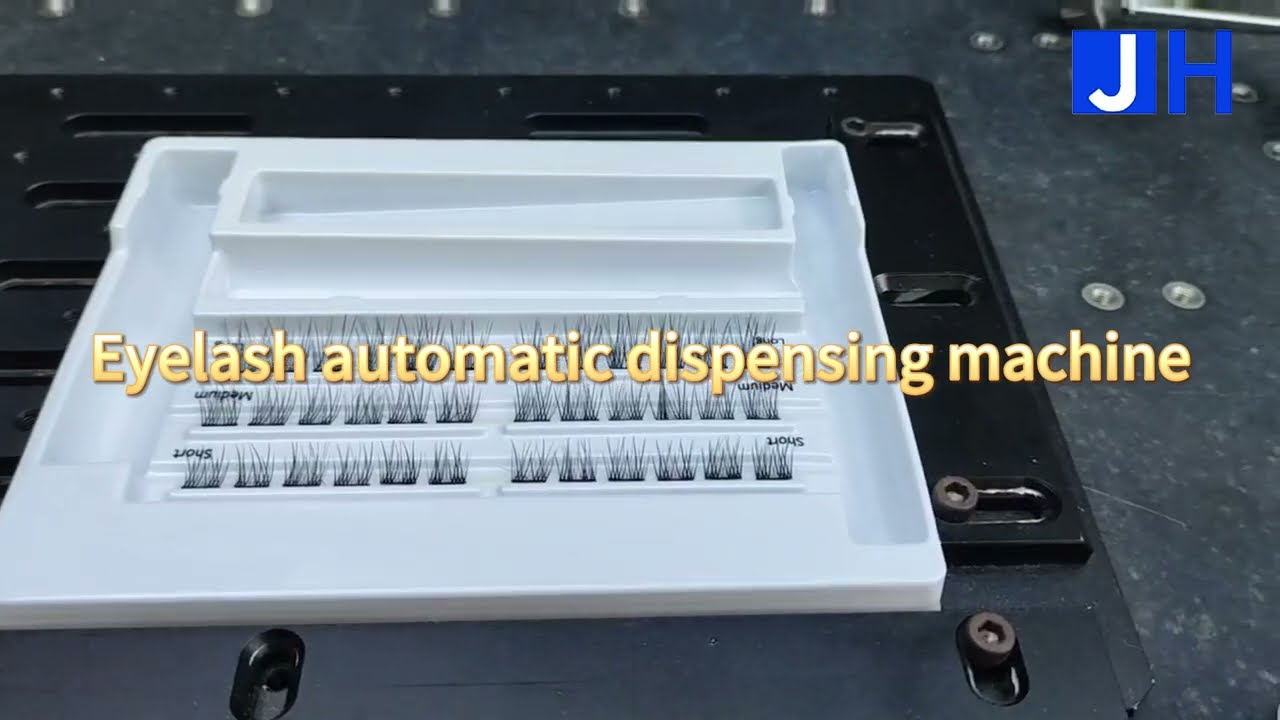
JHIMS | Eyelash Automatic Dispensing machine | Machine for manufacturing eyelash #Eyelash #lash
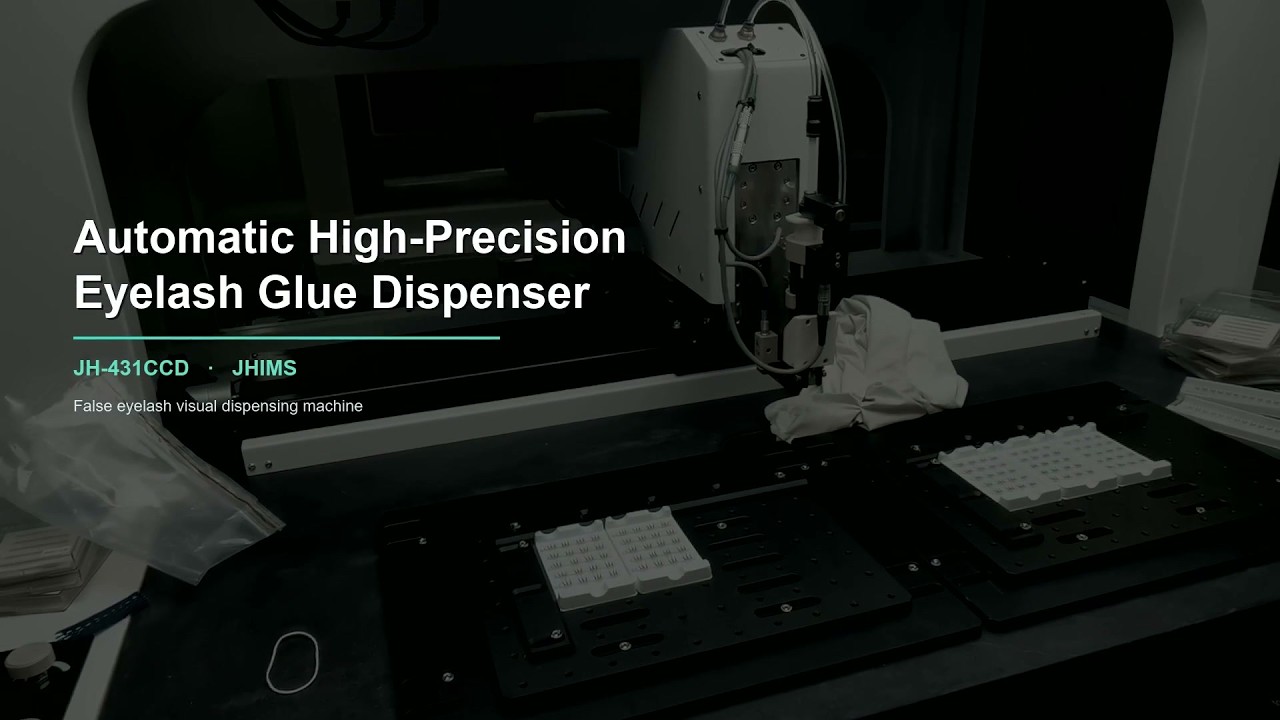
JHIMS Eyelash glue dispensing machine Demo
JHIMS | How to make false eyelashes ? Eyelash Dispensing machine #eyelash #lash
Eyelash hot melt glue coating machine #eyelash #lash #Glue coating machine

قصص نجاح العملاء

Delivered to Eyelash Manufacturers Worldwide

Real JHIMS deliveries behind the JH-431CCD — one floor-standing dual-station vision glue dispenser shipped to an eyelash producer in Vietnam in November 2026, and seven X4 lash tube-inserting machines delivered to an Indonesian lash factory across 2025–2026.
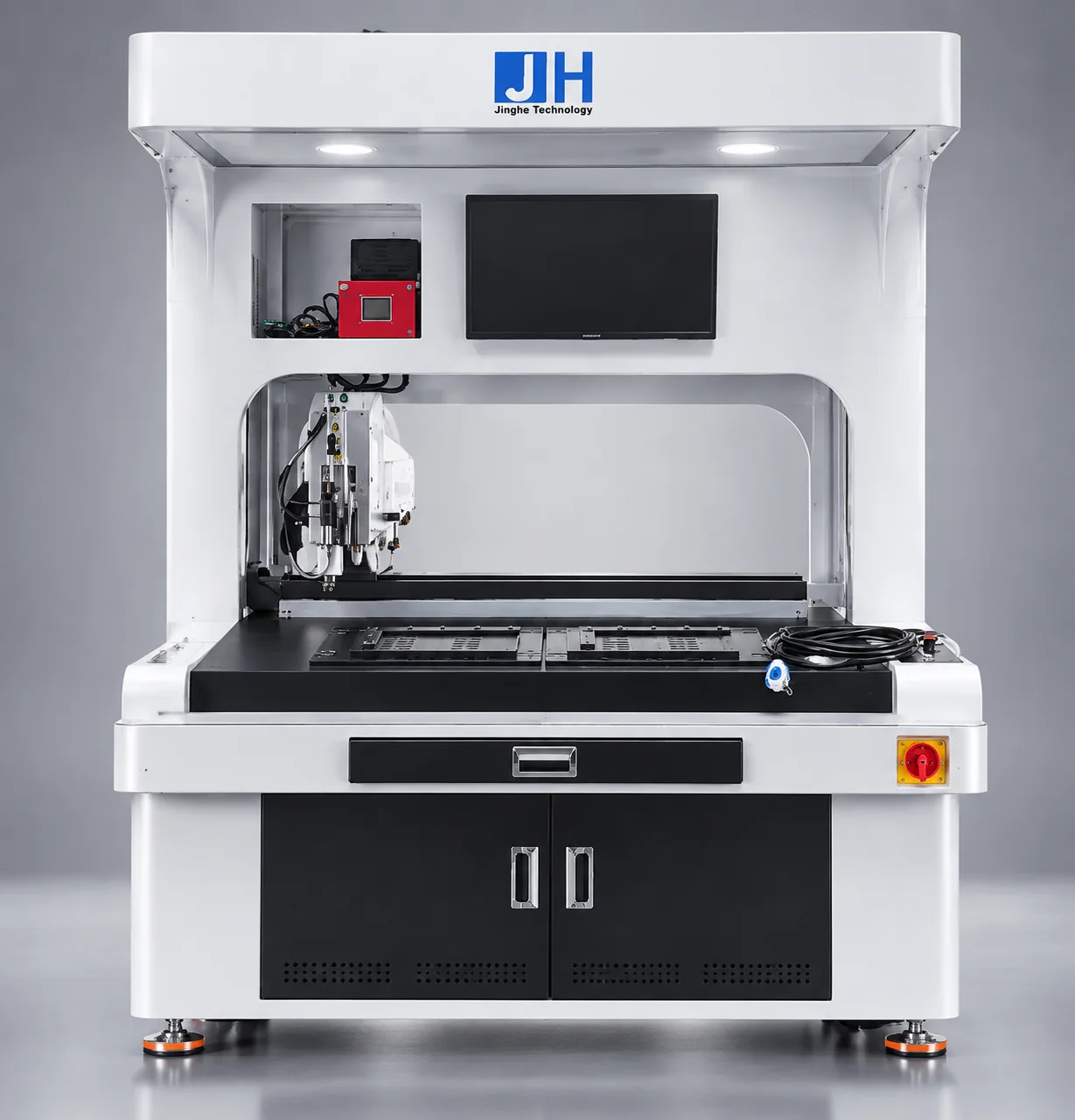
JH-431CCD automatic eyelash glue dispensing machine, floor-standing dual-station panoramic vision dispenser, front viewEYELASH · VIETNAM
فيتنامEYELASH MANUFACTURING

JH-431CCD Floor-Standing Dual-Station Glue Dispenser

One unit shipped in November 2026 to an eyelash producer in Vietnam, configured as the floor-standing dual-station panoramic vision machine.
1الوحدة المسلّمة
Nov 2026تم الشحن
Dualالمحطات
  • Panoramic vision jetting configuration
  • Dual-station fixtures for tray loading
  • Shipped from Shenzhen to Vietnam
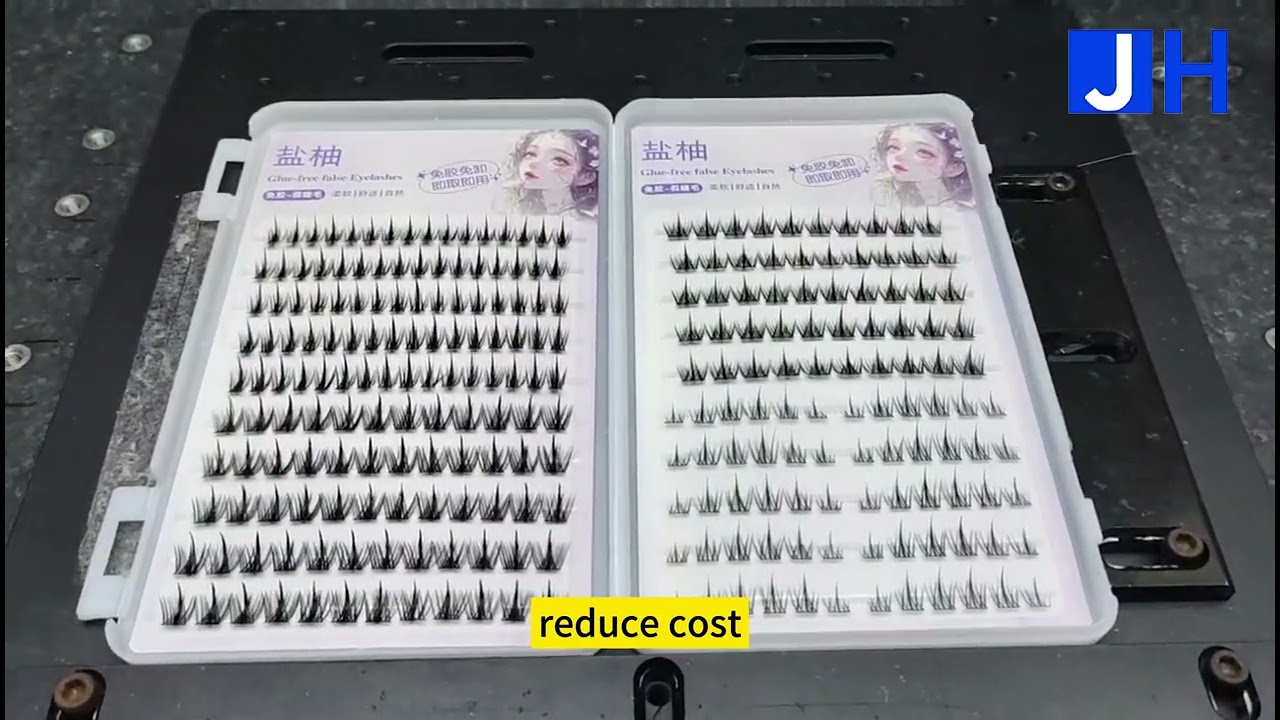
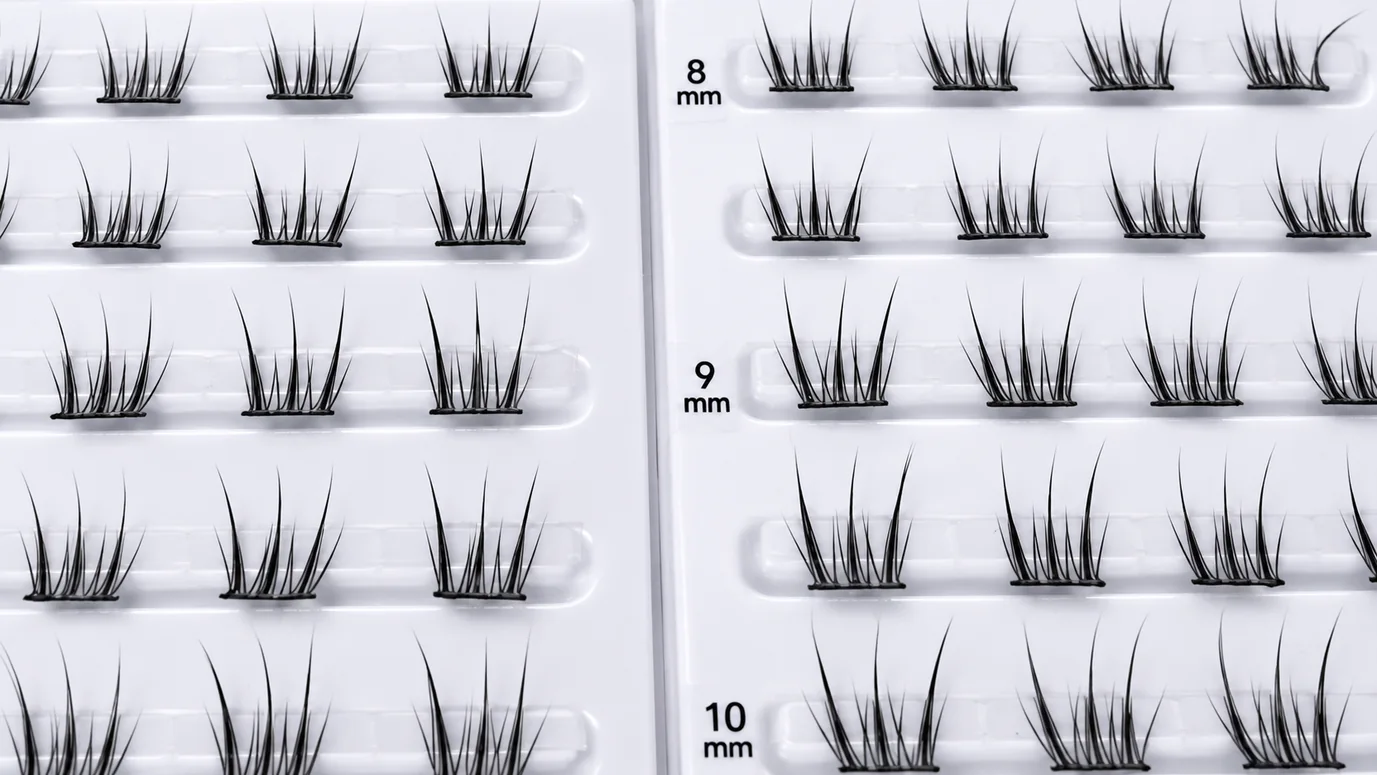
Two white trays of cluster false eyelashes labelled 8 mm, 9 mm and 10 mm after glue dispensingILLUSTRATIVE · LASH OUTPUT
IndonesiaEYELASH MANUFACTURING

X4 Lash Tube-Inserting Machines for a Lash Factory

An Indonesian lash producer took three X4 lash tube-inserting machines in June 2025, three more in September 2025 and one in February 2026.

7Units Supplied
3Deliveries
2025–26الطلبات المتكررة
  • Same lash factory, three separate orders
  • Repeat purchase after the first batch
  • Shipped from Shenzhen to Indonesia

الأسئلة الشائعة

🔧 Technical Specifications

The JH-431CCD is a floor-standing, dual-station machine that jets glue onto strip and cluster lashes. A 2000W pixel panoramic camera locates every lash root, the software converts those roots into a jetting path, and a piezo jet valve fires the dots at 300 times a second with ±0.02mm motion accuracy and repeatability.

Working range is 400/300/100*2 mm on X/Y/Z with a 0-500 mm/sec moving speed and a 10kg maximum load. Motion accuracy and repeatability are both ±0.02mm, minimum spit volume is 0.01ml, dispensing frequency is 300 times per second, working air pressure is 0.3-0.6MPA and input power is AC220V.

Epoxy glue, solder paste, silver glue, UV glue, black glue and silica gel all run on the standard setup. The dispensing controller is selected to match your glue process, and the dispensing needle or nozzle is chosen together with the glue, so the valve and dosing stay inside the fluid manufacturer specification.

Minimum spit volume is 0.01ml, based on glue viscosity. Motion accuracy and repeatability are both ±0.02mm, held by a grinding screw drive running on a double guide rail. That combination keeps the dot in the same place on the first tray of a shift and on the thousandth tray.

A 2000W pixel industrial camera with a matching lens captures the whole lash tray in one shot. Programming is visual capture plus computer programming: box the lash sample, generate the jetting path, name the trajectory file and save the program, so every later tray of that lash type runs from the stored file.

Modes 0 and 1 filter the image before matching, mode 2 matches the raw image, and mode 3 adds a second locating pass on the filtered image. Mode 3 suits lower lashes and low contrast roots, because the root is re-located immediately before the dot is fired rather than once per tray.

Travel speed is 0-500 mm/sec with a 10kg maximum load, so fixtures and loaded lash trays run without slowing the cycle. Dispensing response is 0.05 second, based on glue viscosity, and the head fires 300 dots a second, which is what sets the pace on a normal lash tray.

Working air pressure is 0.3-0.6MPA and input power is AC220V on a single-phase supply. The air must be dry and oil-free; moisture in the line is the most common cause of unstable jetting, and a blocked or wet filter shows up first as drifting dot weight.
🏭 Application & Industry

Strip lashes with black or clear stems, cluster lashes and individual lash rows are the main work. Each lash type keeps its own stored program with its own recognition parameters and trajectory, so the same head runs a mixed production plan without a mechanical changeover between lash types.

Yes. Cluster roots are curved, close together and low contrast, so the machine uses recognition mode 3: closure and filter parameters make the root continuous on the filtered image, then a second locating pass re-finds that root before the dot is fired. Dots land on the root instead of the fan spread.

Yes, with a separate parameter set for clear stems. Closure and filter parameters plus recognition contrast are tuned on a clear-stem sample first, because low contrast roots need different filtering than black stems. The two parameter sets are stored separately and recalled by program, not retyped per batch.

Eyelash manufacturing, private-label cosmetics, lash extension brands and contract cosmetics factories are the main users. The same platform is also used wherever a small adhesive dot has to land on a flexible, low-contrast part held in a tray, such as beauty applicators and small cosmetic assemblies.

The standard configuration covers epoxy, solder paste, silver glue, UV glue, black glue and silica gel. Send your glue datasheet and JHIMS confirms the valve, nozzle and controller combination for hot-melt or other adhesives before quoting, because heater blocks and controller settings differ from room-temperature glue.

One tray is jetted while the operator unloads and reloads the other station, so the head keeps working through the load cycle. Real output depends on lash rows and dots per tray; JHIMS times your own tray during a sample run before quoting, rather than quoting a generic figure.
🧾 Purchase, Payment & Delivery

JHIMS quotes the machine against your configuration. Send your lash type, tray drawing and target output; the quotation covers the machine, fixtures, shipping and commissioning options. Custom-configured dispensers do not carry a public list price, because fixtures and valve choice move the cost more than the base machine.

Standard payment terms: 70% T/T deposit with the order, 30% T/T before shipment. Existing customers may use L/C (Letter of Credit) at sight. Both milestones are written into the sales contract, and the balance is due before the machine leaves Shenzhen.

Standard lead time is 4-6 weeks after the deposit and drawing confirmation. The exact shipping date is confirmed on the order and depends on fixture tooling and the glue test on your sample tray, so send the tray and the glue datasheet with the deposit to keep the schedule.

12 months as standard, with options to extend to 24 or 36 months. Wear parts such as nozzles, needles and seals are quoted separately because their life depends on the glue and the daily cycle count, while the valve body, controller and motion system are covered by the standard warranty.

Export crating by ocean freight, with the dispensing head and fixtures packed separately so the nozzle and camera stay aligned. JHIMS issues the packing list, shipping documents and the machine parameter file before dispatch, and photographs the crate before it leaves the workshop.

نعم. توفّر JHIMS التركيب والتشغيل والتجريب في الموقع وتدريب المشغّلين بواسطة مهندسين معتمدين من JHIMS — وتُقدَّم الخدمة الميدانية مقابل رسوم. أما التدريب عن بُعد بالفيديو ودعم الوثائق والإرشاد الفني الاحترافي فتُقدَّم مجانًا.

It depends on your labour cost, glue waste and rework rate. The ROI calculator on this page takes your own figures, including the price you were quoted, and returns the payback period in months, so the answer reflects your factory rather than an average.
🛠️ Service, Warranty & Maintenance

Wipe the nozzle, confirm the jet on a test tray, keep the air supply dry and seat the tray flat in its fixture. When dot weight starts to drift, clean the valve following the valve manual; a full strip and clean is a scheduled job, not something to do mid-shift.

Raise the recognition contrast so the gap between roots is seen, and check the closure parameter that merges adjacent roots. If the dots themselves bridge across, reduce the dispensed volume before touching the vision settings, because over-dosing looks the same as a filtering fault.

Lower the minimum contrast first, since limits that are too tight drop acceptable lashes. Then confirm the exposure still separates lash from backing, and finally re-run the Y-axis offset test on one row. Change one parameter at a time so you can see which one fixed the fault.

Run a single row, watch where the dots land, then change the Y offset and repeat until the dot sits on the root line. Save the program only after the single-row test passes on three consecutive trays; saving early is how offsets end up wrong for the rest of a batch.

JHIMS supplies the nozzles, needles, seals and tappets for the dispensing head. Keep one spare nozzle and one seal set on site so a worn part does not stop the line while the replacement is in transit, and record the nozzle size with each program so the spare matches.

Operators learn loading, vision programming and the daily checks. JHIMS certified engineers carry out on-site installation, commissioning and training, which is chargeable; remote video training and documentation support are free. Most sites train two operators so the program knowledge does not sit with one person.

Contact JHIMS support. Remote diagnosis is free and the first response is within 30 minutes during business hours. Most jetting faults clear by wiping the nozzle, checking air pressure or reloading the saved program, and the parameter file lets support compare your settings with the factory record.

فيديوهات مرجعية: False Eyelash Glue Dispensing Machine Tutorial | Setup & Heating (Part 1) | JHIMS; False Eyelash Visual Dispensing Machine | Complete Operation & Programming Tutorial (Part 3)| JHIMS; Eyelash Glue Dispensing Machine Calibration Tutorial | JHIMS JH-431CCD (Part 5); Automatic Eyelash Glue Dispenser | Transparent Lash Stem Recognition & Setup (Part 6); Automatic Eyelash Glue Dispensing Machine | Lower Lash CCD Setup Tutorial(Part 11) | JHIMS.

الطراز

JH-431CCD

Working Range X/Y/Z

400/300/100*2 mm

Motion Accuracy

±0.02mm

قابلية التكرار

±0.02mm

Minimum Spit Volume

0.01ml

Dispensing Frequency

300 times/second

Moving Speed

0-500 mm/sec

Maximum Load

10kg

Display Mode

ViewSonic Display

ضغط هواء التشغيل

0.3-0.6MPA

Input Power Supply

AC220V